


Understanding the Real Cost of Solar Panels for Your Home: Investment vs. Expense
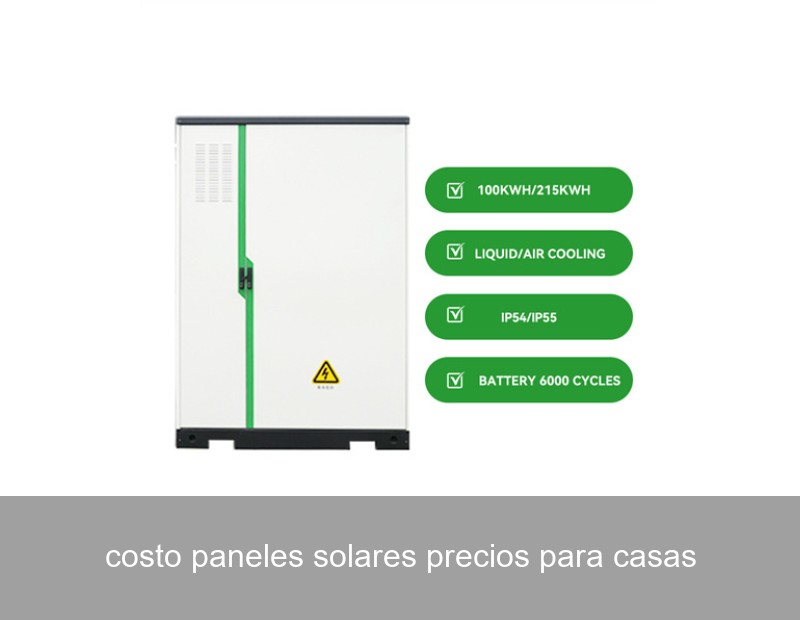
So, you're thinking about solar panels for your house. It's a fantastic decision, driven by a desire for cleaner energy, lower bills, and energy independence. But let's be honest, the first thing that comes to mind is the price tag. A quick search for "costo paneles solares precios para casas" (solar panel costs for homes) can leave you with more questions than answers. You'll see figures ranging from a few thousand to tens of thousands. What gives? The truth is, the upfront cost of the photovoltaic (PV) modules is just one piece of the puzzle. To truly understand the value, we need to look at the entire solar-plus-storage ecosystem and its long-term financial return.
Breaking Down the Price Tag: More Than Just Panels
The total installed cost of a home solar system is influenced by several key factors. Think of it like buying a car; the sticker price is for the base model, but the final cost includes taxes, registration, and any premium features you choose.
- System Size (kW): This is the primary cost driver. A larger system to power a 3,000 sq. ft. home will naturally cost more than one for a 1,500 sq. ft. condo. Your energy consumption history dictates the size needed.
- Equipment Quality: Not all solar panels and inverters are created equal. Premium, high-efficiency panels from trusted manufacturers may have a higher initial cost but produce more energy over a longer, guaranteed lifespan (often 25+ years).
- Installation Complexity: Roof type (tile, metal, shingle), pitch, and accessibility can affect labor costs. Ground-mounted systems involve different work than roof-mounted ones.
- Balance of System (BOS): This includes the inverter(s), mounting hardware, wiring, conduits, and the crucial energy storage system.
- Permits & Incentives: Local permitting fees vary. Crucially, government incentives like the U.S. Residential Clean Energy Credit or various European Union grants can slash your net cost by 30% or more.
Image Source: Unsplash - Professional installation is a key component of system cost and long-term performance.
The Inverter: The Brain of Your Solar Operation
Often overlooked in initial cost estimates, the inverter converts the DC electricity from your panels into usable AC for your home. You have options: string inverters (cost-effective for simple roofs), microinverters (optimized for shaded areas, panel-level monitoring), and hybrid inverters. Which leads us to the most transformative addition to modern solar systems.
The Power of Storage: Why Your Solar Investment Isn't Complete Without It
Here's a critical insight: a solar-only system often leaves significant value on the table. Your panels produce the most energy in the middle of the day when you might not be home. Without storage, that excess energy is sent back to the grid, often for a modest feed-in tariff. Then, in the evening when demand and electricity rates peak, you're buying power back from the utility. This is where adding a battery energy storage system (BESS) transforms the economics and resilience of your solar investment.
By pairing your solar array with a high-performance home battery, you can store your daytime surplus and use it during peak hours. This maximizes self-consumption, shields you from rising utility rates, and provides backup power during outages. When evaluating the total costo paneles solares precios para casas, integrating storage from the start is the smartest approach for long-term savings and control.
This is precisely where Highjoule excels. As a global leader in advanced energy storage since 2005, we don't just sell batteries; we provide intelligent, integrated power solutions. Our Residential Energy Hub is designed to seamlessly connect with your new or existing solar panels. Its compact, scalable design allows you to start with the capacity you need and expand later. With Highjoule's smart energy management software, the system automatically optimizes when to store energy, power your home, or export to the grid, putting you in complete control of your energy costs.
| Scenario | Daytime (Sunny) | Evening/Night | During Grid Outage | Long-Term Financial Benefit |
|---|---|---|---|---|
| Solar Panels Only | Powers home, exports excess to grid. | Must purchase all power from utility. | System shuts off (no power). | Good, limited by net metering policies. |
| Solar + Highjoule Storage | Powers home, charges battery with excess. | Powers home from stored battery energy. | Provides seamless backup power for critical loads. | Excellent, maximizes self-use, avoids peak rates. |
Real-World Case Study: The Smith Family's Solar & Storage Journey
Let's look at real data from a Highjoule installation in Hamburg, Germany. The Schmidt family (a 4-person household in a detached home) had a 8 kW solar array installed in 2020. While they saw a 40% reduction in their annual electricity bill, they were frustrated that most of their summer surplus was exported at a low rate.
In 2023, they decided to retrofit a Highjoule 10 kWh lithium-ion battery system with a hybrid inverter. The results after one year were compelling:
- Self-Consumption Rate: Increased from 35% to 82%.
- Grid Electricity Purchases: Reduced by an additional 60% compared to solar-only.
- Payback Period: The added storage system is projected to pay for itself in under 7 years, thanks to high German electricity prices and intelligent peak-shaving.
- Resilience: The system automatically provided backup power during two brief winter grid outages, keeping lights and heating circulation running.
As the International Energy Agency (IEA) reports, the global push for renewables is accelerating, and pairing solar with storage is becoming the new standard for maximizing household benefits.

Image Source: Unsplash - A modern home battery system like Highjoule's Residential Energy Hub.
Making the Right Choice for Your Home and Budget
So, how do you navigate this decision? Follow this logical ladder:
- Phenomenon: High and volatile electricity bills, desire for energy independence.
- Data: Analyze your last 12 months of utility bills. Calculate your average monthly kWh consumption. Use tools like the NREL PVWatts Calculator to estimate solar production for your location.
- Case: Learn from real examples like the Schmidts. Get multiple quotes that detail both solar-only and solar+storage options. Ask installers to model the 20-year financial outlook for each scenario.
- Insight: The lowest upfront costo paneles solares precios para casas may not deliver the highest long-term savings. An integrated system with quality storage often provides a superior return on investment and peace of mind.
Highjoule's Role in Your Sustainable Home
At Highjoule, we provide the intelligent storage piece that completes your home's energy puzzle. Our systems are designed for safety, longevity, and seamless integration. For homeowners, this means a partnership that goes beyond the sale. We offer monitoring platforms that give you real-time insight into your energy production, consumption, and storage levels, empowering you to make the most of your investment.
Looking Beyond the Initial Price: Your Energy Independence
When you reframe the question from "What is the cost?" to "What is the value?", the picture becomes clear. The true value of a solar-plus-Highjoule-storage system lies in:
- Fixed Energy Costs: Lock in a significant portion of your electricity rate for 25+ years.
- Grid Independence: Reduce reliance on the utility and gain protection against outages.
- Increased Home Value: Studies show homes with solar and storage sell at a premium.
- Sustainability: Maximize your personal contribution to a cleaner grid.
Ready to move past generic price searches and calculate a solution tailored specifically to your home's energy profile and your financial goals? What would you do with the savings and security that a truly intelligent home energy system could provide?
 Inquiry
 Online Chat