


Finding the Right Fit: Your Guide to the 100 kWh Battery for Sale
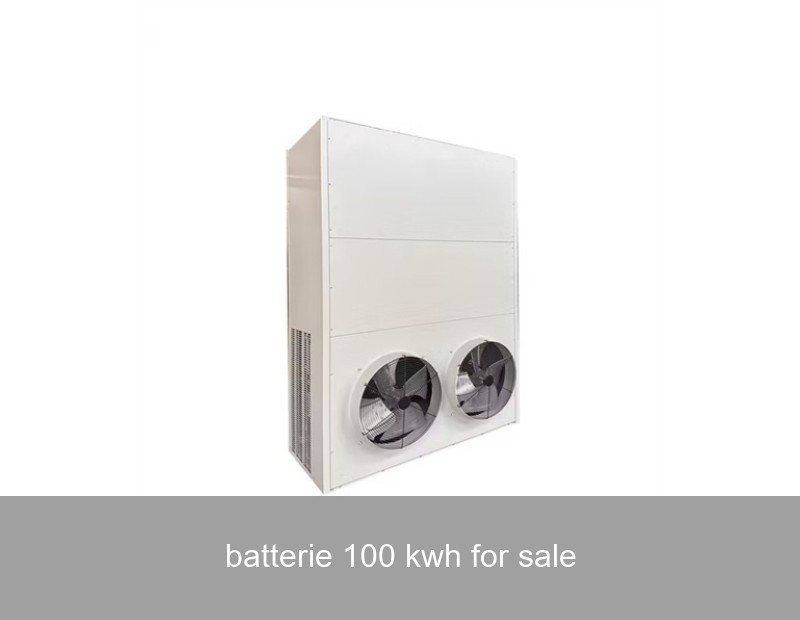
If you're actively searching for a "batterie 100 kwh for sale," you're likely beyond the basics. You're looking at a significant energy storage solution, a cornerstone for energy independence, operational resilience, or a new revenue stream. A 100 kWh battery system represents a substantial step up, capable of powering small to medium businesses, large homes, or acting as a critical node in a microgrid. But with great power comes a crucial question: how do you ensure you're investing in the right technology and partner for this long-term commitment? This guide will walk you through the key considerations, from technical specs to real-world applications, helping you navigate the market for a robust 100 kWh energy storage system.
Table of Contents
- What Does a 100 kWh Battery System Really Do?
- Key Considerations Before You Buy
- Technology Showdown: Lithium-Ion Chemistries
- A Real-World Case: The German Bakery
- Beyond the Battery: The Importance of System Intelligence
- Making Your Decision: The Right Questions to Ask
What Does a 100 kWh Battery System Really Do?
Let's demystify the capacity first. A 100 kilowatt-hour (kWh) battery stores enough energy to deliver 100 kilowatts of power for one hour, or 10 kW for 10 hours, and so on. It's a unit of energy, like the gallons in your fuel tank. But its application is where it gets exciting. For a commercial entity, this scale of storage is often the sweet spot for meaningful load shifting—using cheap, off-peak or solar energy to power operations during expensive peak hours. For a farm with a large solar array, it can store midday excess to run irrigation systems through the night. For a community microgrid, it can be the buffer that ensures stability when switching from main grid to island mode.

Image: A containerized large-scale battery system. Source: Unsplash
Key Considerations Before You Buy
Purchasing a 100 kWh system isn't like buying a commodity. It's a tailored solution. Here are the non-negotiable factors to evaluate:
- Depth of Discharge (DoD): Can you safely use 90% or 100% of that 100 kWh, or only 80%? A higher usable DoD means more value from your investment.
- Round-Trip Efficiency: How much energy is lost during charge/discharge cycles? A 95% efficient system loses far less than one at 85%.
- Cycle Life & Warranty: Look for warranties guaranteeing a certain capacity (e.g., 70% of original) after a specified number of cycles (e.g., 6,000+). This is the true measure of longevity.
- Power Rating (kW): This dictates how fast you can pull energy. A 100 kWh battery with a 50 kW inverter can discharge fully in 2 hours. Ensure the power rating matches your peak demand needs.
- Thermal Management: Passive air-cooling? Liquid cooling? Proper thermal management is critical for safety, cycle life, and performance in extreme climates.
Technology Showdown: Lithium-Ion Chemistries
Not all lithium-ion is created equal. The chemistry inside your 100 kWh battery profoundly impacts its characteristics.
| Chemistry | Typical Use Case | Key Advantage | Consideration |
|---|---|---|---|
| Lithium Iron Phosphate (LFP) | Stationary Storage (Daily Cycling) | Superior safety, long cycle life, stable chemistry | Slightly lower energy density than NMC |
| Nickel Manganese Cobalt (NMC) | EVs, High-Power Apps | High energy density, good power performance | Historically higher cost, more sensitive thermal management |
For stationary storage, where safety and longevity are paramount, LFP has become the industry benchmark. Its inherent stability reduces fire risk and its cycle life often exceeds that of NMC, making it a more cost-effective choice over a 15-20 year lifespan (U.S. Department of Energy).
A Real-World Case: The German Bakery
Let's look at a concrete example from Bavaria, Germany. A mid-sized industrial bakery with a 250 kWp rooftop solar array was facing two issues: high grid demand charges during early morning production peaks and solar curtailment on sunny weekends. They installed a 108 kWh LFP battery system with a 75 kW inverter.
- Data Point 1: The system shifted 28-35 kWh of solar energy daily to cover the 5 AM - 7 AM production ramp-up, reducing peak grid draw by over 60%.
- Data Point 2: By storing excess Saturday solar generation, they powered cold storage and partial lighting on Sunday, increasing solar self-consumption from 68% to 92%.
- Result: The calculated payback period, factoring in Germany's peak charge rates and energy price dynamics, fell under 7 years. Beyond finances, it provided crucial backup for refrigeration during two brief grid outages.

Image: Commercial solar and storage installation. Source: Unsplash
Beyond the Battery: The Importance of System Intelligence
A 100 kWh battery is more than just cells in a rack. It's the Battery Management System (BMS) that ensures each cell operates safely and evenly. It's the inverter that converts DC to AC efficiently. Most critically, it's the energy management system (EMS)—the brain. A smart EMS can automatically decide when to charge, discharge, or hold based on weather forecasts, electricity tariffs, and your consumption patterns. Without this intelligence, you're leaving significant value and savings on the table.
The Highjoule Solution: Engineered for Performance
This is where Highjoule's 15+ years of specialization in advanced储能 systems comes into play. When you evaluate a 100 kWh battery for sale from Highjoule, you're not just getting hardware. You're investing in an integrated, intelligent power solution.
Our H-Stack Commercial Series is modular, allowing configurations like 105.6 kWh per unit, scalable to megawatt-hours. Built around UL-recognized LFP cells, it features a liquid-cooled thermal system for consistent performance from -20°C to 50°C and industry-leading cycle life. The true differentiator is the Highjoule SynergyOS™. This AI-driven platform doesn't just react; it learns and forecasts. It can integrate with onsite solar, wind, or generators, and is designed to participate in grid services programs where available, creating potential revenue streams. For microgrid applications, our systems include built-in grid-forming capabilities for true islanding resilience.
We provide a full spectrum of services—from initial feasibility analysis and system design to commissioning, remote monitoring, and long-term performance guarantees. We think in terms of total cost of ownership, not just upfront price.
Making Your Decision: The Right Questions to Ask
As you shortlist suppliers for your 100 kWh project, move beyond the spec sheet. Ask these questions:
- What is the guaranteed end-of-warranty capacity and what are the warranty terms?
- Can you provide a detailed performance simulation for my specific location and load profile?
- How does the EMS integrate with my existing infrastructure (solar, building management system)?
- What cybersecurity protocols are in place for the communication and control systems?
- What is the total installed cost, including balance of system and commissioning?
The market for a batterie 100 kwh for sale is diverse. Your ultimate choice should balance proven chemistry, intelligent software, and a partner with a track record of supporting complex deployments. The goal is a system that works seamlessly today and continues to deliver value for decades.
What specific energy challenge—be it demand charge reduction, backup power assurance, or renewable integration—is driving your search for a 100 kWh solution today?
 Inquiry
 Online Chat