


Powering Your Independence: The Essential Guide to Batteries for Home Solar Panels
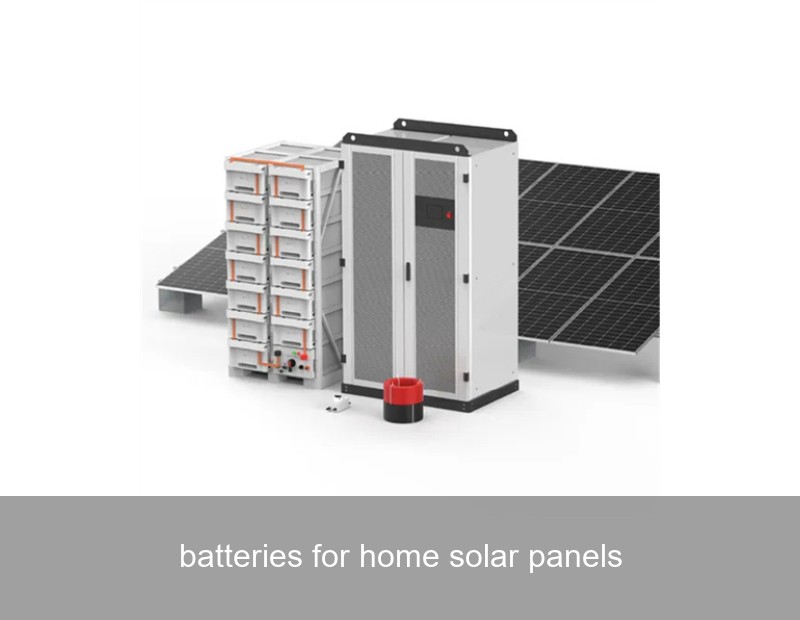
You've made a fantastic investment by installing solar panels on your roof. You're generating clean energy, reducing your carbon footprint, and watching your electricity bills drop. But have you ever wondered what happens when the sun goes down, or on those cloudy days? This is where the game-changer comes in: batteries for home solar panels. These intelligent energy storage systems are the missing piece that transforms your solar array from a daytime energy saver into a 24/7 power solution, offering true energy independence and resilience. Let's explore how this technology works and why it's becoming a must-have for homeowners across Europe and the US.
Table of Contents
- The Phenomenon: From Sun-Dependent to Self-Sufficient
- The Data: Why Storage Makes Solar Smarter
- Case Study: Real-World Resilience in California
- Choosing the Right Battery for Your Home Solar System
- The Highjoule Solution: Engineered for Intelligence and Durability
- Future Trends: What's Next for Home Energy Storage?
The Phenomenon: From Sun-Dependent to Self-Sufficient
Traditional solar panel systems without batteries operate on a simple, yet inefficient, principle: generate during the day, use what you can, and export the surplus to the grid (often for a low feed-in tariff). At night, you pull power back from the grid. This leaves you vulnerable to rising utility rates, grid outages, and the inherent mismatch between solar production peaks (midday) and household consumption peaks (evening).
The integration of a home battery system flips this model. It stores your excess solar energy instead of sending it all away, creating a personal energy reserve you control. Think of it like a high-tech pantry for electricity: you "preserve" the sunshine you harvest to use exactly when you need it most.

Image: A modern home integrating solar panels with a wall-mounted battery storage unit. (Source: Unsplash)
The Data: Why Storage Makes Solar Smarter
The financial and practical benefits are backed by compelling data. According to the U.S. Department of Energy, pairing storage with solar can increase a homeowner's consumption of self-generated solar power from 20-40% to 50-80% or more. This directly translates to:
- Dramatically Lower Bills: Maximizing use of your own cheap solar energy minimizes expensive grid imports, especially during peak tariff periods.
- Enhanced ROI: While adding an initial cost, batteries protect your solar investment from future rate hikes and can qualify for additional incentives, improving long-term payback.
- Backup Power: A critical feature in regions prone to outages. During a grid failure, a battery system can keep your lights on, fridge running, and essential devices powered.
| Scenario | Solar Only | Solar + Battery |
|---|---|---|
| Self-Consumption of Solar Energy | ~30% | ~70%+ |
| Grid Import at Night | High | Minimal to None |
| Resilience During Outage | None | Yes (Seamless Backup) |
Case Study: Real-World Resilience in California
Consider the Johnson family in Northern California, an area increasingly affected by Public Safety Power Shutoffs (PSPS) due to wildfire risk. In 2022, they installed a 10 kW solar array coupled with a 13.5 kWh lithium-ion battery system. Their goals were clear: achieve energy security and reduce their reliance on the unstable grid.
The Results: In the following year, the grid experienced 5 planned outages totaling over 60 hours. The Johnson's home experienced zero disruption. Their battery system seamlessly took over, powering critical loads including refrigeration, lighting, internet, and medical equipment. Financially, their annual electricity bill dropped from an average of $1,800 to a net credit, as they now export only surplus energy during high-price grid events. "It's not just about savings," Mrs. Johnson noted, "it's the peace of mind knowing my family is safe and powered, no matter what happens outside."
Choosing the Right Battery for Your Home Solar Panels
Not all batteries are created equal. Key specifications to understand include:
- Usable Capacity (kWh): The actual amount of energy you can store and use. This determines how long you can power your home during an outage.
- Power Rating (kW): How much electricity the battery can deliver at once. A higher rating allows you to run more high-power appliances simultaneously.
- Depth of Discharge (DoD): The percentage of the battery's total capacity that can be safely used. A higher DoD (like 90-100%) means you get more value from your investment.
- Round-Trip Efficiency: The percentage of energy put into the battery that you can get back out. Higher efficiency (e.g., 95%+) means less energy is lost in the storage process.
- Warranty & Cycle Life: Look for long warranties (10+ years) and a high guaranteed number of charge/discharge cycles, indicating a durable, long-lasting product.
The Highjoule Solution: Engineered for Intelligence and Durability
As a global leader in advanced energy storage since 2005, Highjoule understands these critical parameters intimately. Our Residential Energy Hub (REH) series is specifically designed to seamlessly integrate with home solar panels, transforming your property into a robust, intelligent microgrid.
What sets Highjoule's batteries for home solar panels apart is our focus on adaptive intelligence and sustainable design. The REH system doesn't just store energy; it learns your household's consumption patterns, weather forecasts, and utility rate schedules. Our proprietary energy management software automatically optimizes when to store solar energy, when to power your home, and when to strategically export to the grid to maximize your financial return.

Image: A sleek, modern battery energy storage system like the Highjoule Residential Energy Hub. (Source: Unsplash)
Our products feature:
- High-Cycle Life LFP Chemistry: Using Lithium Iron Phosphate (LFP) batteries, known for exceptional safety, longevity (over 6,000 cycles), and stable performance, even in diverse climates across Europe and North America.
- Modular Scalability: Start with what you need and easily add more capacity as your energy needs grow, from 5 kWh to over 30 kWh.
- Seamless Backup Integration: Provides sub-second transition to backup power during grid failures, ensuring your home remains comfortable and operational.
Highjoule provides more than just hardware; we offer a complete service package including system design, professional installation support by certified partners, and remote monitoring via our user-friendly app, giving you full control over your energy destiny.
Future Trends: What's Next for Home Energy Storage?
The evolution of batteries for home solar panels is accelerating. We're moving towards integrated ecosystems where your battery, solar, EV charger, and smart home appliances communicate to achieve ultimate efficiency. Emerging concepts like virtual power plants (VPPs)—where networks of home batteries provide grid stabilization services—are already being piloted, offering homeowners potential new revenue streams. Furthermore, continued research into solid-state and other advanced battery chemistries promises even greater energy density and safety in the coming decade, as noted by research from institutions like the National Renewable Energy Laboratory (NREL).
As electricity markets evolve and the demand for resilience grows, one question becomes increasingly personal: Is your home simply connected to the grid, or is it an intelligent, self-reliant asset ready for the future of energy?
 Inquiry
 Online Chat