


Batteriespeicher Großprojekte: Powering the Future with Giga-Scale Energy Storage
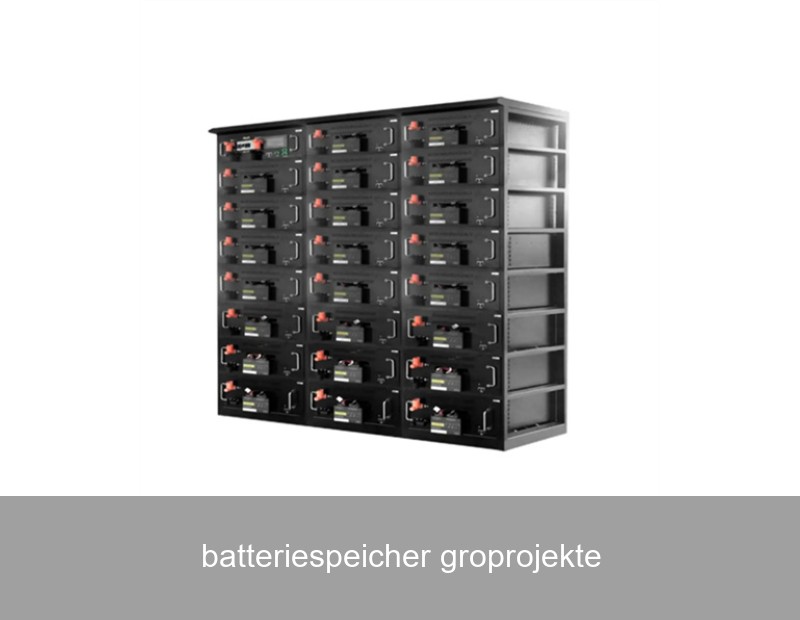
Imagine a power plant that doesn't burn fuel, emits nothing, and can spring to life in milliseconds. This isn't science fiction; it's the reality of modern batteriespeicher großprojekte (large-scale battery storage projects). Across Europe and the United States, a quiet revolution is underway. Grid operators and energy developers are moving beyond pilot programs and deploying battery storage systems at an unprecedented, gigawatt-scale. These aren't just backup power sources; they are becoming the intelligent, flexible backbone of a decarbonized grid, enabling the massive integration of wind and solar power. For businesses, industries, and communities, understanding this shift is key to unlocking energy resilience, cost control, and a sustainable future.
Why Big Batteries Matter Now: From Intermittency to Integration
The challenge is clear. Renewable energy sources like solar and wind are variable—the sun sets, the wind calms. This intermittency creates a mismatch between when energy is generated and when it's needed most. Traditional grids, built for steady fossil-fuel power, struggle with this unpredictability. The result can be grid instability, costly price spikes, and even the curtailment (wasting) of clean energy when production exceeds demand.
This is where large-scale battery storage projects come in. They act as a massive buffer, performing a complex dance of energy arbitrage and grid services. Think of them as the "shock absorbers" and "time-shifters" for the electricity network. The data speaks volumes: according to the U.S. Energy Information Administration, the country's utility-scale battery storage capacity is projected to nearly double in 2024 alone[1]. In Europe, driven by ambitious REPowerEU goals, the market for grid-scale storage is set to explode, with forecasts suggesting a need for 200 GW by 2030 to successfully integrate renewable targets.

Image: Utility-scale battery storage systems co-located with solar farms are becoming a common sight. (Source: Unsplash, representative image)
Key Components of a Successful Mega-Project
Building a successful batteriespeicher großprojekt is more than just stacking containers of batteries. It's a sophisticated integration of hardware, software, and deep grid expertise. Let's break down the core pillars:
- Advanced Battery Technology: While lithium-ion dominates for its energy density and falling costs, project design must carefully consider cell chemistry (LFP for safety and longevity, NMC for energy density), thermal management, and degradation mitigation over a 15-20 year lifespan.
- Intelligent Power Conversion Systems (PCS): This is the "brain" of the operation. High-efficiency, bi-directional inverters must rapidly convert DC battery power to AC grid power and vice versa, responding to grid signals in fractions of a second.
- Grid-Forming Inverter Capability: The next frontier. Unlike traditional grid-following inverters, grid-forming ones can independently establish voltage and frequency, essentially "creating" a stable grid from scratch. This is crucial for black start capabilities and strengthening grids with high renewable penetration.
- Sophisticated Energy Management Software (EMS): This is where the value is maximized. The EMS must make real-time decisions: when to charge, when to discharge, and which grid service (frequency regulation, capacity reserve, arbitrage) provides the optimal revenue stack, all while preserving the battery's health.
Case Study: The Hornsdale Power Reserve & Lessons for Global Großprojekte
No discussion of batteriespeicher großprojekte is complete without the landmark Hornsdale Power Reserve in South Australia. While not in our target geographies, its lessons are universal. Initially a 100 MW/129 MWh system (since expanded), it was built to address grid instability and blackouts. The results were staggering: it provided frequency control ancillary services (FCAS) at a speed 100 times faster than traditional thermal plants, slashing grid stabilization costs by over 90% in its first year of operation[2].
This case proved the multi-value stream model: a single large-scale battery can simultaneously earn revenue from energy arbitrage, provide critical inertia services, and act as a physical safety net for the grid. It set the blueprint for projects now emerging in Texas, California, Germany, and the UK.
| Service | Function | Benefit to the Grid |
|---|---|---|
| Frequency Regulation | Inject/absorb power in seconds to maintain grid frequency (50/60 Hz). | Prevents blackouts, allows more renewables. |
| Energy Arbitrage | Buy cheap power (e.g., midday solar), sell during expensive peak hours. | Lowers wholesale prices, optimizes asset use. |
| Capacity Reserve / Peak Shaving | Discharge during periods of highest demand to avoid firing peaker plants. | Defers grid upgrades, reduces reliance on fossil fuels. |
| Black Start Capability | Restore power to a grid section after a complete outage. | Dramatically improves grid resilience and recovery. |
Engineering Resilience: The Highjoule Approach to Large-Scale Storage
At Highjoule, with nearly two decades of experience since 2005, we've moved beyond simply supplying equipment for batteriespeicher großprojekte. We deliver turnkey, intelligent storage ecosystems. Our philosophy is that a mega-project's success hinges on seamless integration and long-term performance.
For commercial, industrial, and utility clients, our H-Joule GridMax series is the cornerstone for large-scale deployments. It's a fully containerized, utility-proven solution that integrates our proprietary, ultra-low latency energy management system. What sets it apart is its adaptive logic, which continuously learns local grid patterns and market signals to optimize the revenue stack automatically, all while applying our patented battery aging algorithms to maximize system lifespan.
Furthermore, our Microgrid Command Center platform allows operators of large complexes or renewable parks to seamlessly blend solar PV, wind, and massive battery storage into a virtual power plant (VPP). This creates not only energy independence but also a potent asset that can participate in grid-balancing markets, generating significant new revenue streams. From initial feasibility and financial modeling to commissioning and 24/7 remote performance monitoring, Highjoule provides the end-to-end expertise that de-risks these critical infrastructure investments.

Image: Centralized control systems are vital for managing the complex operations of giga-scale storage. (Source: Unsplash, representative image)
The Future Landscape: What's Next for Mega-Batteries?
The evolution of batteriespeicher großprojekte is accelerating. We're seeing a shift towards hybrid systems that combine lithium-ion with longer-duration storage technologies (like flow batteries) for applications requiring 6, 8, or even 10+ hours of discharge. Co-location with renewable generation—solar-plus-storage or wind-plus-storage—is becoming the default for new projects, as it simplifies grid connection and maximizes the value of the generated kWh.
Perhaps the most exciting development is the rise of the Virtual Power Plant (VPP). Here, thousands of distributed assets—residential Powerwall-style batteries, commercial storage systems, EV fleets, and large-scale großprojekte—can be aggregated and controlled as a single, flexible resource. This creates a decentralized, ultra-resilient grid topology. A recent report by the International Energy Agency highlights the crucial role of demand-side flexibility and VPPs in secure clean energy transitions[3].
As you contemplate the role of energy in your operations or community, the question is no longer if large-scale storage will play a part, but how and when. What specific grid challenge or energy opportunity could a strategically placed, intelligent battery system solve for you?
 Inquiry
 Online Chat