


Finding Your True North: How Compass Energy Solutions Are Guiding a Sustainable Future
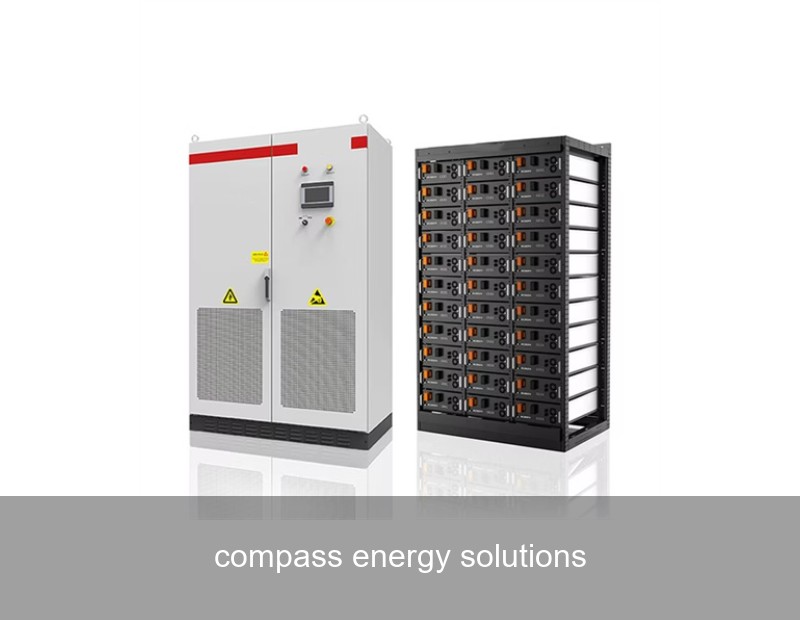
In the complex landscape of modern energy, the quest for reliability, cost-efficiency, and sustainability can feel like navigating without a map. This is where the concept of compass energy solutions comes into play—a holistic approach that doesn't just provide power but offers a clear direction for managing energy generation, storage, and consumption. For businesses and communities across Europe and the US, these integrated systems are becoming the indispensable guide toward energy independence and resilience. At the heart of this transformation lies advanced battery energy storage systems (BESS), the critical technology enabling this intelligent, navigational control over power.
Table of Contents
- The Problem: Energy Volatility is the New Normal
- The Data: The Compelling Case for Storage-Led Solutions
- The Case Study: A German Manufacturing Plant's Journey
- The Technology: The BESS as Your Energy Compass Core
- Highjoule's Role: Delivering Precision and Intelligence
- The Future: Where Are Compass Energy Solutions Heading?
The Problem: Energy Volatility is the New Normal
Let's be honest, if you manage a factory, a commercial facility, or even a community microgrid, your relationship with the grid has changed. You're no longer just a passive consumer. With the rise of solar PV on your rooftop, volatile energy prices, and increasing concerns over grid stability, you've become an active energy manager. The problem? Renewable sources like solar and wind are intermittent. The sun doesn't always shine, and the wind doesn't always blow when you need power most. This mismatch creates a fundamental challenge: how do you capture clean energy and deploy it precisely when it delivers the maximum value—for your operations, your budget, and the planet? Without a strategic plan, you're left exposed to peak demand charges, grid outages, and missed sustainability targets.
The Data: The Compelling Case for Storage-Led Solutions
The numbers speak volumes about why a strategic, compass-like approach is no longer a luxury but a necessity. According to the International Energy Agency (IEA), global energy storage capacity is set to multiply exponentially, with grid-scale storage leading the charge. In the US alone, the Energy Information Administration (EIA) reports a dramatic surge in battery storage capacity, driven by both policy and economics.
Consider this typical financial impact for a commercial user:
| Challenge | Without BESS | With Integrated BESS "Compass" |
|---|---|---|
| Peak Demand Charges | High, unpredictable monthly fees | Reduced by 20-40% through peak shaving |
| Solar Self-Consumption | ~30-40% of solar energy used on-site | ~70-80%+ of solar energy used on-site |
| Grid Outage Downtime | Full operational halt | Critical load backup for hours |
| Carbon Footprint | Limited reduction scope | Maximized renewable use, significant reduction |
This data illustrates that a well-orchestrated compass energy solution directly translates to operational resilience and a stronger bottom line.
The Case Study: A German Manufacturing Plant's Journey
Let's move from theory to a concrete example from Bavaria, Germany. A mid-sized automotive parts manufacturer faced steep ‘strompreisbremse’ (electricity price brake) costs and had ambitious internal carbon neutrality goals. They had a 500 kWp rooftop solar array but were exporting over half of their midday production to the grid at low feed-in tariffs, only to buy expensive power later during evening production shifts.
Their implemented compass energy solution involved:
- Phase 1: Analysis & Mapping: A full audit of energy flows, identifying the "when" and "why" of high costs.
- Phase 2: Integration: A 372 kWh lithium-ion BESS was installed alongside their existing solar inverters.
- Phase 3: Intelligent Control: An AI-driven energy management system (EMS) was deployed to act as the true compass, making autonomous decisions every second.
The results after one year were telling:
- Demand Charge Reduction: 31% decrease, saving tens of thousands of euros annually.
- Solar Self-Consumption: Increased from 38% to 82%.
- ROI Timeline: Achieved in under 5 years, factoring in German subsidy programs.
- Resilience: The system now provides 4 hours of backup power for critical assembly lines.

Image: A modern industrial facility with integrated solar and storage, similar to the Bavarian case study. Credit: Unsplash.
This case perfectly embodies the compass energy solutions philosophy: it started with a destination (cost savings + sustainability), used technology as a tool, and intelligent software as the guiding instrument to navigate there efficiently.
The Technology: The BESS as Your Energy Compass Core
So, what makes this possible? The Battery Energy Storage System is the physical heart of the solution. But not all BESS are created equal. Think of a basic battery as a simple bucket that holds energy. A true compass energy solution requires a smart, responsive, and durable system. Key components include:
- High-Cycle Life Battery Cells: Using lithium iron phosphate (LFP) chemistry for safety and longevity, capable of thousands of charge/discharge cycles.
- Advanced Power Conversion System (PCS): The "translator" between DC battery power and AC grid/building power, with high efficiency ratings (>98%).
- Thermal Management System: A climate control system for the battery, ensuring optimal performance and lifespan in both Scandinavian winters and Southern European summers.
- Grid-Forming Inverter Capability: The most advanced systems can "black start" and form a stable microgrid independently if the main grid fails—a critical feature for true resilience.
Highjoule's Role: Delivering Precision and Intelligence
This is where Highjoule's nearly two decades of expertise becomes pivotal. We don't just supply hardware; we provide the integrated compass. For our commercial and industrial clients in Europe and North America, our H-Series Modular BESS serves as the robust, scalable core. Its containerized or skid-mounted design allows for flexible deployment, from supplementing a warehouse's solar to forming the backbone of a community microgrid.
More importantly, our JouleMind AI Energy Management Platform is the intelligence that turns the system into a genuine compass energy solution. JouleMind analyzes weather forecasts, grid tariff schedules in real-time (crucial for markets with dynamic pricing), and your facility's consumption patterns. It then autonomously optimizes energy flow: storing solar excess, discharging to avoid peak tariffs, or even providing grid services like frequency regulation. We handle the complexity, so you simply see a clear path to your goals.

Image: Visualization of an energy management system dashboard, similar to Highjoule's JouleMind platform. Credit: Unsplash.
The Future: Where Are Compass Energy Solutions Heading?
The trajectory is clear. As noted by research from sources like the National Renewable Energy Laboratory (NREL), the future grid will be decentralized, digital, and decarbonized. Compass energy solutions will evolve from single-site optimizers to networked virtual power plants (VPPs), where thousands of distributed storage systems aggregate to support the wider grid's stability. This presents a new revenue stream for system owners. Furthermore, the integration of electric vehicle (EV) fleets as mobile storage assets ("vehicle-to-grid" or V2G) will add another layer to this navigational challenge—and opportunity.
The question is no longer if you need a strategic energy plan, but how you will implement it. Will you continue to react to the volatile energy seas, or will you set your coordinates and take control?
What is the first energy challenge you would need your compass
 Inquiry
 Online Chat