


Battery 5kVA with Battery: Your Complete Guide to Mid-Scale Energy Independence
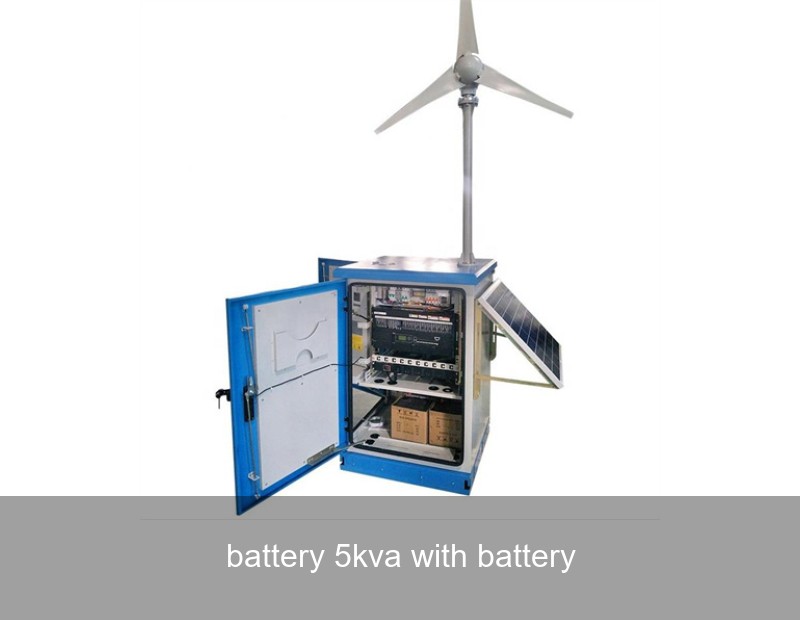
Have you ever watched your electricity meter spin after sunset and wondered, "What if I could use my own power?" For many homes and small businesses across Europe and the US, this isn't just a daydream. The rising demand for reliable, clean energy is pushing innovative solutions to the forefront. One such solution, perfectly balanced for mid-scale energy needs, is the battery 5kVA with battery system. This isn't just a battery; it's an integrated power hub designed to provide substantial backup, maximize solar self-consumption, and offer genuine energy autonomy. As grid instability and energy costs continue to challenge households and enterprises, understanding this specific capacity—5 kilovolt-amperes (kVA) paired with scalable battery storage—becomes key to taking control of your energy future.
Table of Contents
What Exactly is a 5kVA Battery System?
Let's break it down. The "5kVA" refers to the power rating of the inverter—the brain of the system. It indicates the system can deliver up to 5,000 volt-amperes of apparent power, which typically translates to around 4,000-4,500 watts of continuous real power (in kW) to run your appliances. This capacity is ideal for powering the essential and high-priority loads in a larger home, a small to medium business, or a critical commercial facility during an outage.
The "with battery" part is crucial. It signifies an integrated energy storage system (ESS). The inverter manages energy flow between the grid, solar panels (if you have them), the battery bank, and your home's circuits. The battery capacity, measured in kilowatt-hours (kWh), determines how long you can power those loads. A common configuration might be a 5kVA inverter paired with 10-15 kWh of battery storage, offering a perfect balance of power and duration for overnight backup or full-day solar shifting.
The Driving Forces: Why Consider a 5kVA System Now?
The trend towards mid-scale storage isn't accidental. Several converging factors make the battery 5kVA with battery a compelling investment.
- Grid Volatility & Outages: From extreme weather events in the US to grid modernisation pressures in Europe, power reliability is a growing concern. A 5kVA system acts as an uninterruptible power supply (UPS) for your entire property.
- Soaring Energy Prices: Electricity costs have skyrocketed. The International Energy Agency (IEA) highlights continued price sensitivity in global markets. Storing cheap solar energy or off-peak grid power for use during expensive peak hours delivers immediate savings.
- Solar Maximization: For homes with existing solar PV, adding a battery increases self-consumption from 30-50% to 70% or more, ensuring your clean energy doesn't go to waste.
- Energy Independence: There's an undeniable desire to be less reliant on utility companies and to have a personal, resilient energy asset.
Key Components of a Robust 5kVA System
Not all systems are created equal. A high-performance battery 5kVA with battery solution comprises several intelligent components working in harmony.
| Component | Role | What to Look For |
|---|---|---|
| Hybrid Inverter (5kVA) | Converts DC from batteries/solar to AC for home use; manages all energy flows. | High efficiency (>97%), seamless grid-to-backup switching, smart grid readiness. |
| Lithium-Ion Battery Bank | Stores electrical energy for later use. | LiFePO4 chemistry for safety & longevity, modular design for easy expansion, 10+ year warranty. |
| Battery Management System (BMS) | The battery's brain; protects cells and optimizes performance. | Advanced, multi-layer protection (thermal, overcharge, short-circuit). |
| Energy Management System (EMS) | The system's intelligence; optimizes for cost, comfort, or carbon. | User-friendly app, customizable operating modes, weather forecasting integration. |

Image Source: Unsplash (Representative image of a modern residential battery installation)
A Real-World Case Study: Stability for a Bavarian Guesthouse
Let's move from theory to practice. Consider the case of a family-run guesthouse in the Bavarian Alps, Germany. Their challenges were twofold: frequent short grid outages disrupting their operations, and high winter electricity costs despite having a sizable rooftop solar array.
Phenomenon: Solar overproduction in summer was fed to the grid at low rates, while in winter, they bought expensive grid power, especially during breakfast and dinner peaks.
Data & Solution: An analysis of their load profile showed a peak demand of around 4.2 kW, with a critical load circuit (reception, kitchen fridges, lighting) needing about 2.5 kW. They installed a 5kVA hybrid inverter system paired with 14.4 kWh of LiFePO4 storage. The system was configured for maximum self-consumption and backup priority for the critical loads.
Outcome: The results were transformative:
- Reliability: The system has provided seamless backup during 7 grid outages in the last year, with guests unaware of any disruption.
- Economics: Their grid electricity purchases dropped by 68% annually. By shifting solar and cheap-night-rate power to peak times, they achieved a return on investment (ROI) in under 7 years.
- Sustainability: Their carbon footprint from grid electricity decreased substantially, a strong marketing point for eco-conscious guests.
This case, mirrored by many small businesses, underscores the tangible value of a correctly sized battery 5kVA with battery system.
Choosing the Right 5kVA Solution: Beyond Basic Specs
Selecting a system requires looking beyond the kVA and kWh numbers on a datasheet. Here’s what truly matters:
- Scalability: Can you easily add more battery modules later if your needs grow? A modular design is essential.
- Software & Intelligence: The hardware is just the body; the software is the soul. Look for systems that offer intelligent, forecast-based charging (using solar and weather forecasts) and flexible control modes.
- Safety & Certification: Ensure the system has all necessary regional certifications (e.g., UL 9540 in the US, CE/IEC in Europe). LiFePO4 chemistry is widely regarded as the safest lithium option for stationary storage.
- Installation & Service: Partner with a certified installer with proven experience. The quality of installation is as critical as the product itself.
How Highjoule Powers Mid-Scale Energy Independence
At Highjoule, with nearly two decades of experience since 2005, we've designed our HES-Series specifically to meet the robust demands of the 5kVA segment. We understand that our customers need more than just a product; they need a dependable energy partner.
Our HES-5.0 Hybrid Energy System is a prime example of this philosophy. It features a 5kVA hybrid inverter that achieves 98% peak efficiency and is pre-configured for seamless integration with our modular IntelliCore LiFePO4 batteries. The system's standout feature is the Highjoule SynergyOS, an advanced energy management platform. SynergyOS doesn't just react—it learns your patterns and proactively optimizes energy flow based on tariff rates, solar production forecasts from integrated weather data, and your personal preferences for backup or savings.

Image Source: Unsplash (Representative image of monitoring a home energy system)
For commercial and industrial applications, our systems offer advanced features like three-phase capability through unit stacking and demand charge management, which can lead to significant savings on commercial utility bills, as highlighted by resources like the U.S. Department of Energy. Whether for a large residential property, a rural clinic, or a small manufacturing workshop, Highjoule provides intelligent, efficient, and sustainable power solutions built to last.
Ready to Define Your Energy Future?
The journey to energy resilience starts with a clear understanding of your own power profile. What would a day without grid dependency look like for your home or business, and which critical loads would you prioritize to keep running with a reliable battery 5kVA with battery system?
 Inquiry
 Online Chat