


Battery Backup for Solar Energy: The Key to True Energy Independence
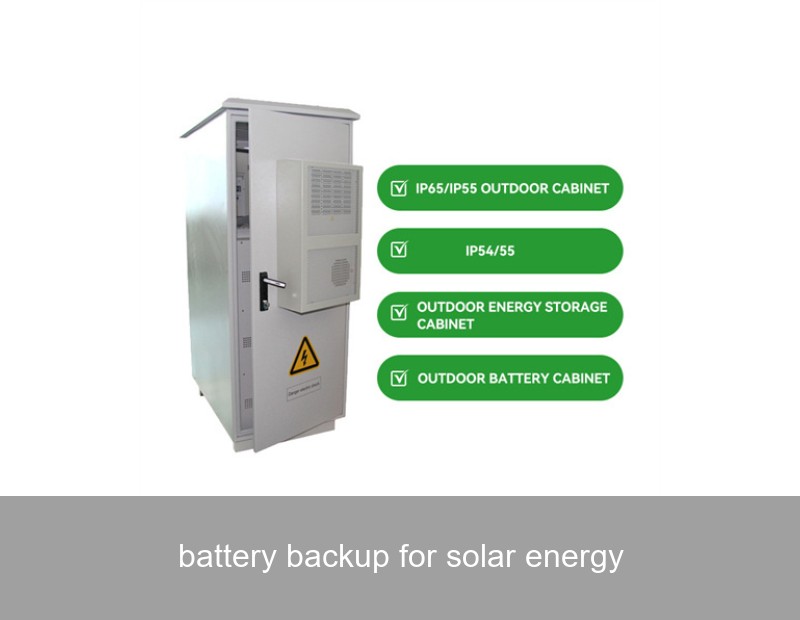
You've made the smart decision to install solar panels. You're generating clean energy, reducing your carbon footprint, and watching your daytime electricity bills plummet. But what happens when the sun goes down, or a storm cloud rolls in? Your panels stop producing, and you're back to drawing power from the grid. This is where a battery backup for solar energy becomes not just an add-on, but the essential component that unlocks the full potential of your solar investment. It's the bridge between simply generating green energy and achieving genuine, resilient energy independence for your home or business.
Table of Contents
- The Solar Power Gap: Generation vs. Consumption
- How a Solar Battery Backup System Works: A Simple Breakdown
- Beyond Blackouts: Key Benefits of Pairing Solar with Battery Storage
- Real-World Impact: A California Case Study in Resilience and Savings
- Choosing the Right Battery Backup System: What to Look For
- Highjoule's Smart, Integrated Solutions
- The Future Horizon: Smarter Grids and Self-Powered Communities
The Solar Power Gap: Generation vs. Consumption
Let's look at a common phenomenon for solar homeowners without storage. Their energy production curve looks like a beautiful mountain peak during midday, perfectly aligned with the sun's trajectory. However, the household's energy consumption curve is often a different story—it might have a morning bump, a dip during the day when people are at work or school, and then a significant evening peak when families return home, cook dinner, and turn on appliances and entertainment systems.

Image Source: Unsplash - Visual representation of energy production vs. consumption.
This mismatch creates a critical problem. Excess solar energy produced at noon is often sold back to the grid at a low, wholesale rate. Then, just a few hours later, that same household must buy energy back from the grid at a much higher retail rate to cover their evening needs. According to the U.S. Department of Energy, this "duck curve" effect is becoming more pronounced as solar adoption grows, highlighting the urgent need for storage to smooth out these imbalances.
How a Solar Battery Backup System Works: A Simple Breakdown
Think of your solar battery backup as a high-tech, high-capacity energy bank. The process is elegantly simple:
- Capture & Store: During sunny hours, your solar panels generate DC (direct current) electricity. Any power not immediately used by your home is converted to AC (alternating current) by your solar inverter, and then sent to charge your battery system.
- Intelligent Management: A smart energy management system (like the one built into every Highjoule unit) constantly monitors your energy production, consumption, grid status, and even weather forecasts.
- Discharge & Power: When your panels aren't producing enough—at night, during a brownout, or a full grid outage—the system automatically switches to draw clean, stored energy from your batteries to power your essential loads or entire home.
This creates a seamless, uninterrupted flow of clean electricity, 24/7.
Beyond Blackouts: Key Benefits of Pairing Solar with Battery Storage
While backup power during outages is the most dramatic benefit, the advantages run much deeper:
| Benefit | Description | Impact |
|---|---|---|
| Energy Independence | Dramatically reduce reliance on the utility grid and volatile energy markets. | Price stability and control over your energy destiny. |
| Maximized Self-Consumption | Use your own solar energy on-site instead of selling it cheaply and buying it back expensively. | Directly increases the financial return on your solar investment. |
| Resilience & Security | Automatic backup power keeps critical loads (refrigeration, medical equipment, lights) running during grid failures. | Peace of mind and safety during extreme weather events, which are increasing in frequency. |
| Grid Support & Incentives | In some regions, you can participate in utility programs that pay you for allowing grid access to your stored energy during peak demand. | Creatates an additional revenue stream from your battery system. |
Real-World Impact: A California Case Study in Resilience and Savings
Consider the experience of a medium-sized winery in Napa Valley, California—a region prone to Public Safety Power Shutoffs (PSPS) to prevent wildfires. Before 2022, a single multi-day grid outage could jeopardize thousands of gallons of fermenting wine, requiring expensive diesel generators and risking the entire vintage.
In 2022, the winery installed a 250 kW solar array coupled with a 500 kWh battery backup for solar energy system. The results over two years have been transformative:
- Outage Protection: The system has seamlessly powered critical cooling, fermentation tanks, and facility operations through 7 separate grid outages, the longest lasting 36 hours.
- Financial Performance: By shifting energy consumption to avoid peak utility rates (a strategy called peak shaving), the winery saves an average of $3,200 per month on its electricity bill.
- Sustainability Win: They have increased their on-site consumption of solar power from 35% to over 85%, drastically reducing their operational carbon footprint.
This tangible example, mirrored by data from the California Public Utilities Commission on storage adoption, shows that a solar battery backup is both a risk mitigation tool and a strategic financial asset.
Choosing the Right Battery Backup System: What to Look For
Not all battery systems are created equal. When evaluating your options, key specifications matter:
- Usable Capacity (kWh): How much energy the battery can actually store and deliver. This determines how long it can power your home.
- Power Rating (kW): How much electricity the battery can deliver at once. This determines how many appliances you can run simultaneously.
- Depth of Discharge (DoD): The percentage of the battery's capacity that can be safely used. A higher DoD means more of your stored energy is available.
- Round-Trip Efficiency: The percentage of energy put into the battery that you can later use. Higher efficiency means less energy lost in the storage process.
- Warranty & Lifespan: Look for a strong warranty that guarantees both a certain number of years and a minimum number of cycles or retained capacity.
Highjoule's Smart, Integrated Solutions
At Highjoule, we've been engineering advanced energy storage solutions since 2005. We understand that a battery backup for solar energy is more than just hardware—it's an intelligent ecosystem. Our H-Series Home Energy Storage systems are designed for this very purpose.
Our systems feature industry-leading lithium iron phosphate (LFP) battery chemistry, renowned for its safety, long cycle life, and stability. The integrated Highjoule Energy Hub is the brain of the operation: a smart inverter and manager that optimizes every kilowatt-hour. It learns your consumption patterns, integrates weather forecasts, and can be configured to prioritize backup resilience, cost savings, or a perfect balance of both.

Image Source: Unsplash - Example of a modern home battery installation.
For commercial and industrial clients, our C-Series Containerized Storage Solutions provide scalable, robust power for microgrids, manufacturing facilities, and agricultural operations, turning large-scale solar arrays into fully dispatchable power plants.
The Future Horizon: Smarter Grids and Self-Powered Communities
The integration of widespread battery backup for solar energy is paving the way for a decentralized energy future. Imagine neighborhoods forming virtual power plants (VPPs), where hundreds of home battery systems aggregate to support the local grid during heatwaves, preventing blackouts and delaying the need for costly new power plants. Research from institutions like the National Renewable Energy Laboratory (NREL) is actively modeling this future, showing significant grid benefits from distributed storage.
This isn't just about individual homes; it's about building community-wide resilience, lowering overall energy costs, and accelerating the transition to a sustainable energy economy. The technology is here, proven, and more accessible than ever.
Is your solar system truly complete without the key component that stores its power for when you need it most? What would uninterrupted clean power mean for your home's security or your business's operational continuity during the next grid event?
 Inquiry
 Online Chat