


Solar Power Storage Units: The Key to Unlocking True Energy Independence
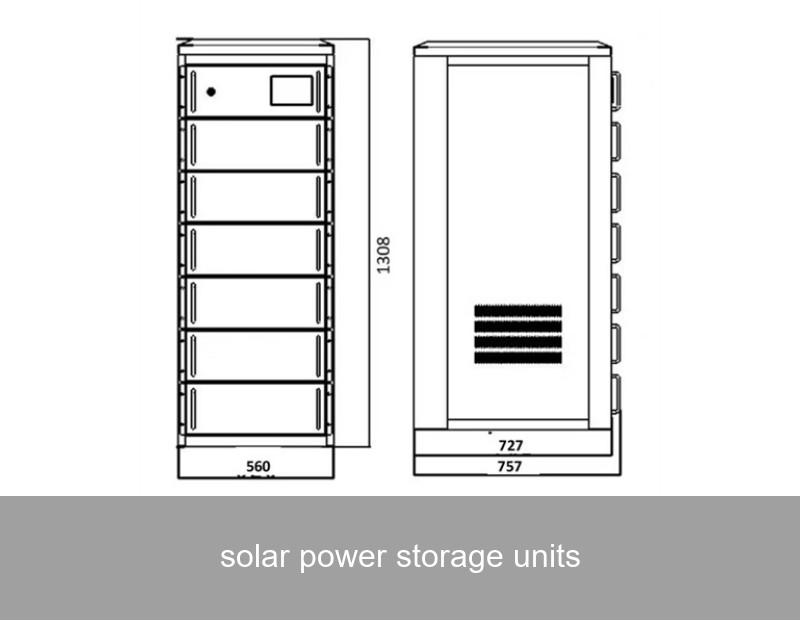
You've made the smart decision to install solar panels. You're generating clean energy, reducing your carbon footprint, and watching your meter spin backwards. But what happens when the sun goes down, or on a cloudy day? This is where the true game-changer enters the scene: solar power storage units. These sophisticated systems are transforming solar energy from an intermittent source into a reliable, 24/7 power solution for homes and businesses across Europe and the US. Let's explore how this technology works and why pairing your panels with a high-performance battery is no longer a luxury—it's the cornerstone of a modern, resilient energy strategy.
Table of Contents
What Exactly Are Solar Power Storage Units?
In simple terms, a solar power storage unit is a rechargeable battery system specifically designed to store the excess electricity generated by your solar panels. Instead of sending all surplus power back to the grid (often for minimal feed-in tariffs), you store it for your own use later. Modern systems are far more than just a box of batteries; they are integrated energy management hubs.
A typical system includes:
- The Battery Pack: The heart of the system, using lithium-ion chemistry (like Lithium Iron Phosphate or LFP) for its safety, long lifespan, and high efficiency.
- The Inverter/Charger: Often a hybrid inverter that intelligently manages energy flow—converting DC from solar panels and batteries to AC for your home, and vice-versa for charging.
- The Energy Management System (EMS): The brain. This software monitors energy production, consumption, weather forecasts, and even grid electricity rates to autonomously optimize when to store, use, or export power.

Think of it this way: your solar panels are a fantastic income source (producing energy during the day). A solar battery is your savings account, allowing you to "bank" that income and spend it whenever you need it most—effectively making you your own micro-utility.
Why the Surge in Demand? The Data Behind the Trend
The adoption of solar-plus-storage is skyrocketing, and it's not just an environmental choice; it's a compelling financial and practical one. The phenomenon is driven by several converging factors.
First, grid instability and rising costs. In the US, power outages have increased by approximately 64% over the past decade. In Europe, volatile energy markets have led to unprecedented electricity prices. Consumers and businesses are seeking control and predictability.
Second, the economics have flipped. As feed-in tariffs decline (the price you get for selling power back) and retail electricity rates climb, the value of self-consumption soars. Storing a kilowatt-hour (kWh) to use later avoids buying it at a high peak rate. Third, technology advancements have made batteries safer (LFP chemistry), longer-lasting (10-15+ year warranties), and more affordable—prices have fallen over 70% in the last decade.
| Driver | Impact on Homeowner/Business |
|---|---|
| Rising Grid Electricity Prices | Higher savings from every self-consumed kWh |
| Declining Solar Export Tariffs | Makes storing energy more valuable than selling it |
| Increased Grid Outages | Demand for reliable backup power during blackouts |
| Technology Improvement | Safer, longer-lasting, and more intelligent systems |
From Theory to Practice: A Real-World Case Study in Bavaria
Let's move beyond theory. Consider a medium-sized bakery in southern Germany. They installed a 50 kW solar array in 2020 but found they were exporting most of their solar power on weekends while buying expensive power in the early mornings and evenings for their ovens.
In 2023, they integrated a solar power storage unit with a capacity of 80 kWh. The results after one year were striking:
- Self-Consumption Rate: Increased from 35% to 82%.
- Grid Energy Costs: Reduced by 68% annually.
- Backup Power: The system provides seamless backup for refrigeration and essential lighting, preventing spoilage during brief grid outages.
- ROI Timeline: The projected payback period for the added storage system is under 7 years, thanks in part to Germany's high commercial electricity rates and specific funding programs for efficiency.
This case exemplifies the dual benefit: substantial cost savings and operational resilience. The bakery is now largely energy-independent during daylight hours and protected from grid disruptions.
Choosing the Right Solar Battery: Key Considerations
Not all solar power storage units are created equal. As you evaluate options, here are the critical specifications to understand:
- Usable Capacity (kWh): The actual amount of energy you can store and use. It's less than the total battery capacity due to system buffers that protect battery health.
- Power Rating (kW): How much power the battery can deliver at once. A high capacity with a low power rating means you can run many devices for a short time, but not necessarily high-power appliances (like an AC unit or oven) simultaneously.
- Round-Trip Efficiency: The percentage of energy put into storage that you can later use. Top-tier systems exceed 90%. A 5% difference adds up significantly over the system's life.
- Depth of Discharge (DoD): The percentage of the battery that can safely be used. A 90% DoD on a 10 kWh battery means you can use 9 kWh without harming it.
- Warranty & Lifespan: Look for a warranty that guarantees both a certain number of years (e.g., 10) and a certain number of cycles or retained capacity (e.g., 10,000 cycles or 70% capacity retention).
Highjoule's Intelligent Approach to Solar Storage
At Highjoule, with nearly two decades of experience since 2005, we've moved beyond simply providing batteries. We engineer integrated, intelligent energy ecosystems. Our solutions are designed to maximize the economic and practical value of your solar investment for residential, commercial, and microgrid applications.
Our flagship product line, the Highjoule H-Series, exemplifies this philosophy. These modular solar power storage units are built with market-leading Lithium Iron Phosphate (LFP) cells, renowned for their safety and longevity. What truly sets them apart is the Adaptive Energy OS.

This intelligent software platform doesn't just react; it predicts and optimizes. By analyzing your historical consumption, real-time solar production, and even integrating with utility rate schedules (like time-of-use rates in California or dynamic tariffs in the EU), it makes autonomous decisions to minimize your costs. For instance, it can decide to store solar energy for the evening peak rate period or even perform strategic grid charging during ultra-low overnight rates to supplement solar on a predicted cloudy day.
For businesses and communities, our microgrid controllers can manage multiple storage units, solar arrays, and even backup generators as a single, resilient system. This ensures critical operations continue, whether it's a manufacturing facility avoiding downtime or a remote community maintaining essential services. Our systems are designed to meet the rigorous standards and grid-compliance requirements of both European and North American markets.
What Does the Future Hold for Home & Business Energy?
The trajectory is clear: the future is decentralized, digital, and resilient. Solar power storage units are the enabling technology. We're moving towards a model where every building with solar and storage becomes an active node in a smarter, more flexible grid—a concept often called a Virtual Power Plant (VPP). In a VPP, thousands of distributed systems like yours can be aggregated to provide grid services, enhancing stability and potentially creating a new revenue stream for participants.
The question is no longer if you should add storage to your solar, but how to select a system that is future-proof, intelligent, and offers the best total value over its entire lifespan. It's about choosing a partner who understands the complete energy equation.
 Inquiry
 Online Chat