


Battery Backup for Starlink: The Essential Guide to Uninterrupted Connectivity
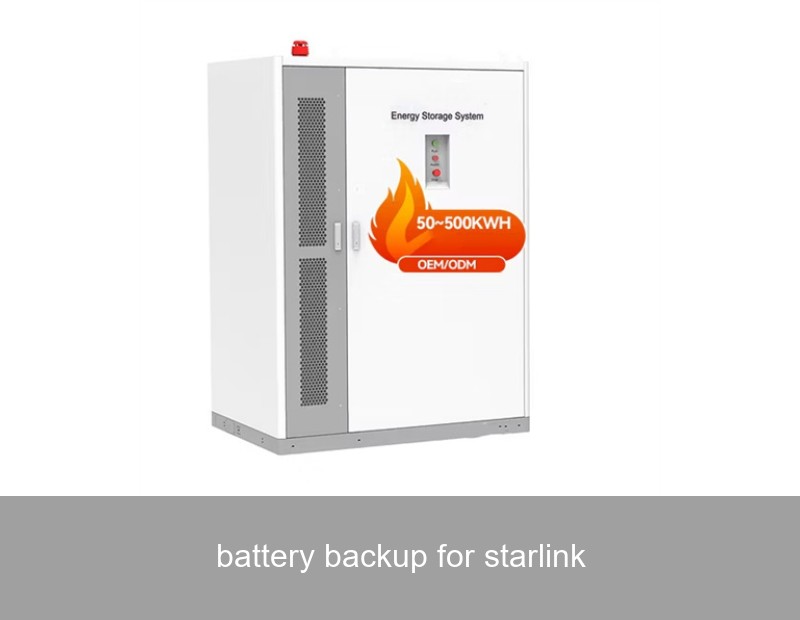
Table of Contents
For homes and businesses in remote areas of Europe and the US, Starlink has been a game-changer, delivering high-speed internet where traditional providers can't reach. But have you ever considered what happens when the lights go out? That sleek satellite dish goes silent. This is where planning for a battery backup for Starlink transitions from an afterthought to an absolute necessity. As a product technology expert at Highjoule, I've seen how integrating robust energy storage with critical communications infrastructure transforms reliability. Let's explore why your Starlink system is vulnerable and how you can secure it with the right technology.
The Silent Problem: Why Starlink Needs Backup Power
It's an ironic twist: the very regions that benefit most from Starlink's satellite internet—rural homesteads, off-grid cabins, remote industrial sites—are often the most prone to power instability. Grid outages caused by storms, wildfires, or simple infrastructure fragility can last for hours or even days. When the power fails, your connection to the outside world vanishes. This isn't just about missing a streaming show; it's about losing security systems, emergency communication, remote work capabilities, and critical business operations. A dedicated battery backup for Starlink is your insurance policy against digital isolation.
Understanding Starlink's Power Appetite
To choose the right backup, you must first understand the load. Starlink's power consumption isn't static. It varies based on the model and activity.
| Starlink Model (Typical) | Average Operational Power | Peak/Surge Power (e.g., in snow melt mode) |
|---|---|---|
| Standard Residential (Gen 2/3) | 50-75 Watts | 150-200+ Watts |
| High Performance / Business | 110-150 Watts | 250-300+ Watts |
This data is crucial. Your backup system must handle the average continuous draw to determine runtime and the peak surge to ensure it can start and run the system under all conditions. For a standard unit expecting a 24-hour outage, you're looking at a energy need of roughly 1.8 kWh (75W * 24h). This is the foundation of your battery backup for Starlink calculation.

Starlink brings connectivity to remote locations, but its power supply remains a terrestrial challenge.
Choosing the Right Battery Backup Solution
Not all battery backups are created equal. For a critical application like this, you need reliability, efficiency, and intelligence.
- Lead-Acid (Inverter/Charger Combo): A traditional, lower upfront-cost option. However, they are bulky, have a shorter lifespan (300-500 cycles), require maintenance, and suffer from slower recharge times. Suitable for occasional, short outages.
- Lithium-Ion Power Stations (All-in-One): Portable and user-friendly, these are popular for casual use. Their capacity is often limited (0.5-2 kWh), and they may not be designed for 24/7, multi-year duty cycles or easy expansion.
- Modular Lithium-Ion Battery Energy Storage Systems (BESS): This is the professional-grade solution. Systems like those developed by Highjoule use Lithium Iron Phosphate (LiFePO4) chemistry, known for its safety, longevity (6000+ cycles), and stable performance. They are scalable, can be integrated with solar, and managed via smart software.
For a permanent, reliable battery backup for Starlink, a modular BESS is increasingly the recommended choice for homeowners and businesses seeking a "set it and forget it" solution.
A Real-World Case Study: Off-Grid Research in Norway
Consider a meteorological research station in the remote mountains of Norway. Their operation depended on Starlink for transmitting large volumes of environmental data. Grid power was non-existent, and their aging generator was unreliable and fuel-intensive. During winter storms, communication blackouts were common.
Solution & Data: They deployed a 5 kWh Highjoule residential BESS paired with a 3 kW solar array. The system was configured to prioritize the Starlink router and dish (averaging 80W).
- Result: The station achieved 99.99% communication uptime over the following year.
- Data Point: The battery system seamlessly handled the Starlink's peak draw of 180W during heavy snowfalls, activating snow melt without a hiccup.
- Added Benefit: Solar integration reduced generator runtime by over 70%, cutting fuel costs and emissions. The system's remote monitoring allowed them to check battery status and Starlink connectivity from their main office in Oslo.
This case underscores that a well-designed battery backup for Starlink is more than a battery; it's an integrated energy ecosystem.

A modern, modular BESS provides clean, scalable, and intelligent backup power.
The Highjoule Advantage: Smart Power for Smart Satellites
At Highjoule, we've been engineering advanced energy storage since 2005. We understand that a battery backup for Starlink isn't a generic product—it's a tailored component of your energy resilience strategy. Our systems are designed to meet this challenge head-on.
Our Residential Energy Hub (REH) Series is particularly well-suited for this application. Its LiFePO4 battery modules are scalable from 5 kWh to over 30 kWh, ensuring you can size your system for a 12-hour or a 3-day outage. The integrated inverter/charger features pure sine wave output, which is gentle on sensitive electronics like Starlink's power supply. More importantly, our Energy Management System (EMS) can be configured to prioritize critical loads—you can designate your Starlink router and dish as "must-run" devices, guaranteeing they remain on even if the system needs to shed other, less critical loads to conserve energy.
Furthermore, Highjoule systems are built for integration. Pairing your REH with solar panels creates a truly sustainable microgrid. During an outage, solar can recharge the batteries and power your Starlink indefinitely, turning your communication link into a self-sustaining asset. For commercial and microgrid applications, our larger-scale systems offer the same robust protection for essential telecoms infrastructure.
Your Implementation Guide
Ready to build your own failsafe system? Follow this logical ladder:
- Measure: Use a simple power meter to check your specific Starlink model's idle and peak wattage.
- Calculate: Decide on your desired backup duration (e.g., 24 hours). Multiply your Starlink's average wattage by hours needed. Add a 20-30% buffer for battery efficiency and aging. This is your minimum usable battery capacity (kWh).
- Select: Choose a battery system (like Highjoule's REH) that meets or exceeds this capacity and can handle the peak surge wattage. Ensure it has the correct AC outlets and voltage for your region (110V/120V for North America, 230V for Europe).
- Integrate: Plan the installation. The simplest method is to plug the Starlink power supply into a dedicated, backed-up outlet on the battery system. For whole-home backup, a licensed electrician should integrate the BESS with your main panel, creating a critical loads sub-panel that includes the Starlink circuit.
- Test & Monitor: Regularly simulate an outage to ensure seamless switchover. Use system monitoring apps (like Highjoule's JouleTrack) to keep an eye on battery health and remaining runtime.
For authoritative information on grid outage trends and resilience planning, you can refer to resources like the U.S. Energy Information Administration or the European Network of Transmission System Operators (ENTSO-E).
Your Starlink terminal is your window to the world. What steps will you take this week to ensure that window never gets boarded up by a power outage?
 Inquiry
 Online Chat