


Solar Water Pumps for Wells: The Ultimate Guide to Off-Grid Water Solutions
Imagine a reliable, clean water supply for your farm, home, or community, completely independent of the grid and rising electricity costs. That's the promise of solar water pumps for wells. For landowners, farmers, and project managers in regions like Southern Europe or the sunbelt of the USA, harnessing the sun to draw water isn't just an eco-friendly idea—it's becoming a cornerstone of practical, sustainable resource management. This guide will dive deep into how these systems work, their real-world benefits, and what you need to know to implement a solution that lasts.
Table of Contents
- What Are Solar-Powered Well Pumps?
- Key System Components: More Than Just Panels
- Why the Switch? Tangible Benefits Beyond "Going Green"
- Real-World Impact: A Case Study from Spain
- Choosing the Right System for Your Well
- The Highjoule Advantage: Intelligent Power for Critical Water Systems
- Looking Ahead: The Future of Solar Water Pumping
What Are Solar-Powered Well Pumps?
At their core, solar well pumps are systems that use photovoltaic (PV) panels to convert sunlight into electricity, which then powers a pump to lift water from a well or borehole. Unlike traditional AC pumps tied to the electrical grid, these systems often use efficient DC motors or variable-speed AC motors controlled by solar power. They can be configured as surface pumps for shallow wells or, more commonly, as submersible pumps for deep wells, delivering water directly to storage tanks, irrigation systems, or livestock troughs.

Image Source: Wikimedia Commons, Creative Commons
Key System Components: More Than Just Panels
A robust solar pumping setup is an integrated system. Understanding each part is crucial for reliability:
- Solar Photovoltaic (PV) Array: The engine. Its size (in watts) determines the available power.
- Solar Pump Controller/Inverter: The brain. It regulates power, protects the pump, and often includes MPPT (Maximum Power Point Tracking) to optimize energy harvest from the panels.
- Water Pump (Submersible or Surface): The heart. Designed to run on DC or variable-frequency AC from solar input.
- Water Storage Tank: The buffer. Essential for storing water during sunny hours for use at night or on cloudy days, eliminating the need for costly batteries.
- Supporting Structure & Wiring: The skeleton. Proper mounting and correct cable sizing minimize energy losses.
The Critical Role of Energy Storage & Management
While many basic systems run pump-to-sun, advanced operations require consistency. This is where modern energy storage and management come in. Integrating a small battery buffer or a smart hybrid inverter can ensure pump operation during brief cloud cover or early morning/late evening water needs. Companies like Highjoule specialize in this intelligent layer. Their commercial and industrial energy storage systems can be configured to prioritize solar for critical water pumping infrastructure, ensuring 24/7 operational resilience even for larger agricultural or community wells.
Why the Switch? Tangible Benefits Beyond "Going Green"
The shift to solar for well water is driven by compelling, hard-number advantages:
| Benefit | Explanation | Impact |
|---|---|---|
| Zero Fuel & Low Operating Costs | After the initial investment, sunlight is free. No diesel costs, no grid electricity bills. | Rapid ROI, especially in remote areas; immunity to energy price volatility. |
| High Reliability & Low Maintenance | Fewer moving parts than diesel gensets. No fuel contamination, fewer mechanical issues. | Reduced downtime, lower long-term service costs, ideal for hard-to-reach locations. |
| Environmental Sustainability | Zero direct emissions, no noise pollution, and minimal ecosystem disturbance. | Meets ESG goals, preserves local air/water quality, and is often eligible for green grants. |
| Energy Independence & Security | Decouples water access from grid failures or fuel supply chain disruptions. | Critical for disaster resilience and food security in farming operations. |
Real-World Impact: A Case Study from Spain
Let's move from theory to practice. A 50-hectare almond farm in Andalusia, Spain, faced steep irrigation costs and an unreliable grid connection at its main well, which was 120 meters deep. In 2022, they installed a 15kW solar PV array directly coupled to a new submersible pump via a sophisticated solar pump controller.
- Data Point: The system delivers an average of 50,000 liters per day during peak summer months.
- Result: Annual diesel savings of €8,500 were achieved, projecting a payback period of under 4 years. Furthermore, by adding a modular Highjoule battery storage unit, the farm can now run the pump for 2-3 hours after sunset to utilize cooler, lower-evaporation watering periods, increasing irrigation efficiency by an estimated 15%.
This case highlights the synergy between direct solar pumping and supplemental storage for maximizing utility. You can explore more on the economics of solar for agriculture from the International Renewable Energy Agency (IRENA).
Choosing the Right System for Your Well
Selecting a system isn't one-size-fits-all. Key considerations form a decision ladder:
- Water Needs & Well Characteristics: Calculate daily water volume (in liters/gallons) and assess well depth and static water level. This determines pump horsepower and solar array size.
- Solar Resource: Understand your location's peak sun hours. Southern Europe and the US Southwest are ideal, but efficient systems work in less sunny climates with proper sizing.
- System Configuration: Will you pump directly to an irrigation system or to a storage tank? Tank-based systems are simpler and more forgiving.
- Future-Proofing with Hybrid Power: For critical, year-round water supply, consider a system that can integrate with a generator or the grid as a backup. This is where Highjoule's expertise in intelligent microgrid controllers shines, seamlessly blending solar, battery, and backup power to keep your water flowing under any condition.
The Highjoule Advantage: Intelligent Power for Critical Water Systems
While the pump and panels are vital, the system's intelligence and reliability often hinge on the power management platform. This is Highjoule's core competency. For large-scale agricultural, industrial, or community well projects, a simple pump controller may not suffice.
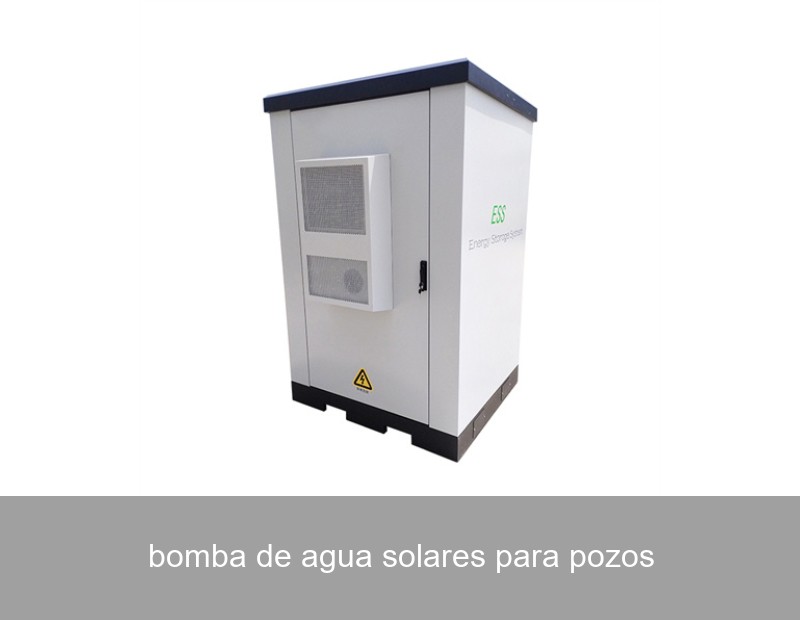
Highjoule provides integrated energy storage and management solutions that turn a solar pump into a resilient water infrastructure asset. Their battery systems (like the C&I ESS series) can be paired with solar pumping setups to:
- Ensure pump start-up and operation during low-light conditions.
- Time-shift solar energy for optimal watering schedules, reducing evaporation.
- Provide seamless backup power, ensuring water access during grid outages or maintenance periods.
- Offer remote monitoring and control, giving operators peace of mind and data-driven insights into both water output and energy performance.

Image Source: Unsplash
In essence, Highjoule doesn't just provide batteries; they provide water security through reliable power. Their solutions are designed for the long haul, built with robust lithium-iron-phosphate (LFP) battery chemistry known for its safety and long cycle life—a perfect match for the 20+ year lifespan of a quality solar array.
Looking Ahead: The Future of Solar Water Pumping
The technology is advancing rapidly. We're seeing more efficient pumps, smarter controllers with IoT connectivity for predictive maintenance, and perhaps most importantly, more cost-effective and durable battery storage. The convergence of these technologies, supported by experts in the energy storage field like Highjoule, is making off-grid and hybrid water solutions not just viable, but superior in terms of total cost of ownership and operational control.
For further reading on pump efficiency standards, a great resource is the U.S. Department of Energy's page on pump systems.
Your Next Step
If you're evaluating a solar water pump for your well, what is the single biggest challenge you anticipate—is it the initial capital cost, sizing the system correctly, or ensuring reliability during unpredictable weather? Understanding this hurdle is the first step toward designing a solution that overcomes it.
 Inquiry
 Online Chat