


Battery Energy Storage System China: A Global Powerhouse Shaping Your Energy Future
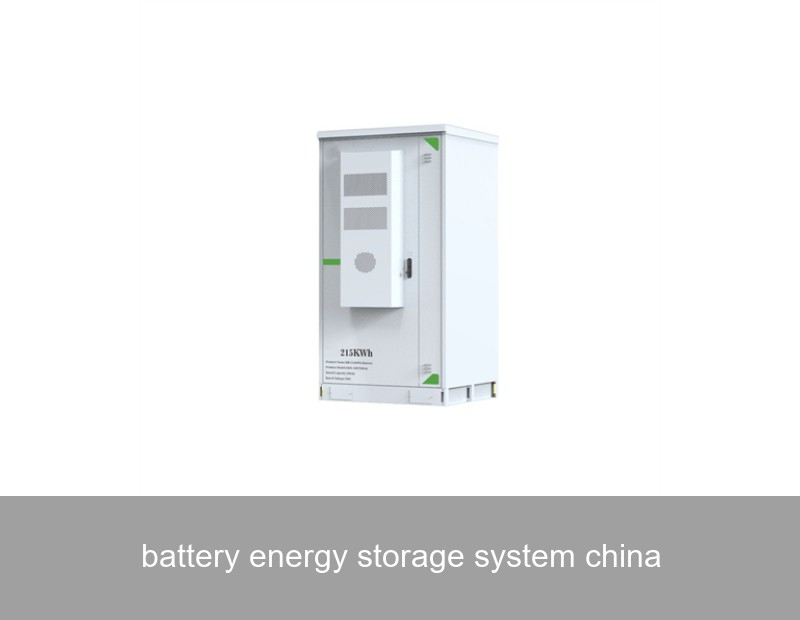
When you think of advanced technology manufacturing today, one country inevitably comes to mind: China. This is especially true in the clean energy sector, where Battery Energy Storage System China manufacturing has evolved from a regional supplier to a global innovation and production leader. But what does this dominance mean for businesses and homeowners in Europe and the United States looking for reliable, sustainable power? It represents access to cutting-edge technology, scalable production, and increasingly sophisticated solutions that are accelerating the global energy transition. In this article, we'll explore the rise of China's BESS ecosystem, separate fact from fiction, and show how global leaders like Highjoule integrate this world-class manufacturing with intelligent software and deep engineering expertise to deliver tailored solutions for Western markets.
Table of Contents
- The Phenomenon: China's Central Role in the Global BESS Supply Chain
- By the Numbers: Data Driving the Dominance
- Case Study: A German Industrial Park's Journey to Resilience
- Beyond the Cell: The Critical Role of System Intelligence
- The Highjoule Approach: Global Expertise, Localized Solutions
- Navigating the Future Energy Landscape
The Phenomenon: China's Central Role in the Global BESS Supply Chain
Let's be clear: the rise of Battery Energy Storage System China production isn't an accident. It's the result of over a decade of strategic investment, massive R&D expenditure, and the creation of a complete, vertically integrated supply chain—from raw material processing to finished battery packs. While Western markets focus on design and software innovation, China has built unprecedented manufacturing scale. This has dramatically reduced the global cost of lithium-ion batteries, the heart of any BESS, by over 80% in the last decade. For end-users, this translates to more accessible upfront costs for solar-plus-storage projects and faster ROI. However, a battery cell is not a complete solution. The real value for a commercial facility or a microgrid lies in how these cells are integrated, managed, and optimized for specific applications—which is where specialized system providers like Highjoule add decisive value.
By the Numbers: Data Driving the Dominance
The statistics behind China's battery industry are staggering and help explain the market dynamics. According to BloombergNEF, China is home to over 70% of the world's lithium-ion battery manufacturing capacity. Furthermore, Chinese companies supply a significant portion of the key components, like anodes, cathodes, and electrolytes. This scale provides a formidable advantage.
| Metric | Data Point | Global Impact |
|---|---|---|
| Battery Manufacturing Capacity Share | >70% | Defines global supply availability and baseline pricing. |
| Average Cost of Lithium-ion Battery Pack (2023) | $139/kWh (China); ~20% higher in US/EU | Directly influences the Levelized Cost of Storage (LCOS) for projects worldwide. |
| Projected Global BESS Market Growth (2023-2030) | CAGR ~27% | Chinese manufacturing scale is crucial to meeting this explosive demand. |
Source: Data synthesized from BloombergNEF and industry reports.
For a company like Highjoule, this manufacturing landscape allows us to source high-quality, rigorously tested battery cells at scale. But our engineering begins where the cell ends. We focus on the Battery Energy Storage System as a holistic unit: thermal management, safety protocols, power conversion (PCS), and, most importantly, the proprietary energy management software (EMS) that turns stored energy into intelligent, revenue-generating or cost-saving assets.

Image Source: Unsplash (Representative image of a modern BESS installation)
Case Study: A German Industrial Park's Journey to Resilience
Let's move from global data to a local example. Consider a mid-sized industrial park in Bavaria, Germany. Facing volatile energy prices, strict sustainability targets, and occasional grid congestion, the park's management needed a solution to stabilize costs and ensure operational continuity.
The Challenge: Reduce peak demand charges, integrate existing rooftop solar, and provide backup power for critical processes.
The Highjoule Solution: We deployed a 1.2 MWh containerized battery energy storage system, utilizing high-efficiency lithium iron phosphate (LFP) cells sourced from our trusted partners in China. The core of the solution, however, was our AdaptiveGrid AI software platform. It doesn't just store energy; it learns the park's load patterns, predicts solar generation, and automatically decides when to charge, discharge, or hold—based on real-time electricity prices and grid signals.
The Results (12-month period):
- 28% reduction in peak demand charges.
- Increased on-site consumption of solar power from 35% to over 70%.
- Provision of grid services, generating additional revenue through frequency regulation.
- Projected payback period of under 5 years.
This case highlights that the origin of the battery cell is one factor, but the system's intelligence and integration capabilities are what deliver tangible financial and operational results.
Beyond the Cell: The Critical Role of System Intelligence
Purchasing a BESS is not like buying a commodity. The hardware—including the battery modules, inverters, and safety systems—must be meticulously engineered to work in harmony. The software is the brain. A system without advanced, application-specific software is like a powerful computer without an operating system.
Highjoule's systems are designed with this principle at their core. Our Energy Management System (EMS) offers multiple modes of operation:
- Peak Shaving: Automatically discharges the battery during periods of high, expensive demand.
- Solar Self-Consumption Optimization: Maximizes the use of your own solar generation.
- Microgrid & Backup Operation: Provides seamless islanding and backup power during grid outages.
- Grid Services Mode: Allows the system to participate in utility programs for additional revenue.
This flexibility ensures that whether you're a hospital in California needing resilience, a factory in Italy aiming for cost control, or a community microgrid in Scandinavia, the system adapts to your priorities.
The Highjoule Approach: Global Expertise, Localized Solutions
Founded in 2005, Highjoule has grown into a global leader by bridging the gap between world-class manufacturing and localized, customer-centric application. We leverage the scale and technological advancement of the Battery Energy Storage System China supply chain for hardware, but we control the entire system design, integration, and software stack.
Our product portfolio is built to serve diverse needs:
- H-Joule Cube (C&I): A modular, containerized solution for commercial and industrial applications, scalable from 500 kWh to multi-MWh projects.
- H-Joule Home: An integrated AC-coupled system for residential users, designed for easy installation and seamless integration with home solar.
- H-Joule Microgrid Controller: The central intelligence for hybrid systems combining solar, storage, and backup generators.
Our teams in Europe and North America provide full lifecycle support—from initial consultancy and financial modeling to installation, commissioning, and remote monitoring. We ensure your storage asset performs optimally for its entire lifespan, delivering on the promise of sustainability, resilience, and economic savings.
Image Source: Unsplash (Representative image of BESS monitoring)
Navigating the Future Energy Landscape
The energy transition is accelerating, and battery storage is its cornerstone. The evolution of Battery Energy Storage System China manufacturing ensures the hardware is available and increasingly affordable. The next frontier is in digital intelligence, grid integration, and creating truly adaptive energy assets. As regulations evolve and markets for grid services mature, the software that controls your BESS will become its most valuable component.
So, the question for any business or community leader is no longer just "Should we get a battery?" but rather, "How do we build an intelligent energy ecosystem that not only saves costs today but also adapts to the revenue opportunities and grid demands of tomorrow?" What is the primary challenge holding your organization back from exploring a tailored energy storage solution?
 Inquiry
 Online Chat