


Understanding the 11kVA Solar System Price: A Comprehensive Guide for Homeowners and Businesses
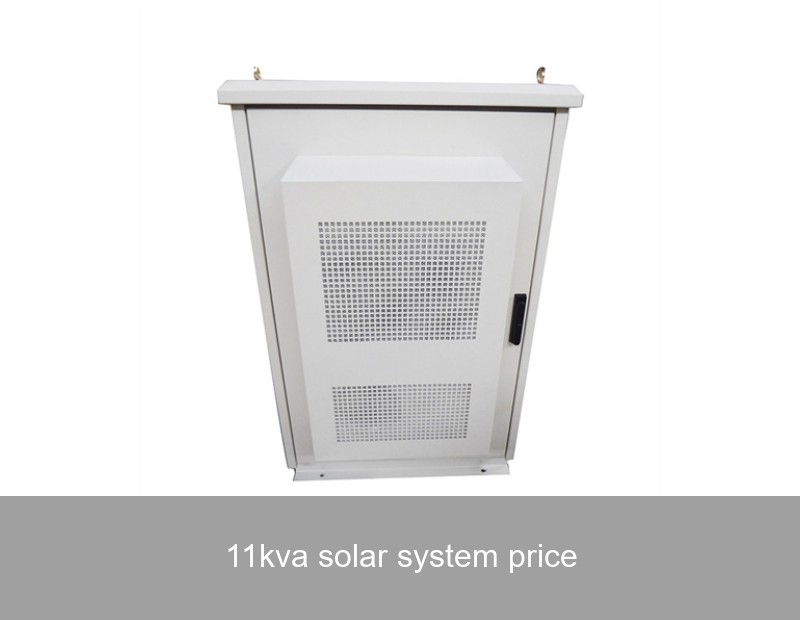
So, you're considering an 11kVA solar system. It's a popular choice for larger homes, small to medium businesses, and farms looking to slash energy bills and gain energy independence. But the first question that comes to mind is almost always: "What's the real price tag?" The truth is, the 11kVA solar system price isn't a single number. It's a puzzle where pieces like component quality, installation complexity, battery storage, and local incentives all fit together. As Europe and America accelerate their shift to renewables, understanding this investment is more crucial than ever. Let's demystify the costs and explore how to maximize the value of your solar journey.
The 11kVA Solar System Price Breakdown: More Than Just Panels
An 11kW (kilowatt) or 11kVA (kilo-volt-ampere) system is a significant power generator, typically requiring 30-40 solar panels. In 2024, the average gross price for an 11kW solar system in markets like the U.S. or Germany can range from $20,000 to $35,000+ before incentives. This wide range exists because the system's price is built from several core components:
- Solar Panels: The heart of the system. Premium monocrystalline panels (e.g., 400W each) command a higher price but offer better efficiency and longevity.
- Inverter(s): The brain. For an 11kVA system, you might use a single powerful inverter or multiple microinverters. This converts DC from the panels to usable AC for your home.
- Mounting & Racking: The skeleton. This secures panels to your roof or ground, and costs vary with material and roof type.
- Balance of System (BOS): Wiring, conduits, switches, and safety devices.
- Installation Labor: Professional design, permitting, and installation by certified technicians.
However, this is only half the story. The modern energy landscape demands resilience. This is where adding battery storage, like the solutions pioneered by Highjoule, fundamentally changes the equation—and the value proposition.
Key Factors Influencing Your Final Cost
Why does your neighbor's quote differ from yours? Several localized factors are at play.
| Factor | Impact on 11kVA System Price | Consideration |
|---|---|---|
| Geographic Location | High | Labor rates, permit fees, and even sunlight hours (affecting panel count needed) vary greatly between, say, California and North Carolina, or Spain and Norway. |
| Roof Complexity | Medium to High | A simple, new asphalt roof is straightforward. Tile roofs, multiple angles, or steep pitches increase labor time and cost. |
| Component Tier | High | Budget, standard, and premium panel/inverter brands offer different performance warranties and efficiency, impacting long-term yield. |
| Grid Connection & Meter | Medium | Some utilities require specific, more expensive interconnection equipment or meter upgrades. |
It's essential to get multiple detailed quotes that itemize these costs. A lower upfront price might use subpar components that degrade faster, hurting your long-term savings.
Why Battery Storage is No Longer Optional
Here's a critical insight: a solar-only system exports excess power to the grid when you don't need it, often for a minimal feed-in tariff. But when the sun sets or the grid fails, you're back buying expensive power or left in the dark. This is the inherent limitation of a traditional setup.
Integrating a battery energy storage system (BESS) transforms your 11kVA system. It stores your surplus solar energy for use at night, during peak rate periods, or during outages. While this increases the initial 11kVA solar system price, it dramatically boosts your self-consumption, resilience, and independence from utility rate volatility.

Image: A modern home solar installation with integrated battery storage. Source: Unsplash
This is where Highjoule excels. We don't just sell batteries; we provide intelligent, integrated storage solutions. Our HES Series (Home Energy System) is designed to seamlessly pair with systems like an 11kVA solar array. It features advanced lithium iron phosphate (LiFePO4) batteries for safety and longevity, coupled with an AI-driven energy management system. This software learns your consumption patterns, automatically deciding when to store solar energy, power your home, or export to the grid for maximum financial return.
A Real-World Case Study: The German Bakery
Let's look at a concrete example from Bavaria, Germany. A family-run bakery with high daytime energy consumption for ovens and cooling installed an 11.2kWp solar system. Initially, they faced a common problem: their solar peak production in the mid-afternoon didn't fully align with their morning and evening baking cycles, forcing them to buy expensive grid power.
They partnered with a Highjoule-certified installer to integrate a Highjoule HES-20 battery system (20 kWh capacity). The results after one year:
- Self-consumption rate increased from 35% to over 85%. They used most of the solar energy they produced.
- Grid electricity purchases reduced by an additional 65% beyond what solar alone achieved.
- The system provided uninterrupted power during two short grid outages, preventing spoilage of refrigerated goods.
- Projected payback period for the combined system (solar + storage) is under 8 years, thanks to Germany's high retail electricity prices and intelligent energy arbitrage.
This case illustrates that the true metric isn't just the installed price, but the cost of energy independence over 20+ years.
The Highjoule Solution: Intelligent Energy Management
At Highjoule, we believe storage is the cornerstone of a modern energy system. For homeowners and businesses considering an 11kVA system, our approach ensures you get the most from your investment.
Our HES Series is modular, allowing you to start with a capacity that fits your budget (e.g., 10 kWh) and expand later. For commercial or microgrid applications, our C&I ESS (Commercial & Industrial Energy Storage System) offers scalable, containerized solutions that can manage demand charges and provide backup for critical operations.

Image: A technician monitoring a commercial-scale battery storage system. Source: Unsplash
What sets us apart is our Grid-Interactive capability. In regions with time-of-use rates or virtual power plant (VPP) programs, our systems can be configured to dispatch stored energy to the grid when prices are highest, creating a new revenue stream for you. This intelligent layer actively works to optimize your 11kVA solar system price payback.
Calculating ROI and Navigating Incentives
The financial picture is brightening with significant incentives. In the U.S., the federal Investment Tax Credit (ITC) now covers 30% of the cost of a solar and paired storage system. Many states offer additional rebates. In Europe, countries like Italy, Poland, and Belgium offer attractive subsidies or VAT reductions for storage-coupled systems.
Let's model a simplified ROI: An 11kVA solar + 15kWh Highjoule storage system in California might have a gross cost of $45,000. After the 30% ITC ($13,500), net cost is $31,500. If the system saves $3,500 annually on electricity bills and earns $500 from grid services, the simple payback period is roughly 8-9 years. Over a 25-year panel life, that's decades of nearly free, clean power.
Your Next Step Towards Energy Independence
The conversation about solar has evolved. It's no longer just about the cost per watt of panels. It's about building a resilient, intelligent energy asset for your property. The 11kVA solar system price with integrated storage represents a strategic investment in long-term price stability and operational security.
What unique energy consumption pattern does your home or business have, and how could an intelligent system like Highjoule's be tailored to not just meet, but anticipate and optimize for those needs?
 Inquiry
 Online Chat