


Mastering Battery Energy Storage System Design with Simulink: A Guide for Modern Engineers
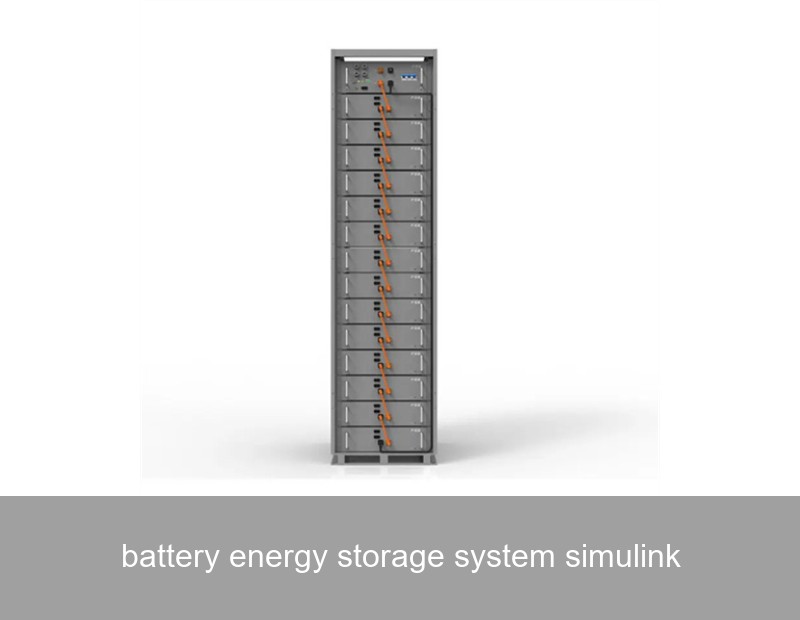
Have you ever wondered how the most advanced battery energy storage systems (BESS) are designed to be so efficient, reliable, and safe? In the world of renewable energy integration and grid modernization, the answer increasingly lies in sophisticated digital modeling. For engineers and project developers across Europe and the US, mastering battery energy storage system Simulink modeling has become a critical skill. It's the virtual proving ground where complex electro-chemical, thermal, and control systems interact long before physical construction begins. This process is fundamental to what we do at Highjoule, where our product development is driven by deep simulation expertise to deliver cutting-edge, real-world storage solutions.
Table of Contents
- Why Simulink Modeling is Non-Negotiable for Modern BESS
- Deconstructing a BESS Simulink Model: Core Components
- From Simulation to Reality: A California Microgrid Case Study
- The Highjoule Approach: Where Simulation Meets Superior Hardware
- Future Trends: AI, Digital Twins, and Beyond
- Your Next Step in Advanced BESS Design
Why Simulink Modeling is Non-Negotiable for Modern BESS
The transition to variable renewable energy sources like solar and wind has made grid stability a paramount concern. A battery energy storage system is no longer a simple battery pack; it's a complex cyber-physical system. Designing one without accurate simulation is like flying a new aircraft design without wind tunnel tests—risky and costly. Simulink, from MathWorks, provides a model-based environment that allows engineers to simulate multi-domain systems, integrating electrical circuit models with control logic and thermal dynamics. This is crucial for predicting performance, identifying failure points, and optimizing for longevity and return on investment. For instance, a poorly managed thermal profile can reduce a battery's lifespan by over 50%. Simulation helps prevent such costly oversights.

Image Source: MathWorks - Example of a battery system model in Simulink environment.
Deconstructing a BESS Simulink Model: Core Components
A robust battery energy storage system Simulink model is built like a digital twin of the physical system. It typically integrates several key blocks:
- Battery Cell Model: Often based on an Equivalent Circuit Model (ECM) or a more detailed Electrochemical Model. This block simulates voltage response, state-of-charge (SOC), and state-of-health (SOH).
- Battery Management System (BMS) Algorithm: The brain of the operation. This includes logic for cell balancing, overcharge/over-discharge protection, and thermal management. Simulink Stateflow is excellent for modeling these complex state-based logics.
- Power Conversion System (PCS) Model: This includes the bi-directional inverter and its control systems, crucial for managing AC/DC conversion and grid-forming/grid-following functions.
- Thermal Management System Model: Simulates heat generation and dissipation, often coupled with the battery model. This is vital for safety and performance, especially in densely packed containerized systems.
- Grid/ Load Interface: Models the external grid conditions or the specific site load profile to test the BESS under real operational scenarios.
By simulating the interaction of these components, engineers can answer critical questions: How will the system respond to a sudden grid frequency dip? What is the optimal cooling strategy during a peak-shaving event on a hot day? This virtual validation de-risks projects significantly.
From Simulation to Reality: A California Microgrid Case Study
Let's look at a tangible example from the US market. A community in Northern California aimed to create a resilient microgrid powered by a 2 MW solar array and a 4 MWh battery energy storage system. The challenge was to ensure the system could "island" (operate independently) during public safety power shutoffs, seamlessly powering critical loads for over 8 hours.
The engineering team used Simulink to model the entire microgrid, with a focus on the BESS's grid-forming capabilities and the transition logic between grid-tied and islanded modes. The simulation revealed a potential instability during transition due to the sudden load pickup sequence. By iterating the control algorithms in the virtual environment, they optimized the transition controller, ensuring a sub-100ms seamless transfer.
The Result: The real-world system, built and commissioned, performed flawlessly during its first three wildfire-season outages. The simulation data predicted a 92% round-trip efficiency for the BESS, and field measurements confirmed 91.7%. This close alignment between model and reality saved an estimated $200,000 in potential redesign costs and downtime. You can read more about the importance of microgrid modeling in this NREL report on advanced microgrid controls.
The Highjoule Approach: Where Simulation Meets Superior Hardware
At Highjoule, we don't just use simulation; we are driven by it. Our philosophy is that a superior physical product begins with exhaustive digital validation. Our engineering teams employ battery energy storage system Simulink modeling as a core part of our development cycle for products like our HJ Cube commercial & industrial storage system and our HJ Matrix utility-scale solution.
For example, our proprietary adaptive BMS algorithms are first born and refined in Simulink models, tested against thousands of virtual scenarios—from extreme temperature cycles to irregular grid frequency events. This allows us to pre-certify performance and safety. When we manufacture an HJ Cube, its digital twin already has millions of simulated operational hours behind it. This translates to tangible customer benefits:
- Predictable Performance: Our published efficiency and degradation curves are based on simulation-validated physics, not just lab samples.
- Faster Integration: We provide accurate model parameters to our clients' engineers, enabling them to seamlessly integrate Highjoule BESS into their own plant or microgrid simulations.
- Enhanced Safety: Thermal runaway propagation and fault scenarios are simulated to design in preventative containment from the cell to the container level.
Our services extend beyond hardware. We offer Highjoule Design Support, where our simulation experts collaborate with client teams to model specific project applications, ensuring optimal sizing and control strategy before installation.

Image Source: Unsplash - Representative image of a technician and a BESS unit.
Future Trends: AI, Digital Twins, and Beyond
The frontier of battery energy storage system Simulink modeling is integrating with artificial intelligence and moving towards live digital twins. Imagine a Simulink model that doesn't just design the system but continues to learn from it in operation. AI can be used within Simulink to create self-tuning BMS algorithms that adapt to unique cell aging characteristics. Furthermore, the initial design model can evolve into a live digital twin fed by real-time operational data from a deployed Highjoule system, enabling predictive maintenance and performance optimization. Resources like the IEA's Energy Storage Outlook highlight the critical role of innovation in software and controls for the future of storage.
Your Next Step in Advanced BESS Design
The complexity of modern energy systems demands a simulation-first approach. Whether you are an engineer designing a groundbreaking storage project, a developer looking to de-risk your investment, or a utility planner ensuring grid stability, the question is no longer *whether* to model, but *how well* you can model. How will you leverage the power of detailed simulation, not just to meet specifications, but to unlock the full potential and value of your next battery energy storage system project?
We invite you to explore how Highjoule's simulation-validated technology and expertise can form the foundation of your project's success.
 Inquiry
 Online Chat