


Why a Battery for Solar Power Plant is the Key to Unlocking 24/7 Renewable Energy
Imagine a vast solar power plant, thousands of panels glinting under the midday sun, generating clean megawatts. Now, imagine that same plant at dusk: silent, dormant, waiting for dawn. This intermittency is the fundamental challenge of solar energy. The sun, while abundant, doesn't align with our peak electricity demand cycles. This is where integrating a battery for solar power plant transitions from an innovative idea to an operational and economic necessity. It's the crucial component that transforms solar from a variable source into a reliable, dispatchable asset, capable of powering our homes and industries day and night.
The Solar Dilemma: Sunlight Isn't 24/7
The phenomenon is clear. Solar generation follows a predictable yet inconvenient curve, peaking at noon and falling to zero at night. Grid demand, however, often peaks in the early evening when solar output is fading—a mismatch known as the "duck curve." This creates grid instability, curtailment of excess solar energy, and missed economic opportunities. According to the U.S. Department of Energy's Solar Futures Study, achieving high penetration of solar power is deeply dependent on the simultaneous expansion of energy storage systems to manage this variability.

Image: A utility-scale solar plant. To maximize its value, it needs a robust battery storage system. (Source: Unsplash)
The Indispensable Role of a Battery for Solar Power Plant
So, what exactly does a battery storage system do at a solar facility? Its functions are multifaceted, creating value at every step:
- Energy Time-Shifting (Arbitrage): Store cheap, abundant solar energy produced at noon and discharge it during high-price evening peaks.
- Grid Frequency Regulation: Provide near-instantaneous injections or absorptions of power to maintain the grid's stable frequency (60 Hz in the US, 50 Hz in Europe).
- Capacity Firming: Smooth out the solar output, ensuring a more predictable and reliable power delivery to the grid, even when clouds pass.
- Black Start Capability: Help restart the grid in the event of a total blackout, a critical service for grid resilience.
Beyond the Basics: Key Considerations for Solar Plant Batteries
Not all batteries are created equal for this demanding application. Selecting the right battery for solar power plant involves a deep understanding of technical and economic parameters.
Duration & Power: The Core Equation
Think of a battery as a reservoir. "Power" (measured in MW) is the size of the pipe—how much electricity can flow in or out at once. "Energy" (measured in MWh) is the size of the reservoir—how much total electricity it can hold. A solar plant might need a 100 MW / 400 MWh system, meaning it can discharge at 100 MW for 4 hours. The required duration (2hr, 4hr, 6hr+) depends on local grid needs and revenue opportunities.
Battery Chemistry: The Heart of the System
The choice of chemistry dictates performance, lifespan, and safety.
| Chemistry | Key Advantages | Typical Use-Case in Solar Plants |
|---|---|---|
| Lithium Iron Phosphate (LFP) | High safety, long cycle life (>6000 cycles), stable, cobalt-free. | The dominant choice for new installations, ideal for daily cycling for arbitrage and frequency regulation. |
| Lithium NMC | Higher energy density. | Use is becoming more specialized, often where space is a major constraint. |
| Flow Batteries | Decoupled power/energy, very long duration potential, non-flammable electrolyte. | Emerging for long-duration storage (8+ hours) applications adjacent to very large solar farms. |
The Intelligence Layer: BMS and Software
The hardware is only half the story. A sophisticated Battery Management System (BMS) and plant-level energy management software (EMS) are the brains. They optimize every charge-discharge cycle for maximum lifespan and revenue, deciding in milliseconds whether to sell power, provide a grid service, or hold capacity. This is where Highjoule truly excels. Our HPS (Highjoule PowerStack) utility-scale systems are built on LFP chemistry for maximum safety and longevity, and are governed by our Athena AI GridOS™ platform. This software doesn't just operate the battery; it continuously analyzes market prices, grid signals, and weather forecasts to make autonomous, profit-maximizing decisions.
Case Study: Grid Stability in Germany's Transition
Let's look at a real-world example from Europe. Germany's Energiewende (energy transition) has led to a high penetration of wind and solar, sometimes causing grid congestion in the northern regions. A 50 MW solar farm in Brandenburg, coupled with a 60 MWh Highjoule HPS battery system, was deployed not just for energy shifting, but primarily for primary frequency regulation (FCR) and grid congestion management.
- Challenge: Stabilize the local grid against rapid fluctuations from renewable sources and avoid costly grid infrastructure upgrades.
- Solution: The Highjoule system's sub-second response time allows it to bid into the FCR market, providing a critical grid service. Simultaneously, it stores excess local solar generation that would otherwise be curtailed.
- Result: The project generates dual revenue streams: from the frequency regulation market and from optimized energy arbitrage. It provides the equivalent grid stability service of a small traditional power plant, but with zero emissions. Data from the first year of operation showed a 99.8% availability rate and a significant reduction in local solar curtailment incidents. This aligns with findings from Fraunhofer ISE, which highlights the economic and technical necessity of storage for Germany's renewable targets.

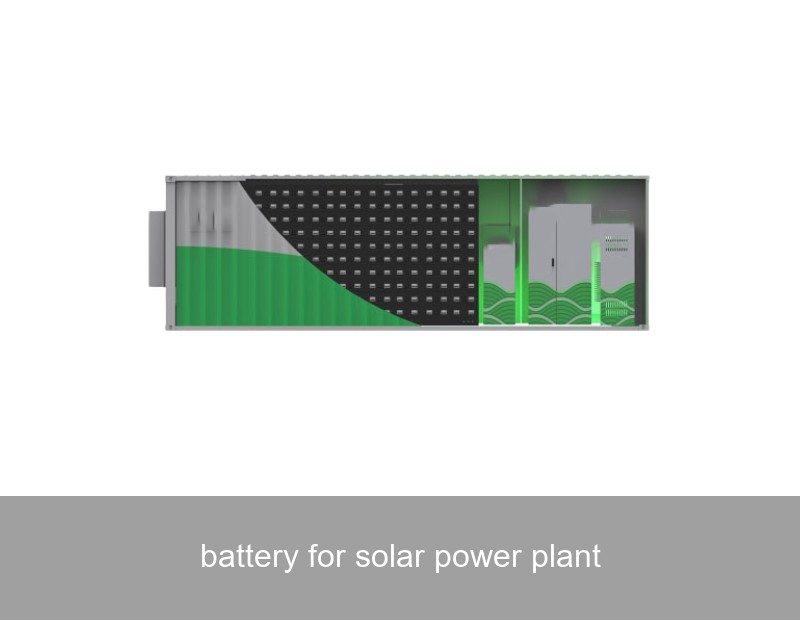
Image: Inside a utility-scale battery energy storage system (BESS) container. (Source: Unsplash)
Highjoule's Tailored Solutions for Utility-Scale Solar
With nearly two decades of experience since 2005, Highjoule designs storage solutions that are more than just an add-on; they are an integrated, value-maximizing component of your solar asset. For solar plant developers and operators, we offer:
- End-to-End System Design & Integration: From feasibility studies and financial modeling to grid connection support, we ensure seamless integration of the battery for your solar power plant.
- The HPS Product Line: Our containerized, utility-grade systems are pre-assembled and tested for rapid deployment, featuring industry-leading LFP cells, liquid cooling for optimal thermal management, and a 20-year design life.
- Athena AI GridOS™ Platform: This proprietary software turns your solar-plus-storage plant into an intelligent, autonomous revenue generator, capable of stacking multiple value streams across energy and ancillary service markets.
- Long-Term Service Agreements: We provide peace of mind with comprehensive performance guarantees and remote monitoring, ensuring your asset delivers its projected ROI over its entire lifespan.
The Future Landscape of Solar-Plus-Storage
The trajectory is unmistakable. The International Energy Agency (IEA) reports massive growth in grid-scale battery storage, overwhelmingly paired with solar PV. As levelized costs continue to fall, the question for energy developers is shifting from "Should we add a battery?" to "What is the optimal size and strategy for our battery?" The future grid will be powered by hybrid renewable power plants, with intelligent storage at their core, providing not just clean energy, but predictable, firm, and flexible power.
Is your next solar project designed to capture its full potential in an evolving energy market, and what specific grid challenge in your region could a solar-plus-storage plant uniquely solve?
 Inquiry
 Online Chat