


The Battery Storage Cost Decline: From Luxury Asset to Grid Cornerstone
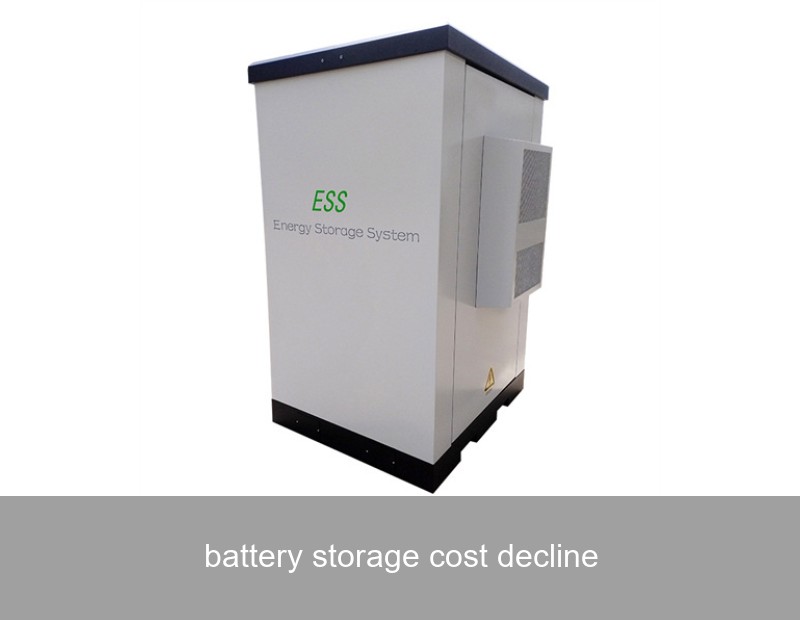
Imagine a technology that, just a decade ago, was considered a costly premium for the most ardent eco-pioneers. Today, it's rapidly becoming a standard calculation for homeowners, factory managers, and city planners alike. We're talking about battery energy storage systems (BESS), and the single most transformative force behind this shift is the relentless battery storage cost decline. This isn't just a minor price adjustment; it's a fundamental re-writing of the energy economics playbook, making resilient, self-sufficient, and sustainable power a reality for millions. But what's fueling this drop, and more importantly, what can you actually do with this new-found affordability? Let's unpack the phenomenon that's charging our energy future.
Data Driving the Decade: From Niche to Mainstream
The numbers tell a compelling story. According to BloombergNEF, the global benchmark price for lithium-ion battery packs plummeted from over $1,200 per kilowatt-hour (kWh) in 2010 to just $139 per kWh in 2023[1]. That's an 89% decrease in just 13 years. Think about that in terms of any other commodity or technology. This dramatic cost reduction is primarily attributed to a virtuous cycle of economies of scale, manufacturing innovations (like denser cell chemistry and streamlined production), and intense competition across the supply chain.
But here's a crucial insight: the upfront battery cost is only one part of the equation. The true metric of value is the levelized cost of storage (LCOS). LCOS accounts for the total cost of owning and operating the storage system over its lifetime, divided by the total energy it discharges. Thanks to longer lifespans (more cycles), higher efficiencies, and smarter software, LCOS is falling even faster than simple pack prices. This means each unit of stored electricity becomes cheaper to deliver, unlocking new use cases every year.

Image: Modern battery storage systems are designed for seamless integration. (Photo Source: Pexels)
A Real-World Case Study: Powering a German Mittelstand Factory
Let's move from global data to a local example. Consider a mid-sized automotive parts manufacturer in Bavaria, Germany. Their challenges are universal: volatile energy prices, a desire to use their extensive rooftop solar PV more effectively, and high grid demand charges.
- Phenomenon: Their solar panels produced excess energy at midday, which was sold to the grid at low feed-in tariffs. Yet, they had to buy expensive power from the grid during evening production peaks.
- Solution: In 2022, they installed a 500 kWh / 1000 kWh battery storage system integrated with their existing solar array.
- Data & Outcome: The system stores cheap midday solar and grid power, discharging it during peak hours. The result? A 40% reduction in monthly grid demand charges and an increase in on-site solar consumption from 35% to over 70%. The project's payback period, buoyed by the falling cost of storage hardware and intelligent energy management, was calculated at under 7 years—a figure that would have been unthinkable a decade prior.
This is the battery storage cost decline in action: transforming a capital expenditure into a strategic investment with a clear, accelerated ROI.
Beyond the Price Tag: The Ripple Effects of Affordability
The falling costs create positive ripple effects across the entire energy ecosystem:
| Area of Impact | Description |
|---|---|
| Renewables Integration | Cheap storage solves intermittency. It soaks up solar and wind surplus and releases it when needed, making high renewable penetration grids stable and reliable. |
| Commercial & Industrial (C&I) Resilience | Businesses can now cost-effectively mitigate outage risks, participate in demand response programs, and create predictable long-term energy budgets. |
| Energy Equity | As system costs fall, residential and community storage becomes accessible to a broader demographic, allowing more people to take control of their energy costs. |
Highjoule's Role: Delivering Value Beyond the Falling Cost Curve
At Highjoule, we've been at the forefront of this evolution since 2005. We understand that capitalizing on the battery storage cost decline isn't just about buying the cheapest cells; it's about maximizing the lifetime value of your entire energy asset. Our approach ensures you capture the full financial and operational benefits.
- Highjoule IntelliBESS Platform: Our flagship product for commercial and industrial applications. It pairs premium, long-life battery cells with our proprietary adaptive control software. The software doesn't just charge and discharge; it continuously learns your facility's load patterns, weather forecasts, and tariff structures to optimize every single kilowatt-hour for maximum savings. The falling hardware cost makes our advanced intelligence accessible to more businesses.
- Residential Harmony Series: Designed for homeowners, these sleek, safe systems seamlessly integrate with solar inverters. We focus on safety (with multi-layer protection), ease of use via a intuitive app, and scalability. As costs have fallen, we've been able to incorporate higher-density cells and more sophisticated grid-interaction features without increasing the price point for our customers.
- Microgrid Solutions: For communities or remote industrial sites, we design and deploy turnkey storage-centric microgrids. The improved economics of storage are the very foundation that makes these self-sufficient energy islands viable, replacing expensive and polluting diesel generators.
Our expertise lies in engineering the system—the thermal management, power conversion, safety protocols, and, most critically, the brain that controls it all. This is where the real value is captured long after the initial purchase.

Image: Intelligent control systems are key to maximizing storage value. (Photo Source: Pexels)
The Future Horizon: What Does "Cheap Enough" Unlock?
We are approaching an inflection point where the combination of cheap solar PV and cheap storage will create a new default for energy systems. The U.S. Department of Energy's "Long Duration Storage Shot" initiative aims to reduce the cost of grid-scale storage by 90% within a decade[2]. This isn't science fiction; it's a targeted roadmap.
So, the pivotal question shifts from "Can we afford storage?" to "How will we redesign our energy strategies around this capability?" Will your business develop new revenue streams through grid services? Will your community build a shared resilience hub? Will your home become a node in a virtual power plant?
The battery storage cost decline has handed us the tool. Now, it's about the vision to use it. What's the first energy challenge you would solve if cost were no longer the primary barrier?
 Inquiry
 Online Chat