


Unlocking Energy Independence: The Complete Guide to a 1 kW Hybrid Solar System
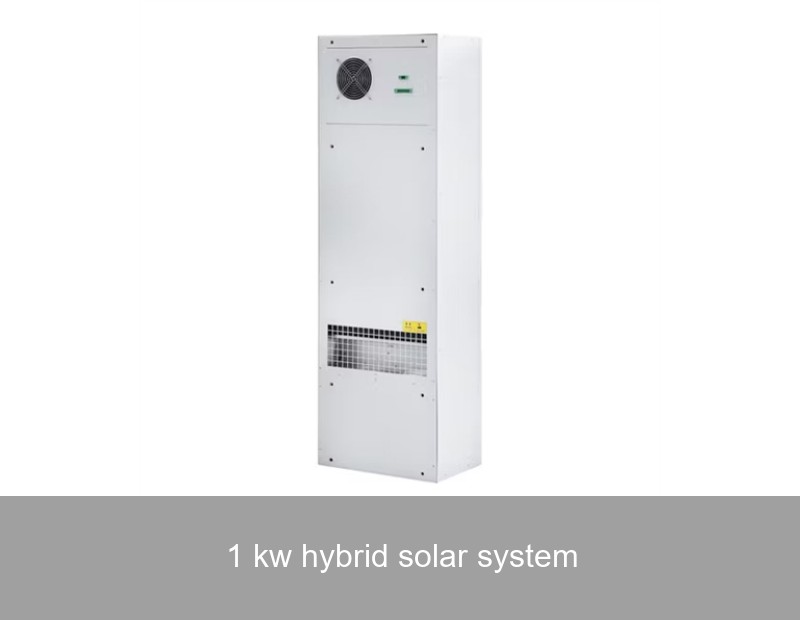
You've likely seen the rooftops adorned with solar panels and heard the growing buzz about home battery storage. But where do you start if your energy needs are modest, or you want to dip a toe into the renewable energy waters? Enter the 1 kW hybrid solar system. This compact, intelligent setup is becoming a surprisingly powerful entry point for homeowners across Europe and the United States seeking resilience and control. Unlike a traditional grid-tied system that goes silent during a blackout, a hybrid system pairs solar panels with a battery, ensuring you have power when you need it most. Let's demystify this technology and explore how a seemingly small system can make a substantial impact.
The Power Phenomenon: Why 1 kW is Smarter Than You Think
The term "1 kW" (kilowatt) refers to the peak power output of the solar array under ideal conditions. It's easy to think, "That's not enough to power my whole house." And you'd be right—if the goal was complete off-grid living. However, the genius of a 1 kW hybrid solar system lies in its strategic application. Think of it not as your sole power plant, but as a sophisticated energy manager for your critical loads.
This system typically consists of 3-4 solar panels, a hybrid inverter (the brain of the operation), and a battery storage unit. The hybrid inverter is key; it intelligently directs energy. During the day, solar power runs your appliances first, charges the battery second, and only then exports excess to the grid. At night or during an outage, your home seamlessly switches to battery power.

Image: A modern hybrid inverter manages energy flow between solar, battery, and home. (Source: Unsplash, representative image)
So, what can a 1 kW hybrid system realistically power? It's perfect for providing essential backup and daily offset for:
- Critical circuits: Refrigerator, lights, Wi-Fi, and security systems.
- High-efficiency appliances: LED lighting, modern TVs, and laptop chargers.
- Partial home backup: Strategically powering a few rooms for extended periods during grid failures.
The Data Reality: Performance and Payback
Let's move from concept to concrete numbers. A 1 kW solar array in sunny Southern California might produce approximately 1,400 to 1,600 kWh of electricity annually. In Germany, with less sun but improving panel efficiency, it could generate around 850-1,000 kWh per year. That's enough to cover the annual consumption of a high-efficiency refrigerator and a significant portion of your lighting.
The financial and resilience equation is compelling. While a system this size may not eliminate your entire utility bill, it provides a crucial layer of security. With volatile energy prices—as witnessed in Europe in recent years—locking in a portion of your power at a fixed cost (sunshine is free!) is a wise hedge. The addition of the battery, often the most significant investment, pays off in regions with:
- Time-of-Use (TOU) Rates: Store cheap solar/sunshine power during the day, use it during expensive peak evening hours.
- Frequent Grid Outages: The value of keeping your lights on and food cold can be immense.
- Weak or No Feed-in Tariffs: It's often more valuable to use your solar energy than to sell it back at a low rate.
| Location | Estimated Annual Solar Generation (kWh) | Primary Financial Driver | Key Benefit |
|---|---|---|---|
| California, USA | ~1,500 | TOU Rate Arbitrage & Backup for PSPS Events | Peak shaving, fire safety shutoff resilience |
| Germany | ~950 | Increasing Self-Consumption, Rising Grid Fees | Reducing dependence on volatile market prices |
| UK | ~850 | Backup for Unstable Grid, Smart Export Guarantee | Energy security during storms and outages |
Case Study: A Californian Home's Energy Independence Journey
Let's look at a real-world example from our files at Highjoule. The Miller family in Sacramento, California, was concerned about Public Safety Power Shutoffs (PSPS) during wildfire season and wanted to reduce their exposure to high peak electricity rates (which could reach over $0.50/kWh).
Their solution was a 1.2 kW hybrid solar system with a 5 kWh lithium-ion battery. The system was designed to back up a dedicated sub-panel containing their refrigerator, kitchen outlets, LED lighting, and internet modem. The results over the first year were telling:
- Outage Resilience: During a 14-hour grid outage, the system kept their essential loads running without interruption, with the battery still at 35% charge by morning.
- Financial Impact: By charging the battery with solar and discharging during the 4-9 pm peak window, they avoided an estimated 1,200 kWh of peak-rate consumption, saving roughly $400 annually on their bill.
- Peace of Mind: The system's automatic, silent switchover during outages meant the family often only knew the grid was down from neighborhood alerts.
This case illustrates that the value of a well-designed 1 kW hybrid solar system isn't just in the kilowatt-hours produced; it's in the intelligent management and assurance of those kilowatt-hours.
The Highjoule Solution: Intelligence Beyond the Kilowatt
At Highjoule, we believe the hardware is only half the story. Since 2005, we've specialized in smart, integrated energy storage solutions. For homeowners considering a 1 kW hybrid solar system, our EcoNode Home Hub platform changes the game.
Our compact hybrid inverter and modular battery units are designed for scalability and simplicity. But the true differentiator is our cloud-based energy management system. It doesn't just react; it learns and forecasts. Using local weather data and your consumption history, the Highjoule system optimizes your battery's charge and discharge cycles to maximize financial return and readiness for an outage. You can set preferences through a simple app—like "Maximum Savings" or "Maximum Backup"—and the system handles the rest.

Image: Modern energy apps provide real-time control and insights. (Source: Unsplash, representative image)
For the Millers in our case study, this meant their system proactively charged the battery to 100% the day before a high-wind warning was issued, anticipating a potential PSPS event. This level of intelligent foresight is what transforms a basic setup into a truly resilient and economical home energy asset.
Making the Decision: Is a 1 kW Hybrid System Right for You?
Choosing an energy system is a personal calculation based on your home, goals, and local context. A 1 kW hybrid solar system is an excellent fit if you:
- Have limited roof space or want to start with a smaller, more affordable system.
- Prioritize backup power for essential circuits over whole-home, off-grid capability.
- Live in an area with time-of-use billing or frequent, short-duration outages.
- Want to future-proof your home; most systems like Highjoule's are designed for easy expansion of both solar and battery capacity.
It's crucial to consult with a qualified installer who can assess your specific energy usage patterns (a home energy audit is a great start) and local regulations. They can help you model the performance and tailor the system to back up the circuits that matter most to you.
So, as you ponder taking control of your power, what's the one essential appliance you absolutely need to keep running when the grid goes down? Identifying that is the first step in designing your own path to energy resilience.
 Inquiry
 Online Chat