


Understanding Battery Storage Solar Cost: A Smart Investment for Energy Independence
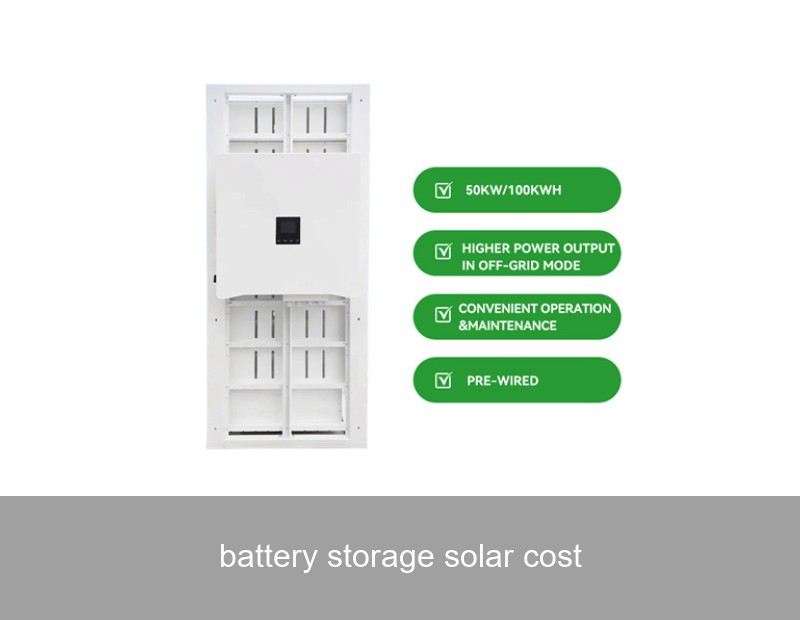
Have you ever looked at your electricity bill and wondered, "Is there a better way?" For homeowners and businesses across Europe and the US, the combination of solar panels and battery storage is becoming the definitive answer. But the initial question that stops many is: what is the true battery storage solar cost, and is it worth it? The conversation is shifting from mere upfront price to long-term value, resilience, and control. While the sun provides free fuel, the intelligence of the storage system determines how much of that power you actually use and save. Let's break down the real costs and savings, moving beyond the sticker shock to see how modern systems like those from Highjoule are designed to maximize your return on investment from day one.
Table of Contents
- The Phenomenon: Rising Energy Prices & Falling Solar Tech Costs
- Breaking Down the Battery Storage Solar Cost
- The Data That Pays: Quantifying Savings and ROI
- A Real Case Study: The German Bakery Maximizing Self-Consumption
- Beyond the Basics: How Highjoule's Technology Optimizes Your Investment
- Future-Proofing Your Energy Costs
The Phenomenon: Rising Energy Prices & Falling Solar Tech Costs
We're witnessing a powerful convergence. On one side, volatile fossil fuel markets and grid infrastructure challenges are driving electricity prices upward consistently. According to the International Energy Agency (IEA), residential electricity prices in many European countries and US regions have seen significant hikes. On the other side, the cost of solar photovoltaic (PV) modules and lithium-ion batteries has plummeted over the last decade. This creates a compelling economic crossroad: pay more for unpredictable grid power, or invest in a controlled, personal energy system. The key is understanding that "cost" is not an isolated number; it's a equation of (Initial Investment) - (Lifetime Savings + Avoided Costs + Value of Resilience).
Breaking Down the Battery Storage Solar Cost
So, what are you actually paying for? A complete solar-plus-storage system cost typically includes:
- Solar PV Panels: The generators of your clean electricity.
- Battery Storage Unit: The heart of energy independence, storing excess solar for use at night or during outages.
- Inverter & System Integration: The brain that manages energy flow between solar, battery, home, and grid. This is where much of the intelligence resides.
- Balance of System (BOS): Wiring, mounting, and other hardware.
- Installation & Permitting: Professional labor and administrative costs.
While the battery itself is a notable component, choosing a system with superior integration software can drastically improve its utilization and payback period. A cheap, "dumb" battery may store energy, but a smart, integrated system like Highjoule's Home Energy Hub decides the most economical moment to store or discharge based on your usage patterns, time-of-use rates, and even weather forecasts.

Image: A modern home solar and storage installation. Source: Unsplash
The Data That Pays: Quantifying Savings and ROI
Let's talk numbers. The primary savings from battery storage solar cost come from:
| Savings Source | How It Works | Potential Impact |
|---|---|---|
| Increased Self-Consumption | Using your stored solar energy instead of buying peak grid power. | Can increase direct solar usage from 30-50% to 70-90%. |
| Time-of-Use (TOU) Arbitrage | Storing solar/cheap off-peak power and using it during expensive peak hours. | Can slash peak rate consumption costs to near zero. |
| Backup Power Value | Avoiding losses from grid outages for homes and businesses. | Priceless for critical loads; can save thousands in spoiled inventory or business interruption. |
| Grid Services & Incentives | In some markets, systems can earn revenue by providing grid stability services. | Provides an additional income stream, improving ROI. |
For a typical household in California or Germany, a well-sized system can often achieve a payback period of 6-10 years, on a system with a 25+ year lifespan for solar and a 10-15 year warranty for batteries. Government incentives, like the US Federal Tax Credit or various European grants, can reduce the net battery storage solar cost by 20-30% or more.
A Real Case Study: The German Bakery Maximizing Self-Consumption
Let's make this concrete. A family-run bakery in Bavaria, Germany, faced high electricity costs, especially for refrigeration and early-morning oven preheating. Their existing solar panels produced a surplus at midday, but they still bought significant power from the grid in the early morning and evening.
The Solution: They installed a 20 kWh Highjoule Commercial Energy Storage system integrated with their existing solar. The system's AI-driven software was programmed with their precise load profile—knowing the massive oven demand at 4 AM.
- Self-Consumption Rate: Increased from 48% to 92%.
- Grid Electricity Import: Reduced by over 75%.
- Annual Savings: €3,800 on their energy bill.
- ROI Period: Achieved in under 7 years, factoring in the German KfW subsidy.
This case shows it's not just about having a battery; it's about having a system that understands your business's unique energy rhythm. The intelligent management turned their solar array from a partial solution into a near-total energy source.

Image: A commercial battery storage installation. Source: Unsplash
Beyond the Basics: How Highjoule's Technology Optimizes Your Investment
As a global leader founded in 2005, Highjoule's approach to the battery storage solar cost equation focuses on maximizing lifetime value. Our systems, like the Residential Energy Hub and Industrial PowerPack, are built with:
- Advanced Lithium Iron Phosphate (LFP) Chemistry: Safer, longer-lasting batteries with higher cycle life, directly reducing long-term cost per kilowatt-hour stored.
- Predictive Energy Management Software (PEMS): This is our secret sauce. It doesn't just react; it learns and forecasts. It considers tomorrow's weather, utility rate schedules, and your historical use to create an optimal charge/discharge strategy.
- Scalable & Modular Design: Start with what you need and expand capacity as your needs grow, protecting your initial investment.
- Robust Monitoring & Control: A user-friendly portal gives you real-time insight and control over your energy flows and savings, putting you in the driver's seat.
By focusing on system intelligence, we ensure every kilowatt-hour of solar energy you produce is used in the most economically advantageous way possible, squeezing the maximum value from your investment.
Future-Proofing Your Energy Costs
Investing in a solar-plus-storage system today is a hedge against future uncertainty. Will grid prices go up? Almost certainly. Will net metering policies change? They often do. A robust system with high self-consumption capability makes you less vulnerable to these external shifts. You're effectively locking in a large portion of your electricity cost at a fixed rate—the cost of your system—for decades.
Furthermore, as we move towards electrification of transport and heating, having a home energy system that can manage these new loads efficiently will become even more valuable. Think of it as building the energy infrastructure of your future, today.
So, the next time you consider battery storage solar cost, ask yourself not just "What does it cost?" but "What is it worth?" What is the value of predictable bills, operational resilience during a blackout, and contributing directly to a sustainable energy grid? With the right technology partner, the numbers make a compelling case. What would you power first with your own reliable, clean energy?
 Inquiry
 Online Chat