


How Government Solar Panel Programs Are Powering a Sustainable Future
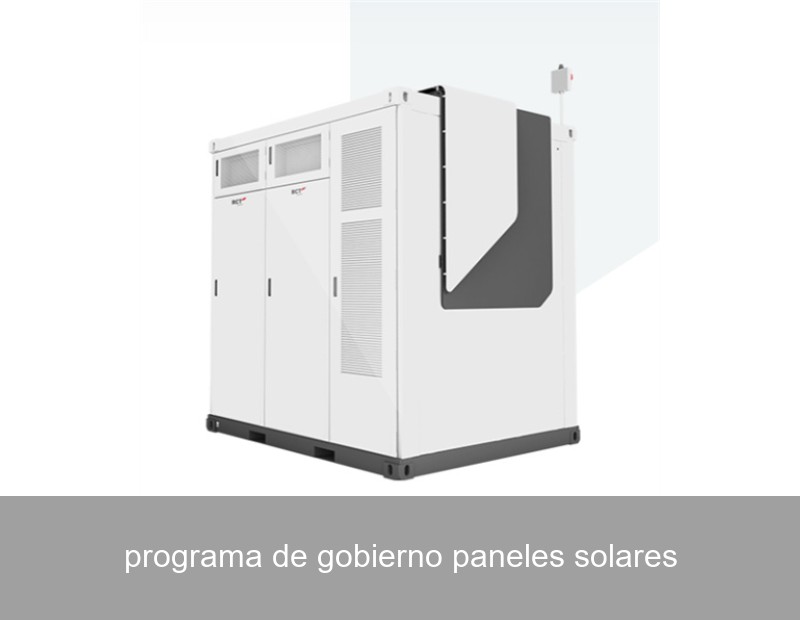
You've likely seen the headlines: energy prices are volatile, climate goals feel urgent, and the sun, well, it just keeps shining. For many homeowners and businesses, the idea of harnessing solar energy is appealing, but the upfront cost can be a significant barrier. This is precisely where government solar panel programs become a game-changer. These initiatives are not just about subsidies; they are strategic catalysts accelerating our transition to clean energy. By understanding how these programs work and pairing them with the right technology, you can unlock unprecedented energy independence and cost savings. Let's explore how these public policies are shaping the market and how companies like Highjoule are providing the advanced storage solutions that make solar investments truly future-proof.
Table of Contents
- The Rise of Solar Policy: From Niche to Mainstream
- Key Components of Effective Government Solar Programs
- The Missing Link: Why Storage is Non-Negotiable
- Case Study: Spain's Push for Solar & Storage
- Choosing the Right Technology for Your Program-Backed Project
- The Future of Solar Programs: What's Next?
The Rise of Solar Policy: From Niche to Mainstream
The journey of solar energy has been profoundly shaped by government intervention. Remember when solar panels were a rare sight? Early adopter incentives, like feed-in tariffs in Germany, proved that policy could create a market. Today, government solar panel programs have evolved into sophisticated tools. In the U.S., the Inflation Reduction Act (IRA) offers a 30% federal tax credit for solar installations, a massive financial incentive. Similarly, many European Union member states align their national subsidies with the EU's Green Deal objectives, creating a cohesive push toward renewables.
The logic is clear: governments set ambitious decarbonization targets (the "phenomenon"), but the market needs a nudge to scale rapidly. Data from the International Energy Agency (IEA) shows that global renewable capacity additions jumped by almost 50% in 2023, with solar PV accounting for three-quarters of this growth—a surge directly linked to supportive policies in China, the U.S., and Europe.
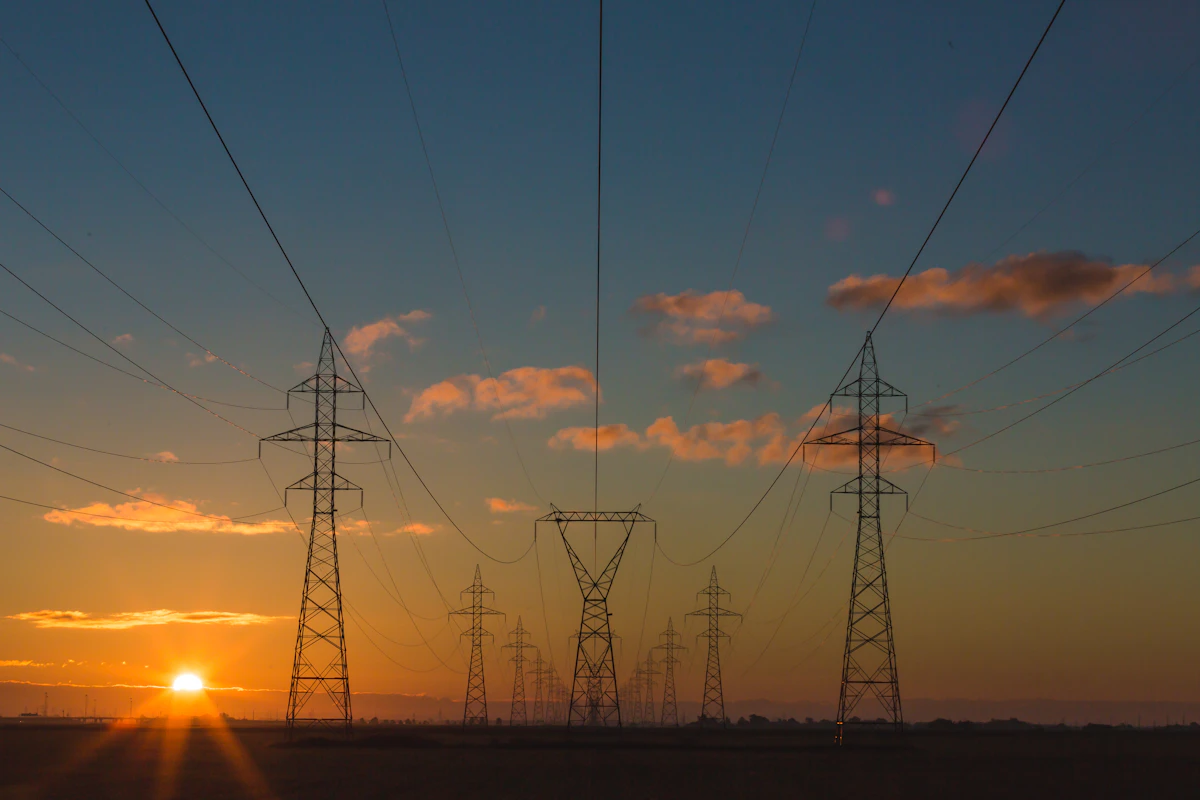
Image Source: Unsplash. Government incentives have made residential solar installations increasingly common.
Key Components of Effective Government Solar Programs
Not all programs are created equal. The most successful government solar panel programs typically feature a multi-pronged approach designed to address different barriers to entry.
- Financial Incentives: These are the most direct motivators. They include tax credits (like the U.S. IRA), rebates (cash-back after installation), and reduced VAT rates on solar equipment (common in several EU countries).
- Net Metering & Feed-in Tariffs: These policies govern how you're credited for excess electricity you feed back into the grid. Net metering allows you to offset your consumption, while feed-in tariffs provide a fixed payment per kWh. The stability of these schemes is crucial for calculating return on investment.
- Streamlined Permitting: "Soft costs" like permitting and inspection can add significant time and expense. Progressive programs, like those in some German municipalities and California, offer online, fast-track permitting to reduce this friction.
- Support for Supporting Technologies: The most forward-thinking programs now explicitly include energy storage. Standalone storage tax credits or additional bonuses for adding a battery to a solar system are becoming more common, recognizing that storage maximizes the value of solar.
The Missing Link: Why Storage is Non-Negotiable
Here's the insight many discover after installing solar: the sun doesn't shine at night, and grid credit rates for excess power are often lower than retail rates. This is the fundamental value of energy storage. A solar panel system without a battery is like a sink without a drain—you can capture water (energy), but you have no control over when to use it.
Adding a battery storage system transforms your solar array. It allows you to store surplus daytime energy for use in the evening peak, drastically increasing your self-consumption and shielding you from peak utility rates. In the context of government solar panel programs, this is the logical next step. It turns a cost-saving installation into a resilient energy asset. This is where Highjoule's expertise becomes critical. As a leader since 2005, Highjoule designs intelligent battery energy storage systems (BESS) specifically to integrate seamlessly with solar. Our EnerSync Home series, for example, features sophisticated energy management software that automatically optimizes when to charge from solar, discharge to power your home, or even provide backup power during an outage, ensuring you extract the maximum value from every incentive and every sunbeam.
Case Study: Spain's "Plan de Recuperación" and the Solar Boom
Let's look at a concrete European example. Spain, with its abundant sunshine, has launched aggressive initiatives under its EU-funded Recovery, Transformation and Resilience Plan. A key component is the MOVES III program, which provides direct subsidies for the installation of renewable energy systems, including solar PV and storage, for both individuals and businesses.
The data speaks volumes. According to the Spanish Photovoltaic Union (UNEF), Spain installed over 2.5 GW of new solar PV capacity in the residential and commercial sector in 2023 alone, a significant portion of which was leveraged through these public aids. The program structure often offers a higher subsidy percentage when the installation includes a storage system.
Consider a mid-sized winery in the La Rioja region. Facing rising energy costs and seeking sustainability credentials for export markets, they utilized the MOVES III program to install a 100 kW rooftop solar array. Crucially, they paired it with a Highjoule C&I PowerStack battery system. The result? They now cover 85% of their energy needs, including energy-intensive night-time cooling, and have reduced their grid energy costs by over 70%. The battery also provides critical backup, protecting their refrigeration systems from grid instability—a tangible business continuity benefit beyond simple savings.

Image Source: Unsplash. Commercial solar installations, like this winery, benefit greatly from combined solar and storage programs.
Choosing the Right Technology for Your Program-Backed Project
Navigating a government solar panel program is the first step. The second, and equally vital, step is selecting technology that will deliver for decades. Here’s what to prioritize:
| Feature | Why It Matters | Highjoule's Solution |
|---|---|---|
| System Intelligence & Software | Software determines how efficiently your solar energy is stored and used. It should adapt to weather, tariff rates, and your consumption patterns. | Our SmartGrid OS uses AI and real-time data to make optimal decisions, ensuring you benefit from time-of-use rates and maximize self-consumption. |
| Battery Chemistry & Longevity | Not all batteries are the same. You need high cycle life, safety, and stable performance over 10+ years. | We use premium LiFePO4 (LFP) chemistry in our residential and commercial systems for superior safety, longevity (10,000+ cycles), and stable performance. |
| Scalability & Integration | Your energy needs may grow. Your system should be able to grow with you, and integrate easily with existing solar inverters. | Highjoule systems are designed with modularity in mind. The C&I PowerStack can be scaled from 30 kWh to multi-MWh projects, and we ensure seamless compatibility with major solar inverter brands. |
By choosing a provider like Highjoule, you're not just buying hardware; you're investing in a long-term energy partnership. Our global experience in commercial, industrial, and residential applications means we understand the specific compliance and performance requirements across different markets, from California to Germany.
The Future of Solar Programs: What's Next?
The trend is clear: government solar panel programs are increasingly moving from supporting just generation to supporting integrated, smart energy systems. We can expect future policy to incentivize:
- Virtual Power Plants (VPPs): Programs that aggregate thousands of home batteries to act as a single, grid-stabilizing power plant. Participants could earn additional revenue.
- Electrification Packages: Bundled incentives for solar, storage, heat pumps, and EV chargers to fully decarbonize a home.
- Focus on Grid Services: As solar penetration grows, the value to the grid shifts from just energy production to providing stability services like frequency regulation.
Highjoule is already at the forefront of this shift. Our systems are VPP-ready, and our software platform is designed to allow fleet owners or utilities to aggregate distributed storage resources, creating new revenue streams and supporting the broader grid.
As you explore the opportunities presented by your local government solar panel program, the essential question becomes: Are you simply looking to install solar panels, or are you building a resilient, intelligent, and truly optimized energy system for the future? What role do you see your home or business playing in the larger energy grid?
 Inquiry
 Online Chat