


What Do Battery Traders Charge? Decoding the True Cost of Energy Storage Procurement
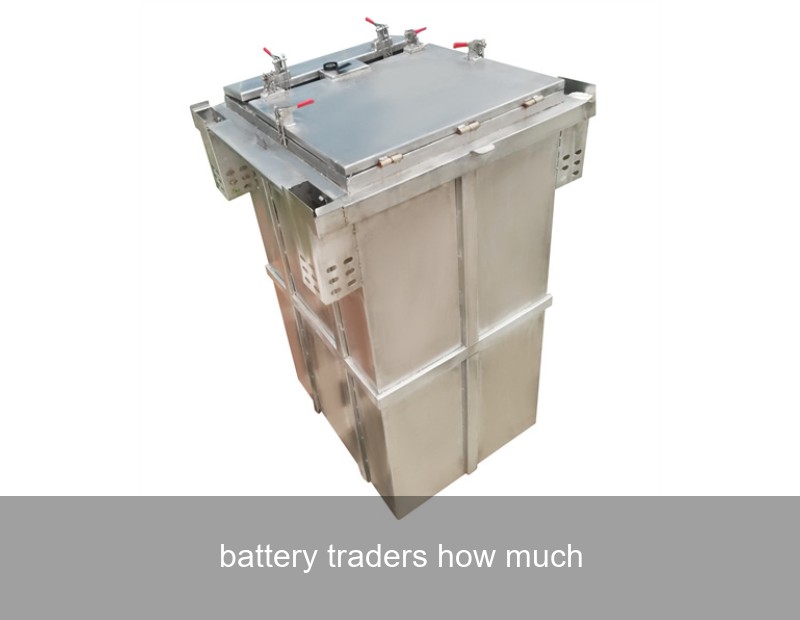
If you're a project developer, facility manager, or even a homeowner looking into energy storage, you've likely asked the central question: "battery traders how much?" The quote you receive isn't just a random number; it's a culmination of complex factors in the global energy storage supply chain. As the demand for reliable, renewable power surges, understanding the breakdown of these costs is crucial for making an informed investment. This isn't just about buying a commodity; it's about securing a long-term energy solution.
Table of Contents
- The Price Puzzle: More Than Just a Battery Quote
- Key Cost Drivers in the Battery Supply Chain
- A Real-World Case: Commercial Solar-Plus-Storage in Germany
- Beyond Price: The Hidden Value of an Integrated System
- The Highjoule Approach: From Trader to Technology Partner
- Asking the Right Questions for Your Project
The Price Puzzle: More Than Just a Battery Quote
When you contact a battery trader or supplier, the initial "per kWh" price for battery cells or a containerized unit is just the entry point. The final cost to have a fully operational, safe, and profitable energy storage system (ESS) involves multiple layers. Think of it like building a house: the cost of bricks (battery cells) is important, but the expenses for architecture, plumbing, electrical work, and the foundation (the Balance of System, software, and integration) are what truly determine the home's value and functionality.
Market volatility plays a huge role. According to BloombergNEF, lithium-ion battery pack prices fell dramatically for years but saw a slight uptick in 2022 due to material cost inflation, settling around $139/kWh on a volume-weighted average in 2023 (BloombergNEF, 2023). However, the price a trader quotes you depends heavily on chemistry (LFP vs. NMC), supply chain logistics, geopolitical factors, and the scale of your order.
Key Cost Drivers in the Battery Supply Chain
To understand "battery traders how much," you need to dissect the components. A trader's quote typically bundles these, but a savvy buyer should understand the breakdown.
| Cost Component | Description | Impact on Final Quote |
|---|---|---|
| Cell & Module Costs | The raw battery cells (e.g., prismatic LFP) assembled into modules. Subject to commodity prices for lithium, cobalt, etc. | Core cost, but diminishing as a % of total system cost. |
| Balance of System (BOS) | Inverters, thermal management, safety systems, enclosures, and wiring. | Can account for 40-50% of total system cost. Quality here dictates safety and longevity. |
| Integration & Software | The "brain" of the system: Energy Management System (EMS) software, controls, and grid integration. | This is where system intelligence and ROI are maximized. A critical differentiator. |
| Logistics & Installation | Shipping, customs (especially relevant for EU/US markets), site preparation, and commissioning. | Highly variable based on location, permitting, and labor costs. |
| Warranty & Service | Long-term performance guarantees and maintenance support. | Adds to upfront cost but protects your investment for 10-15 years. |

Image: The true cost of a battery system encompasses hardware, software, and expert integration. (Credit: Unsplash)
A Real-World Case: Commercial Solar-Plus-Storage in Germany
Let's ground this in reality. A mid-sized manufacturing plant in Bavaria aimed to reduce energy costs and ensure backup power. They solicited quotes from several battery traders and system integrators in 2023.
- Project Goal: Integrate a 500 kWh / 1000 kWh (2-hour) battery with existing rooftop solar.
- Lowest Trader Quote: €145,000 for a containerized LFP battery system (€290/kWh).
- Hidden Gaps in Basic Quote: The quote lacked advanced grid-interactive controls, had a limited 7-year warranty, and required a separate contractor for installation and grid connection, adding an estimated €25,000+.
- Integrated Solution Quote (from a provider like Highjoule): €185,000 for a fully integrated, AC-coupled Highjoule H-Series Commercial ESS. This included the Highjoule Neuron EMS for intelligent peak shaving and solar self-consumption optimization, a 12-year full performance warranty, and turnkey installation.
The choice was clear. The integrated system, while 28% higher upfront, delivered a 35% better ROI over 12 years due to its superior software maximizing revenue streams from energy arbitrage and grid services, plus the security of a single-point warranty. The simple trader quote was, in fact, the more expensive long-term option.
Beyond Price: The Hidden Value of an Integrated System
Focusing solely on "battery traders how much" can lead to a critical oversight: value erosion. A cheap battery pack with inferior BOS or software can degrade faster, underperform, and even pose safety risks. The U.S. Energy Information Administration notes that system capabilities and operational strategies are as important as hardware costs for project economics (EIA, 2022).
True value comes from:
- Longevity & Degradation: High-quality cell selection, precise thermal management (like Highjoule's active liquid cooling), and conservative cycling algorithms can double the useful life of a system compared to a poorly managed one.
- Intelligent Software: This is the profit center. Can your system automatically shift between maximizing self-consumption, providing frequency response, and performing peak shaving based on real-time market signals?
- Safety & Compliance: Certified designs (UL, IEC), built-in fire suppression, and robust system architecture are non-negotiable, especially for commercial and industrial settings.
The Highjoule Approach: From Trader to Technology Partner
This is where Highjoule's model fundamentally diverges from a simple battery trader. Since 2005, we have evolved into a technology-led system provider. We don't just source cells; we engineer complete, intelligent power solutions.
For a business in California navigating NEM 3.0 or a factory in the UK facing volatile time-of-use tariffs, the question isn't just "battery traders how much?" It's "how can I achieve the fastest payback and greatest resilience?"
Our answer is the Highjoule Ecosystem:
- Adaptive Hardware Platform: Our modular H-Series (commercial) and R-Series (residential/light commercial) are built with industry-leading LFP chemistry and future-proof architecture.
- Neuron Energy Management System: The AI-powered brain that transforms stored energy into a dynamic financial asset, optimizing every kilowatt-hour for savings and revenue.
- End-to-End Project Delivery: We handle everything from initial feasibility and design to grid permitting, installation by certified partners, and long-term monitoring and support.

Image: Seamless integration of storage into residential and commercial settings requires expert design. (Credit: Unsplash)
By controlling the entire stack—from battery modules to the user interface—we ensure performance, safety, and simplicity for our clients across Europe and North America, delivering a predictable total cost of ownership rather than just a low initial ticket price.
Asking the Right Questions for Your Project
So, when you next evaluate a quote, move beyond "battery traders how much per kWh?" Empower yourself with these questions:
- Is this a FOB (Freight on Board) price, or does it include delivery, duties, and commissioning?
- What is the detailed specification of the Balance of System (inverter brand, cooling method, safety certifications)?
- What Energy Management System is included, and what operational modes (peak shaving, backup, grid services) does it support?
- What is the total cycle life and throughput warranty (e.g., guaranteed kWh over the warranty period), not just the years?
- Can you provide a projected ROI model based on my specific utility rate schedule and consumption profile?
As the energy landscape becomes more complex, the most cost-effective solution is the one that is intelligently designed to work harder and smarter for you over its entire lifespan.
Ready to See the Full Picture?
What specific energy challenge—be it demand charge reduction, renewable integration, or backup power—is driving your search for storage, and how can we help you model its true economic potential?
 Inquiry
 Online Chat