


Powering Progress: Why 3 Phase Battery Storage is the UK's Key to Energy Resilience
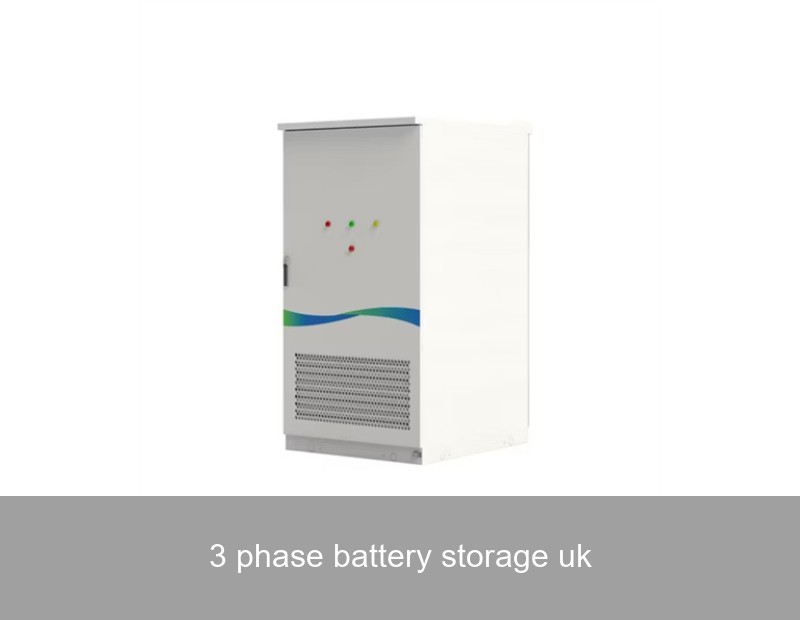
If you're a business owner, facility manager, or homeowner with a larger property in the UK, you've likely felt the pinch of rising energy costs and heard the urgent calls for grid decarbonisation. But there's a powerful solution quietly transforming how the UK manages its electricity: 3 phase battery storage. Unlike standard single-phase systems, 3-phase technology is designed for higher-power applications, perfectly matching the electrical architecture of most commercial, industrial, and larger residential properties. It's not just a battery; it's a sophisticated energy management hub that provides stability, slashes bills, and supports the national grid. As a leader in advanced energy storage, Highjoule has been at the forefront of this revolution since 2005, engineering smart 3-phase systems that are as intelligent as they are robust.
Table of Contents
- What is 3 Phase Battery Storage & Why Does the UK Need It?
- Core Benefits: Beyond Simple Backup
- How a Modern 3-Phase BESS Works: The Highjoule Difference
- A Real-World Case Study: A UK Manufacturing Success
- The Future is a Dynamic Grid: Your Role in It

Credit: Photo via Unsplash. Modern UK industry requires robust, 3-phase power solutions.
What is 3 Phase Battery Storage & Why Does the UK Need It?
Let's break it down. The UK's national grid delivers electricity using a three-phase power system. Imagine three separate waves of power, evenly spaced, creating a constant and smooth flow of energy. This is essential for running heavy machinery, large HVAC systems, and multi-phase motors efficiently. Most homes use a single-phase connection (one wave), but factories, farms, office blocks, and larger homes typically have a three-phase supply.
The problem? Renewable energy like solar and wind is inherently variable, and energy demand peaks are becoming sharper. The UK government's own data shows a commitment to a fully decarbonised electricity system by 2035. This transition requires not just generation, but intelligent storage to balance the grid. 3-phase battery storage systems (BESS) are the perfect counterpart. They store excess renewable energy (like from your solar array) or cheaper off-peak grid power and discharge it precisely when and where it's needed most—across all three phases. This stabilises your local network, reduces strain on the national grid, and turns your property from a passive consumer into an active energy participant.
Core Benefits: Beyond Simple Backup
Investing in a 3-phase system delivers a compelling return on investment through multiple revenue and savings streams:
- Substantial Bill Reduction (Arbitrage): Charge your batteries when electricity tariffs are low (e.g., overnight) and use that stored power during expensive peak periods (4pm-7pm). This simple shift can cut your energy costs dramatically.
- Enhanced Renewable Self-Consumption: For sites with solar PV, a 3-phase BESS captures surplus daytime generation that would otherwise be exported at a lower rate, maximising your own use of clean, free power into the evening.
- Critical Backup Power & Resilience: In the event of a grid outage, a properly configured system can provide seamless backup to essential loads, ensuring business continuity and operational safety.
- Grid Services & Revenue: Advanced systems like Highjoule's IntelliGrid Platform can participate in grid service programmes (like Frequency Response or Balancing Mechanism), generating additional income by helping to stabilise the national network.
- Future-Proofing & Sustainability: Reduce your carbon footprint and meet corporate sustainability (ESG) targets by integrating more renewables and reducing reliance on fossil-fuel peaking plants.
How a Modern 3-Phase BESS Works: The Highjoule Difference
Not all 3-phase systems are created equal. At its core, the technology requires sophisticated inverters and energy management software. Highjoule's approach is holistic:
Our flagship H-Series Commercial Energy Storage system is built around a modular, scalable architecture. It features advanced lithium-ion battery racks, coupled with our proprietary 3-phase hybrid inverter technology. This inverter is the brain, managing the complex flow of energy between the grid, solar panels, the battery, and your building's loads across all three phases simultaneously.
The true intelligence comes from our cloud-based IntelliGrid Platform. Using AI and real-time market data, it doesn't just react—it forecasts. It predicts your energy usage, solar generation, and electricity price fluctuations. It then autonomously optimises charge/discharge cycles to maximise your financial return, while also being capable of responding to grid signals for support services. This dual-layer of hardware robustness and software smarts is what sets a Highjoule installation apart.
| Feature | Standard 3-Phase System | Highjoule H-Series with IntelliGrid |
|---|---|---|
| Energy Management | Basic time-based control | AI-driven, forecast-based optimisation |
| Grid Interaction | Passive, one-way | Active, bidirectional for services & revenue |
| Scalability | Often fixed at installation | Fully modular, expandable in increments |
| Backup Capability | Optional or limited | Seamless, configurable backup power standard |
A Real-World Case Study: A UK Manufacturing Success
Let's move from theory to practice. A mid-sized food processing plant in the Midlands faced annual electricity costs exceeding £180,000, with a significant portion from peak-time charges and a grid connection constraint limiting expansion. They partnered with Highjoule to design a turnkey solution: a 250kW/500kWh H-Series 3-phase battery storage system, integrated with their existing rooftop solar.
The Results (12-month period):
- Energy Cost Savings: £48,000 saved through peak shaving and solar optimisation.
- Additional Revenue: £6,200 earned from participating in the National Grid's Demand Side Response programme via IntelliGrid.
- Carbon Reduction: Increased renewable self-consumption by 65%, cutting site carbon emissions by an estimated 42 tonnes CO2e annually.
- Resilience: The system now provides backup power to critical refrigeration units, protecting thousands of pounds worth of inventory during grid disturbances.
This case mirrors findings from the Energy Storage News sector analyses, which consistently show payback periods for commercial systems in the UK shrinking to 5-7 years, thanks to high market volatility and intelligent software.

Credit: Photo via Unsplash. Professional monitoring and management are key to system performance.
The Future is a Dynamic Grid: Your Role in It
The UK's energy landscape is shifting from a centralised, one-way model to a decentralised, interactive network—a "dynamic grid." In this new paradigm, every large energy user with a 3-phase connection has the potential to become a prosumer: both consuming and providing grid stability. Your facility, farm, or community hub is no longer just at the end of the line; it can be an active node contributing to national energy security.
This isn't just about technology; it's about a new relationship with energy. It's about taking control, building resilience against price shocks and outages, and directly contributing to the UK's net-zero ambitions. The question is no longer if 3-phase storage is viable, but how to implement it most effectively for your specific load profile, tariffs, and sustainability goals.
Is Your Site's Energy Strategy Ready for the Next Decade?
We've explored the "why" and the "how." Now, consider your own situation. Have you analysed your half-hourly consumption data to identify your peak demand charges? Could your operations benefit from guaranteed backup power? What would integrating a smart 3-phase battery system do for your bottom line and your environmental targets? Highjoule's team of experts specialises in answering these questions with data-driven feasibility assessments. The first step towards energy independence and smarter cost management is a conversation. What's holding you back from exploring your site's potential?
 Inquiry
 Online Chat