


Finding the Best 250Ah Inverter Battery for Reliable, Sustainable Power
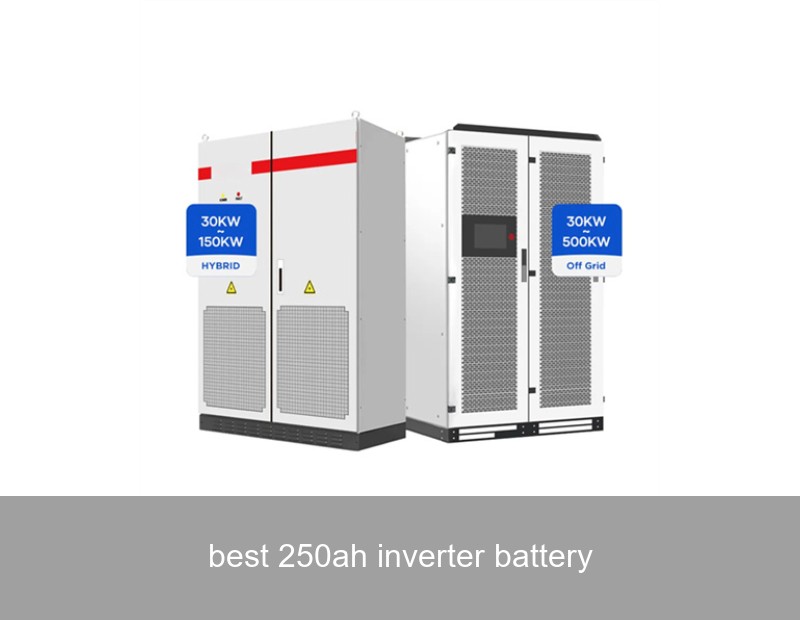
If you're researching energy storage, you've likely come across the term "250Ah inverter battery." It's more than just a spec sheet number; it represents a sweet spot for many homeowners and small business owners seeking substantial backup power or greater energy independence. But in a market flooded with options, what truly separates a good battery from the best 250Ah inverter battery? The answer lies not just in capacity, but in intelligence, durability, and seamless integration with your lifestyle or business operations. As power grids face increasing strain and electricity costs soar, particularly in Europe and the US, the right energy storage system becomes a cornerstone for resilience and savings.
What Exactly is a 250Ah Inverter Battery?
Let's break it down simply. "250Ah" stands for 250 Ampere-hours. Think of it as the fuel tank size of your battery. In practical terms, a 250Ah battery can, in theory, deliver 250 amps of current for one hour, 25 amps for 10 hours, and so on. When paired with an inverter, this battery bank stores energy (often from solar panels or the grid) and provides usable AC power during outages or during peak tariff periods.
However, the raw "Ah" rating is just the beginning. The best 250Ah inverter battery systems today utilize advanced Lithium Iron Phosphate (LiFePO4) chemistry. Compared to traditional lead-acid batteries, they offer deeper discharges, longer lifespans (often over 6000 cycles), and require zero maintenance. For a typical European household, a well-configured 250Ah LiFePO4 system can cover essential loads—refrigeration, lighting, communication, and critical appliances—for a substantial period, turning a blackout from a major disruption into a mere inconvenience.

Modern LiFePO4 battery systems, like those from Highjoule, offer compact, scalable power for homes and businesses. (Image credit: Unsplash)
Why Finding the "Best" 250Ah Battery is Critical
Phenomenon: Many consumers focus solely on upfront cost. Data: A 2023 study by the National Renewable Energy Laboratory (NREL) highlights that the levelized cost of storage (LCOS) is a far more important metric. A cheaper battery that degrades in 3 years is ultimately more expensive than a premium battery that lasts 15+ years. The "best" system minimizes LCOS.
Case in point: A small bed-and-breakfast in California initially installed a low-cost lead-acid battery bank. Within two years, capacity had dropped by 40%, failing to cover nightly loads during winter. The owner replaced it with a high-quality LiFePO4 system, which not only provided reliable power but also integrated with their new solar array to slash peak-demand charges from the utility.
Insight: The best 250Ah inverter battery is an investment, not an expense. It should be judged on total lifetime value, safety certifications (like UL 9540 in the US), and smart capabilities that allow it to adapt to your energy consumption patterns.
Highjoule's Approach to Long-Term Value
At Highjoule, with nearly two decades of expertise, we engineer our HJ-PowerStack 250 series with this lifetime value principle. Our batteries are built with automotive-grade LiFePO4 cells, feature an integrated Battery Management System (BMS) that prevents overcharge and deep discharge, and come with a robust 10-year warranty. We ensure our systems aren't just products, but dependable partners in your energy resilience journey.
Key Features of the Best 250Ah Inverter Battery
When evaluating options, look for these non-negotiable features:
- Chemistry & Safety: LiFePO4 is the standard for safety and cycle life. It's inherently stable, unlike other lithium chemistries.
- Depth of Discharge (DoD): A quality battery allows 90-95% DoD. This means you can use almost all of its rated 250Ah capacity without harming it.
- Cyclic Life: Look for a cycle life rating at 90% DoD. >6000 cycles is a mark of a top-tier product.
- Smart Communication: Can the battery communicate with your inverter and solar charger? Protocols like CAN Bus or RS485 enable optimized system performance.
- Scalability: Can you easily add more batteries in parallel if your needs grow? The best systems are modular by design.
| Feature | Standard Offerings | Best-in-Class (e.g., Highjoule HJ-PowerStack 250) |
|---|---|---|
| Chemistry | Lead-Acid or generic Lithium | Grade-A LiFePO4 |
| Warranty | 1-3 years | 10 years |
| Scalability | Fixed, difficult to expand | Modular, parallel-ready up to 16 units |
| Operating Temperature Range | Narrow (e.g., 0°C to 40°C) | Wide (e.g., -20°C to 55°C) with thermal management |
A Real-World Case: Powering a German Dairy Farm
Let's move from theory to practice. The Schmidt family runs a mid-sized dairy farm in Bavaria. Their challenge was twofold: unpredictable grid outages affecting milking equipment cooling, and soaring energy costs.
Solution: They installed a 30kW solar array coupled with two parallel Highjoule HJ-PowerStack 250 units (creating a 500Ah, 25.6kWh storage system). The system was integrated with a hybrid inverter.
Data & Results (12-month period):
- Energy Self-Sufficiency: Increased from 35% to 78%.
- Grid Outage Protection: Provided seamless backup for critical loads for over 14 hours during a severe winter storm.
- Cost Savings: By leveraging the battery to avoid peak-time grid draw and using stored solar, they reduced their electricity bill by €4,200 annually. The Fraunhofer ISE consistently shows that solar-plus-storage LCOE is now below retail electricity prices in much of Europe.
This case underscores that the best 250Ah inverter battery is part of a holistic, intelligent system. For Highjoule, success is measured by real-world reliability and economic return for our clients, from farms to factories.

Agricultural businesses, like this farm, benefit tremendously from solar-plus-storage systems for cost savings and operational resilience. (Image credit: Unsplash)
Choosing the Right System for Your Needs
So, is a 250Ah battery right for you? Ask these questions:
- What is your backup load? List the essential appliances and their wattage. A 250Ah LiFePO4 system (approx. 12.8kWh) can power a refrigerator, lights, modem, and a well pump for a significant time.
- Do you have solar PV? If yes, the battery maximizes self-consumption. The best systems, like Highjoule's, come with smart energy management that prioritizes solar charging and can be configured for time-of-use optimization.
- What is your future outlook? Choosing a scalable system protects your investment. Our HJ-PowerStack series allows you to start with one 250Ah unit and add more as your family grows or you add an electric vehicle.
The Future of Home & Business Energy Storage
The trend is clear: storage is becoming intelligent and grid-interactive. The next generation of the best 250Ah inverter battery won't just be a backup; it will be a grid citizen. Imagine your battery system automatically participating in grid-balancing programs (like virtual power plants) to earn you revenue, all while ensuring your home's needs are met first. Companies like Highjoule are already developing these capabilities, making energy storage a dynamic asset.
As you contemplate taking control of your energy future, what single question about reliability or return on investment is holding you back from exploring a tailored energy storage solution for your home or business?
 Inquiry
 Online Chat