


Finding the Best Battery for Your 10kW Solar System: A Complete Guide
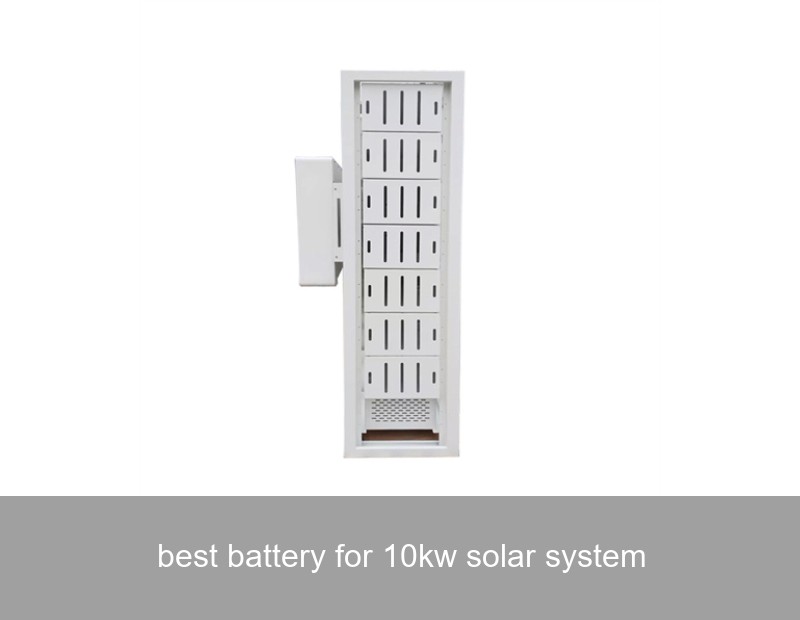
You've made a smart investment—a 10kW solar system is a powerhouse, capable of significantly slashing your energy bills and carbon footprint. But here's a question we hear all the time at Highjoule: "Is my solar system truly optimized if I'm still sending excess energy back to the grid every afternoon?" The answer often lies in pairing it with the right energy storage. Choosing the best battery for your 10kW solar system is the critical next step to unlock true energy independence, maximize self-consumption, and build resilience. This guide will walk you through the key considerations, backed by data and real-world examples, to help you make an informed decision for your home or business.
Table of Contents
- Why Pair a Battery with a 10kW Solar System?
- Key Specifications: What to Look For
- Battery Chemistry Deep Dive: LiFePO4 vs. NMC
- Sizing Your Battery Bank: Capacity & Power
- Real-World Case Study: A German Household
- Beyond the Hardware: The Role of Smart Energy Management
- The Highjoule Solution: Engineered for 10kW Systems
Why Pair a Battery with a 10kW Solar System?
A 10kW solar system typically generates 30-45 kWh per day, depending on your location. However, your home's energy consumption rarely aligns perfectly with the sun's schedule. The classic pattern? A massive surplus at midday when the sun is brightest, and a high demand in the evening when solar production drops. Without a battery, that valuable midday energy is exported to the grid, often at a low feed-in tariff, only for you to buy back expensive electricity at night. This is where the best battery for a 10kW solar system changes the game. It captures that excess solar energy, stores it, and releases it precisely when you need it, transforming your system from a daytime producer into a 24/7 personal power plant.
Key Specifications: What to Look For
Navigating battery specs can feel like reading another language. Let's simplify the three most critical metrics:
- Usable Capacity (kWh): This is the amount of energy you can actually use from the battery. A battery with 10 kWh of usable capacity can, in theory, power a 1 kW load for 10 hours. For a 10kW solar system, we're typically looking at batteries in the 10-20 kWh range to meaningfully shift daily solar excess.
- Continuous Power Rating (kW): This determines what appliances you can run simultaneously from the battery. A 5 kW inverter can handle most household loads, but if you want to run an air conditioner, heat pump, and EV charger from the battery, you'll need a higher power rating, often 7.5 kW or more.
- Depth of Discharge (DoD) & Cycle Life: A battery rated for 90% DoD means you can safely use 90% of its total capacity. Cycle life indicates how many charge/discharge cycles it's designed to last (e.g., 6,000 cycles to 80% capacity). A higher quality battery with a higher cycle life offers better long-term value.
Battery Chemistry Deep Dive: LiFePO4 vs. NMC
Today's market is dominated by lithium-ion, but two chemistries lead the home storage segment: Lithium Iron Phosphate (LiFePO4) and Nickel Manganese Cobalt (NMC).
| Feature | LiFePO4 (LFP) | NMC |
|---|---|---|
| Safety & Stability | Excellent. More thermally stable, lower fire risk. | Good, but requires more sophisticated battery management. |
| Cycle Life | Very High (6,000+ cycles) | High (4,000 - 5,000 cycles) |
| Energy Density | Lower (requires slightly more space) | Higher (more compact) | Best For | Longevity, safety, and whole-home backup. | Maximizing capacity in a limited space. |
For most residential applications seeking the best battery for a 10kW solar system, LiFePO4's superior safety and cycle life make it a compelling, future-proof choice. This is the chemistry Highjoule has strategically adopted across its residential product lines for these very reasons.
Sizing Your Battery Bank: Capacity & Power
So, what size is right for you? It's a balance between your daily "load-shifting" needs and your backup requirements during a grid outage.
- For Daily Self-Consumption: Analyze your evening/nighttime energy use. If your 10kW system exports 15 kWh daily and you use 12 kWh after sunset, a battery with ~13-15 kWh of usable capacity (like two of Highjoule's H-ESS 8.0 units) could cover nearly 100% of your post-solar consumption.
- For Whole-Home Backup: You must consider the starting surge of large appliances (like well pumps or AC compressors). This requires a battery system with a high continuous and surge power rating. A modular system that can stack both capacity and power output is ideal here.

Image: A modern home integrating solar and storage. Source: Unsplash (License: Free to use)
Real-World Case Study: A German Household in Bavaria
Let's look at real data. The Müller family installed a 10.2 kWp solar array on their detached home. Despite high generation, their self-consumption was only 35%, exporting most surplus energy. In 2022, they added a 14.4 kWh LiFePO4 battery system (with a 7 kW inverter).
- Self-Consumption Rate: Increased from 35% to 82%.
- Grid Import: Reduced by 78% year-over-year.
- Energy Bill Savings: Increased from ~€850/year to ~€1,900/year, factoring in Germany's declining feed-in tariffs (Fraunhofer ISE, 2023).
This case highlights the transformative financial impact of adding the right battery, moving the system from a partial solution to a near-total energy independence setup.
Beyond the Hardware: The Role of Smart Energy Management
The best battery for a 10kW solar system isn't just about cells and kWh. Its brain—the Battery Management System (BMS) and system software—is equally important. Advanced systems can:
- Prioritize solar charging over grid charging.
- Integrate with time-of-use rates to charge from the grid when electricity is cheap and discharge when it's expensive.
- Enable "storm watch" modes that pre-charge from the grid ahead of severe weather.
- Provide detailed, app-based monitoring of energy flows.
This intelligence maximizes your return on investment and adapts to your lifestyle and local utility policies.
The Highjoule Solution: Engineered for 10kW Systems
At Highjoule, we've spent nearly two decades designing storage solutions that match the output and potential of modern solar arrays like 10kW systems. Our H-ESS (Home Energy Storage System) product line is built with this precise application in mind.
Our modular LiFePO4-based systems allow you to start with a base unit (e.g., 8 kWh usable) and expand capacity as needed. Paired with our hybrid inverters, they offer seamless integration with new or existing 10kW solar installations. The Highjoule EnergyOS platform provides the smart management layer, allowing you to set preferences, monitor performance in real-time, and even participate in virtual power plant (VPP) programs where available, turning your stored energy into an additional revenue stream. For commercial or larger residential applications, our C&I (Commercial & Industrial) series offers scalable, high-power solutions perfect for microgrids or businesses with 10kW+ solar arrays.

Image: Example of a sleek, wall-mounted home battery unit. Source: Unsplash (License: Free to use)
Choosing the best battery is a significant decision. It's about matching robust, safe technology with intelligent software and a design that fits your unique energy profile. With the right partner and the right system, your 10kW solar investment can reach its full potential.
What's the biggest challenge you face in managing the energy from your solar panels, and how do you envision the perfect battery system solving it for you?
 Inquiry
 Online Chat