


Demystifying the 100Ah Lithium Battery ESS: Power, Performance, and Practicality
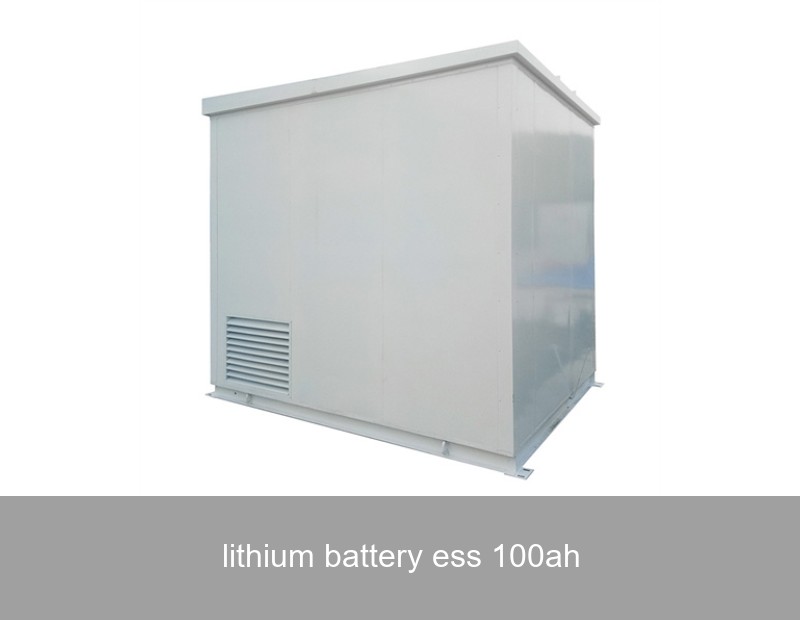
Have you ever wondered what's at the heart of a modern home energy storage system or a reliable off-grid power backup? More often than not, the answer is a lithium battery ESS (Energy Storage System) built around a core like the 100Ah lithium battery. This specific capacity has become a cornerstone for residential and small commercial storage, but what makes it so popular? In this guide, we'll unpack the technology, the benefits, and the real-world applications of a 100Ah lithium battery ESS, helping you understand why it might be the perfect fit for your energy independence goals.
Table of Contents
- What is a 100Ah Lithium Battery ESS?
- Why Choose a Lithium Battery ESS Over Traditional Options?
- Key Applications: Where Does a 100Ah System Shine?
- A Real-World Case Study: Residential Solar in Bavaria
- Choosing the Right System: Beyond the 100Ah Label
- The Highjoule Approach: Intelligent Systems, Not Just Batteries
What Exactly is a 100Ah Lithium Battery ESS?
Let's break down the terminology. ESS stands for Energy Storage System. It's not just a single battery; it's an integrated unit that includes the lithium-ion battery cells (like the 100Ah unit), a sophisticated Battery Management System (BMS), thermal controls, safety mechanisms, and often an inverter/charger. The 100Ah (Ampere-hour) rating refers to the battery's capacity. In simple terms, a 100Ah battery can theoretically deliver 100 amps of current for one hour, or 10 amps for 10 hours, before being fully discharged. In a home energy context, this translates to a usable energy storage capacity, typically between 4.8 kWh to 5.12 kWh, depending on the battery's voltage (48V being standard for home systems).
The Core Technology: Lithium-Ion Chemistry
Modern ESS units primarily use Lithium Iron Phosphate (LFP or LiFePO4) chemistry. Here's why it's the preferred choice for stationary storage:
- Safety: LFP is inherently more stable and less prone to thermal runaway than other lithium chemistries.
- Longevity: It offers a much longer cycle life—often 6,000 cycles or more to 80% capacity, which translates to decades of daily use.
- Performance: Maintains consistent power output and has excellent round-trip efficiency (often over 95%).

Image Source: Unsplash - Representative image of LFP battery modules.
Why Choose a Lithium Battery ESS Over Traditional Options?
The shift from lead-acid to lithium-ion in energy storage is as significant as the move from internal combustion engines to electric vehicles. The data speaks for itself:
| Feature | 100Ah Lithium (LFP) ESS | Traditional Lead-Acid |
|---|---|---|
| Cycle Life | 6,000+ cycles | 300-500 cycles (deep cycle) |
| Depth of Discharge (DoD) | 90-100% usable | ~50% usable to preserve life |
| Round-Trip Efficiency | >95% | 70-85% |
| Lifespan | 15-20 years | 3-5 years |
| Maintenance | Virtually none | Regular watering, cleaning |
This means a 100Ah lithium ESS delivers nearly double the usable energy, lasts 4-5 times longer, and wastes far less of your harvested solar energy as heat. The total cost of ownership over 20 years is decisively lower, despite a higher initial investment.
Key Applications: Where Does a 100Ah System Shine?
A 5kWh-scale system is incredibly versatile. Its primary applications include:
- Home Solar Self-Consumption: Store excess solar energy generated during the day for use at night, dramatically increasing your energy independence from the grid.
- Backup Power: Provide critical electricity during grid outages, keeping lights, refrigeration, and internet running.
- Off-Grid Living: Serve as the core storage component for cabins, remote homes, or telecom sites, often paired with a generator.
- Small Commercial/Utility: Multiple units can be stacked in a modular fashion to create larger storage arrays for peak shaving or microgrid projects.
A Real-World Case Study: Maximizing Solar in Bavaria
Let's look at a concrete example from our operations in Germany. The Müller family in Bavaria installed a 8.2 kWp solar rooftop system in 2022. While they were generating surplus power at midday, they were still buying expensive electricity in the evening. Their goal was to increase their solar self-consumption rate from 35% to over 80%.
Solution: Highjoule installed a modular HJS-5.0 ESS, which centers on a high-density 100Ah LFP battery pack. The system was integrated with their existing solar inverter via a dedicated energy management gateway.
Data & Results (12-month period post-installation):
- Self-Consumption Rate: Increased from 35% to 84%.
- Grid Import Reduction: Reduced by 78%.
- Financials: Achieved an annual savings of approximately €1,150 on their electricity bill, leading to a projected payback period of under 7 years for the ESS investment.
- Performance: The system's intelligent BMS ensured optimal charging/discharging, maintaining battery health at 99.2% State of Health (SoH) after the first year of 330 full cycles.
This case highlights how a correctly sized and intelligently managed 100Ah-class ESS directly translates to tangible economic and energy autonomy benefits. For more on self-consumption rates, the U.S. Department of Energy provides excellent resources.
Choosing the Right System: Beyond the 100Ah Label
Not all 100Ah systems are created equal. When evaluating a lithium battery ESS, consider these critical factors:
1. System Integration & Intelligence
Can the ESS communicate seamlessly with your solar inverter and home energy management system? An "island" of storage is less effective than an integrated one. Look for systems with open protocol support (like SunSpec, Modbus).
2. Scalability
Your energy needs may grow. Does the system allow for easy capacity expansion by adding additional battery modules? A modular design protects your initial investment.
3. Manufacturer Expertise & Warranty
A 10+ year warranty is standard, but it must be backed by robust engineering and field-proven performance. Look for providers with a track record in your specific climate and application.
The Highjoule Approach: Intelligent Systems, Not Just Batteries
At Highjoule, with nearly two decades of experience since 2005, we view a lithium battery ESS as the physical core of a much smarter energy ecosystem. Our HJS Series residential storage solutions, which feature the reliable 100Ah LFP cell architecture, are designed with this philosophy.
Our systems come with the Highjoule Energy Operating System (HEOS), a cloud-connected platform that does more than just charge and discharge. HEOS analyzes your consumption patterns, weather forecasts, and utility rate schedules (critical in markets with time-of-use billing) to optimize every kilowatt-hour. It automatically decides when to store solar energy, power your home, or even participate in grid services where available, maximizing your financial return.

Image Source: Unsplash - Concept of a modern home energy system with storage.
For commercial and microgrid applications, our scalable GridMAX solutions allow for the aggregation of multiple battery racks, providing not just backup power but active energy management and grid stability functions. We partner with installers across Europe and North America to ensure seamless design, installation, and lifetime support. You can explore the latest technical standards for storage systems from the IEEE and safety guidelines from NFPA.
Ready to See Your Energy Future?
A 100Ah lithium battery ESS is more than a product; it's a step toward energy resilience and sustainability. But the right configuration depends entirely on your unique energy profile, location, and goals. What specific energy challenge—be it rising bills, frequent outages, or a desire to reduce your carbon footprint—is motivating you to explore energy storage today?
 Inquiry
 Online Chat