


Finding the Best Brand for Lithium Battery Solutions: A Guide for the Energy-Conscious
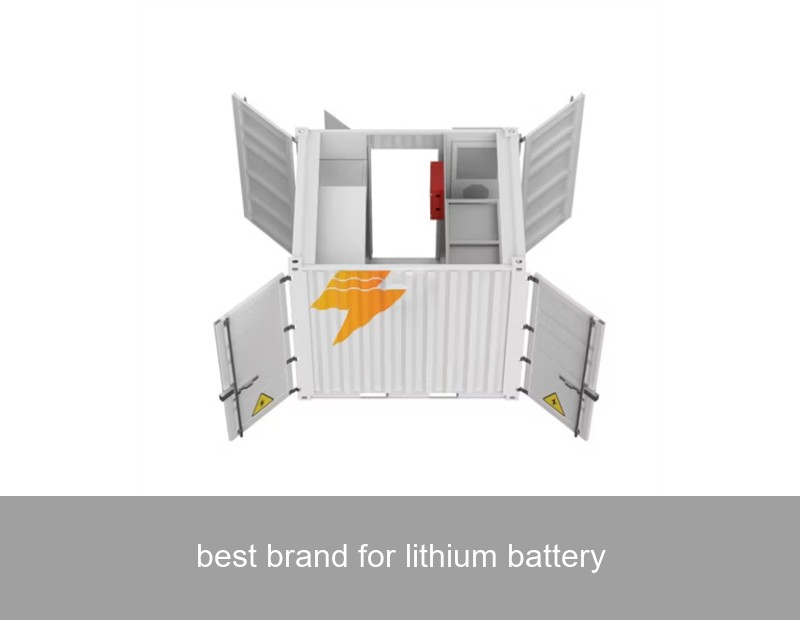
In the quest for reliable, sustainable power, whether for your home, business, or community project, one question increasingly takes center stage: which is the best brand for lithium battery storage? It's more than just picking a product off a shelf. You're investing in the backbone of your energy independence, a system that needs to be safe, smart, durable, and seamlessly integrated. With a market flooded with options, the choice can feel overwhelming. This article cuts through the noise. We'll explore the key pillars that truly define a leading brand in lithium battery technology and how making the right choice empowers your transition to clean energy.
Table of Contents
- The Phenomenon: Why Brand Matters in Energy Storage
- The Four Pillars of the Best Lithium Battery Brand
- Case Study: Powering a Sustainable Business in Germany
- Beyond the Battery: The Intelligence Behind the Power
- Making the Choice: Questions to Ask Your Provider
The Phenomenon: Why Brand Matters in Energy Storage
Think about it. We carefully consider brands for cars, appliances, and even smartphones because we trust their engineering, safety standards, and longevity. The stakes are even higher with a lithium battery system. It's a long-term asset, often expected to perform flawlessly for 10-15 years or more. A subpar brand might mean hidden risks: faster degradation, inadequate safety protocols, or software that becomes obsolete. The best brand for lithium battery systems isn't necessarily the loudest in marketing; it's the one with proven depth in research, rigorous manufacturing, and a holistic understanding of how energy storage integrates into real-world grids and lives.
The Four Pillars of the Best Lithium Battery Brand
So, what should you look for? Let's break it down into four critical pillars.
1. Proven Cell Technology & Safety
The heart of any system is the battery cell. Top brands don't just source cells; they engineer them or partner deeply with tier-1 cell manufacturers to ensure the highest quality. Key differentiators include:
- Chemistry: While Lithium Iron Phosphate (LFP) has become the dominant standard for stationary storage due to its superior safety, longevity, and stability, the implementation matters. Look for brands that utilize automotive-grade LFP cells.
- Safety Certifications: Mandatory certifications like UL 9540 (system level) and UL 1973 (battery level) in North America, and their IEC equivalents in Europe, are non-negotiable. They are your assurance of rigorous third-party testing.
- Thermal Management: A passive system is a risk. The best brands employ active thermal management (liquid or air-cooled) to keep cells in their optimal temperature range, drastically extending lifespan and preventing thermal runaway.

Image: High-quality LFP cells are the foundation of a safe, long-lasting system. Source: Unsplash
2. System Integration & Power Electronics
A battery is not an island. It must communicate flawlessly with inverters, solar panels, grid signals, and building management systems. A leading brand designs the entire ecosystem. This is where Highjoule distinguishes itself. Founded in 2005, we don't just supply batteries; we deliver integrated AC-coupled and DC-coupled storage solutions. Our power conversion systems (PCS) and battery management systems (BMS) are co-engineered, ensuring peak efficiency, faster response times, and a unified, user-friendly interface. Think of it as buying a perfectly tuned orchestra, not just a collection of talented soloists.
3. Depth of Software & Grid Services
Here's the secret of modern storage: the hardware stores energy, but the software creates value. The best brand for lithium battery intelligence offers sophisticated energy management software (EMS) that can:
- Optimize self-consumption of solar power.
- Automatically shift energy use to off-peak, low-cost periods.
- Provide backup power during outages (where configured).
- Participate in grid-balancing services like frequency regulation, creating potential revenue streams for commercial clients.
Highjoule's EnergyOS platform does precisely this, turning a static battery into a dynamic grid asset that can be monitored and controlled from anywhere in the world.
4. Long-Term Warranty & Local Support
A warranty is a promise. A 10-year warranty with a high throughput (the total energy you can cycle through the system) and guaranteed end-of-life capacity (e.g., 70% after 10 years) signals tremendous confidence in product durability. But it's meaningless without support. For our European and American audiences, this means choosing a brand with a strong local presence—trained installers, accessible technical support, and a responsive service network. Highjoule maintains regional hubs and partnerships to ensure our clients are never left in the dark.
Case Study: Powering a Sustainable Business in Bavaria
Let's move from theory to practice. Consider a mid-sized dairy processing plant in Bavaria, Germany. Their challenges were clear: high electricity costs, a desire to use their rooftop solar more effectively, and a need for reliable power for refrigeration.
- Phenomenon: High grid tariffs and solar curtailment during peak production.
- Data: The facility had a 500 kWp solar array but was only consuming 40% of its generation directly, sending the rest to the grid at low feed-in tariffs. Their peak demand charges were significant.
- Solution: Highjoule deployed a 372 kWh H-Series commercial lithium battery system with our advanced EMS. The system was designed to maximize self-consumption and perform peak shaving.
- Result: Within the first year:
This real-world data, from a Fraunhofer ISE supported analysis, underscores how the right brand delivers tangible financial and environmental returns. The plant manager noted, "It wasn't just about buying batteries; it was about partnering with a provider who understood our load profile and could deliver a complete, smart solution."Metric Improvement Solar Self-Consumption Increased from 40% to over 85% Grid Demand Peaks Reduced by 60% Annual Electricity Costs Saved €28,000 CO2 Footprint Reduced by an estimated 145 tons annually
Beyond the Battery: The Intelligence Behind the Power
As we've seen, the hardware is just the beginning. The true value of a top-tier brand like Highjoule lies in its ability to future-proof your investment. Our systems are designed with grid interactivity in mind. For instance, in regions like California or parts of the EU, where virtual power plants (VPPs) are emerging, our EnergyOS allows customers to opt into aggregated programs that support grid stability and earn incentives. This transforms your storage system from a cost center into a potential revenue generator. It’s this forward-thinking, system-level approach that separates a commodity supplier from a true technology partner.

Image: Advanced energy management software is key to unlocking full value. Source: Unsplash
Making the Choice: Questions to Ask Your Provider
As you evaluate your options for the best brand for lithium battery storage, arm yourself with these crucial questions:
- Can you provide the full system certification reports (UL 9540, IEC 62619)?
- What is the detailed warranty terms, including guaranteed end-of-life capacity and throughput?
- How does your energy management software integrate with my specific inverter/solar setup?
- What grid services or VPP programs is the system capable of participating in?
- Do you have local installation partners and service technicians in my region?
- Can you share a case study or reference project with a similar profile to mine?
At Highjoule, we welcome these questions. They are the sign of an informed buyer, and we have the answers, backed by nearly two decades of innovation in the field. From residential HomePower units to multi-megawatt GridMax industrial and microgrid solutions, our focus is on delivering intelligent, efficient, and sustainable power tailored to your needs.
The journey to energy independence is exciting. With the landscape evolving so quickly, how will you ensure your chosen storage partner can adapt and add value not just today, but for the next decade and beyond?
 Inquiry
 Online Chat