


The Summer Power Dilemma: When Your AC Becomes a Burden
it's the peak of summer. The sun is blazing, temperatures are soaring, and your air conditioner is working overtime to keep your home or business comfortable. You feel the relief from the heat, but then the electricity bill arrives—a staggering reminder of the cost of comfort. This scenario is all too common across sunny regions in Europe and the United States. But what if the very source of the heat—the sun—could also be the solution to this power problem? This is where a well-designed equipo solar para aire acondicionado (solar equipment for air conditioning) comes into play, transforming a major energy expense into a sustainable, self-sufficient operation.
What is a "Solar AC Equipment" Solution, Really?
At its core, a solar AC system is more than just slapping some photovoltaic (PV) panels on your roof and hoping they power your compressor. It's an integrated energy ecosystem. The concept is beautifully logical: solar energy production peaks during the sunniest, hottest parts of the day, which is precisely when your air conditioning demand is highest. By aligning generation with consumption, you can significantly offset grid electricity use during peak rate periods. According to the U.S. Department of Energy, properly sized solar systems can cover a substantial portion, if not all, of a building's cooling load.
However, the magic happens not just with generation, but with intelligent management and storage. This is the critical evolution from a simple solar setup to a true equipo solar (solar equipment) solution for AC.

Image: A modern home integrating solar panels with climate control. Source: Unsplash
Key Components of a Robust Solar AC System
Let's break down the essential pieces of this puzzle. A complete system involves careful coordination between several key technologies:
- High-Efficiency Solar Panels: These are your power plants. The goal is to maximize energy harvest from your available roof space, especially during peak daylight hours.
- Solar Inverter(s): This is the brain of the power conversion. It converts the direct current (DC) from your panels into the alternating current (AC) that your home and air conditioner use. Modern hybrid inverters are crucial for systems with storage.
- Energy Storage System (ESS): This is the game-changer. A battery storage system, like those developed by Highjoule, allows you to store excess solar energy generated in the afternoon to power your AC in the evening when the sun is down but temperatures—and cooling needs—remain high.
- Energy Management System (EMS): This is the conductor of the orchestra. An intelligent EMS, such as the software integrated into Highjoule systems, automatically decides when to use solar power directly, when to charge the batteries, and when to draw from the grid, optimizing for cost and efficiency.
- High-Efficiency Air Conditioner: Pairing your solar system with a modern, inverter-driven, high SEER-rated AC unit drastically reduces the overall energy load, making it easier for your solar setup to meet the demand.
| Time of Day | Solar Production | AC Demand | System Action (with Highjoule ESS) |
|---|---|---|---|
| Midday (12 PM - 4 PM) | Very High | Very High | Solar powers AC directly, excess energy charges batteries. |
| Evening (6 PM - 10 PM) | Low/None | High | Battery discharges to power AC, minimizing grid use during peak rates. |
| Night (10 PM - 6 AM) | None | Moderate | Battery supplies power until a preset threshold, then grid supplements if needed. |
Real-World Impact: A Case Study from Arizona, USA
Let's move from theory to practice. Consider a real-world example from Phoenix, Arizona—a city synonymous with extreme summer heat. A medium-sized commercial office with a 20-ton AC unit faced monthly summer electricity bills exceeding $2,800, with over 60% of the cost attributed to cooling.
The facility installed a tailored equipo solar para aire acondicionado system comprising:
- A 50kW rooftop solar array.
- A Highjoule H-Stack Commercial Battery Energy Storage System (BESS) with 100 kWh capacity.
- An integrated energy management platform for peak shaving.
The results, monitored over one summer season, were compelling:
- Grid Consumption Reduction: Peak-hour grid draw for cooling was reduced by 85%.
- Bill Savings: Overall monthly electricity costs dropped by approximately 70% during the cooling season.
- ROI: The system's payback period was calculated at under 5 years, thanks to significant demand charge avoidance and state incentives.
- Reliability: The battery system provided seamless backup power during two brief grid fluctuations, keeping critical cooling online.
This case underscores that the right technology combination doesn't just save money; it adds resilience.
The Highjoule Intelligent Solution: Beyond Just Panels
As a global leader in advanced energy storage since 2005, Highjoule understands that an effective equipo solar para aire acondicionado hinges on sophisticated storage and software. Our products are engineered to be the cornerstone of such systems.
For residential applications, the Highjoule Home Energy Hub is a sleek, integrated unit combining a hybrid inverter and modular lithium-ion batteries. Its AI-driven software learns your cooling patterns and automatically optimizes energy flow. For instance, it ensures your batteries are fully charged by late afternoon, ready for the evening AC load, all while maximizing self-consumption of your solar energy.
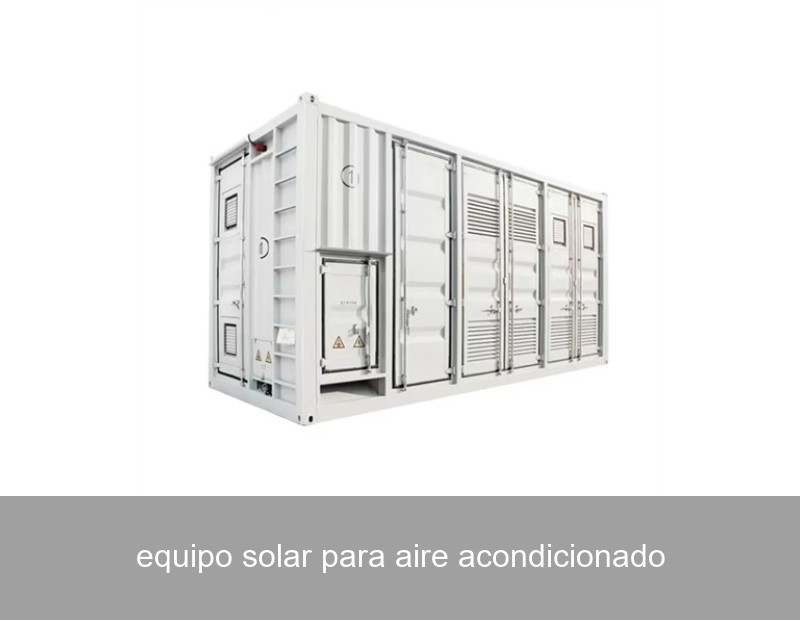
For commercial and industrial clients, our H-Stack Commercial BESS offers scalable, containerized storage. This is vital for businesses looking to perform "peak shaving"—using stored solar energy to power large AC units during expensive peak utility rate windows. The financial impact on demand charges can be transformative. Furthermore, our systems are designed for microgrid readiness, allowing facilities to maintain cooling and critical operations during grid outages, a feature becoming increasingly valuable.

Image: A technician inspecting a modern battery energy storage system. Source: Unsplash
Financial Incentives and Key Considerations
Investing in a solar AC system is a strategic financial decision. In the U.S., the federal Investment Tax Credit (ITC) currently offers a significant tax credit for both solar and standalone storage installations. Many states and utilities offer additional rebates, particularly for systems that reduce peak demand. In Europe, programs vary by country but often include favorable feed-in tariffs, VAT reductions, or grants for renewable energy and storage projects.
Before you embark on this journey, a professional assessment is key. Factors to evaluate include:
- Roof Orientation and Space: Is your roof suitable for enough panels?
- Historical Energy Usage: A detailed analysis of your past bills, especially summer peaks, is essential for correct sizing.
- Local Climate and Net Metering Policies: How does your utility credit you for excess solar energy? This affects the optimal size of your storage system.
- Future-Proofing: Are you planning an electric vehicle? A system designed with scalability in mind, like Highjoule's modular solutions, can adapt to future energy needs.
The Future of Cooling is Smart and Sustainable
The integration of solar generation, intelligent storage, and high-efficiency cooling represents a powerful step towards energy independence. It turns a passive, costly expense into an active, managed asset. The technology is not a future concept—it's operational today, delivering proven economic and environmental returns.
So, the next time you hear your air conditioner hum on a hot day, will you think of it as a drain on your finances, or as a candidate for a smarter, solar-powered future? What would the ability to control your cooling costs, regardless of utility rate hikes, mean for your home or business budget this coming summer?
 Inquiry
 Online Chat