


Finding the Best Home Battery Systems for Energy Independence and Security
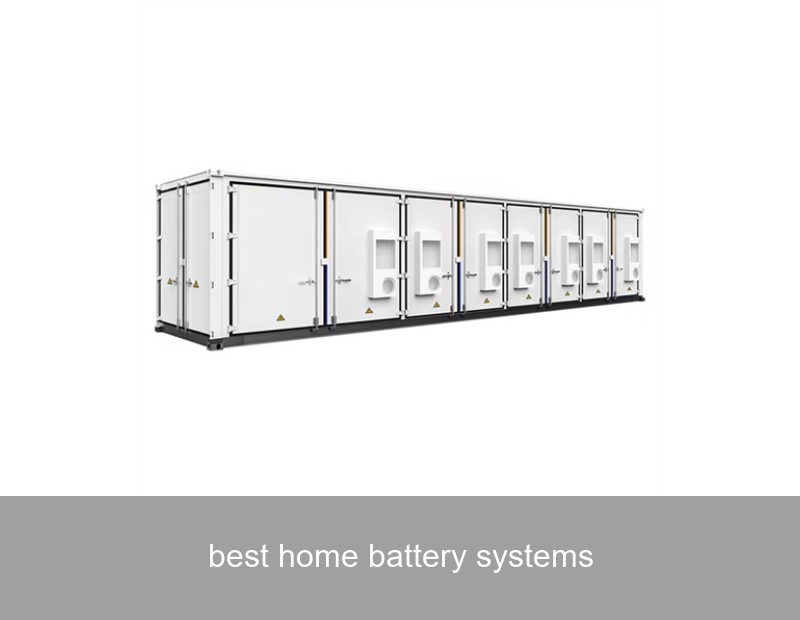
Imagine this: a severe storm knocks out the grid in your neighborhood. While others are left in the dark, your home's lights stay on, your refrigerator hums quietly, and your family carries on with a sense of security. This isn't just convenience; it's energy independence. As electricity prices fluctuate and extreme weather events become more common, homeowners across Europe and the US are actively seeking the best home battery systems to take control of their power. But with a growing market of options, how do you cut through the noise and identify the system that truly delivers on its promises for your specific needs? Let's demystify the key features and real-world performance that separate a good battery from the best.
What Makes a Home Battery System the "Best"?
The "best" system isn't a one-size-fits-all product. It's the one that aligns perfectly with your energy goals, whether that's maximizing self-consumption of solar power, providing unwavering backup during outages, or optimizing for time-of-use savings. The quest for the best home battery systems revolves around a balance of capacity, power, longevity, intelligence, and seamless integration with your existing or new solar panels.

Image Source: Unsplash (Representative image of a home energy system)
Key Criteria for Choosing the Best Home Battery System
Capacity & Power: The Core Duo
Think of capacity (measured in kilowatt-hours, kWh) as the size of your fuel tank, and power (measured in kilowatts, kW) as the size of the hose that delivers that fuel. A high-capacity battery with low power can run many small appliances for a long time but may struggle to start a large heat pump. The best systems offer a strong, balanced combination.
- Usable Capacity: Always look at the usable energy, as manufacturers often reserve a portion to protect battery health.
- Continuous & Peak Power: Ensure the system's continuous power rating can handle your essential loads simultaneously, and that it has a high peak power rating for motor starts.
Efficiency & Round-trip Efficiency
No system is 100% efficient. When you store AC electricity from the grid or your solar panels as DC in the battery, and then convert it back to AC for use, some energy is lost as heat. Round-trip efficiency is the percentage of energy you get back out versus what you put in. Top-tier systems today achieve over 90% round-trip efficiency. A 5% difference may seem small, but over the system's lifetime, it represents a significant amount of "lost" solar energy or increased cost.
Longevity & Warranty: Your Long-Term Peace of Mind
The battery's lifespan is defined by its warranty, which typically guarantees two things: a certain number of years and a retention of usable capacity or total energy throughput.
| Warranty Type | What It Means | What to Look For |
|---|---|---|
| Years | The period the warranty is valid (e.g., 10 years). | A longer period, ideally 10+ years. |
| End-of-Warranty Capacity | The minimum usable capacity guaranteed at the warranty's end (e.g., 70%). | A higher percentage (70% or more). |
| Unlimited Cycles | No limit on charge/discharge cycles within the warranty period. | This offers greater flexibility and value for daily use. |
Safety & Smart Features
The best home battery systems prioritize safety through robust cell chemistry (like lithium iron phosphate, or LFP, known for its thermal stability) and integrated battery management systems. Equally important is the system's intelligence. Can it learn your consumption patterns? Can it automatically switch to backup during an outage in milliseconds? Can it be programmed to charge from the grid when electricity is cheap and discharge when it's expensive? This smart energy management is what transforms a simple battery into a true home energy hub.
A Real-World Case Study: Powering Through a Texas Freeze
Let's move from theory to practice. During Winter Storm Heather in January 2024, a neighborhood in Austin, Texas, experienced a 36-hour grid outage. A household with a 13.5 kWh battery system paired with a 8 kW solar array provided a compelling data point.
- Scenario: Sub-freezing temperatures, grid down for 36 hours, intermittent sunlight.
- System Performance: The battery provided continuous power to essential loads: refrigeration, lighting, internet/Wi-Fi, and a natural gas furnace (which uses electricity for the blower and controls).
- Data & Outcome: By strategically managing loads and using limited solar generation during daylight, the home maintained essential power and indoor temperature for the entire outage duration. The battery's state of charge never dropped below 20%, demonstrating how proper sizing and smart management create resilience. According to the U.S. Department of Energy, such preparedness is increasingly critical.
This case highlights that the best home battery systems aren't just about specs on paper; they're about proven performance under stress.
The Highjoule Solution: Engineered for Performance and Resilience
At Highjoule, with nearly two decades of experience since 2005, we've engineered our HES Series Home Energy Storage systems to meet these rigorous criteria head-on. We believe the best system is one you don't have to think about—it just works, reliably and intelligently.
Our HES Series features industry-leading LFP battery chemistry for exceptional safety and longevity, backed by a robust 15-year warranty. With a round-trip efficiency of 94.5%, you maximize every kilowatt-hour of your precious solar generation. What truly sets it apart is the Highjoule EnergyOS platform. This intelligent software doesn't just react; it predicts. By analyzing weather forecasts, your historical usage, and real-time electricity rates, it autonomously optimizes your energy flow. It can prioritize solar self-consumption, schedule backup reserve for forecasted storms, or engage in peak shaving to reduce your demand charges if you're on a commercial tariff.

Image Source: Unsplash (Representative image of a battery storage unit)
Our systems are designed for scalability. Start with a single 5.6 kWh unit and expand up to 22.4 kWh to meet growing needs. They integrate seamlessly with both new and existing solar installations, providing a future-proof foundation for complete energy independence. For a deeper dive into the technical standards behind safe storage, organizations like the International Energy Agency (IEA) provide valuable context on the technology's global role.
Future-Proofing Your Energy Independence
The energy landscape is evolving towards dynamic, two-way grids and vehicle-to-home (V2H) technology. The best home battery systems available today are those built on an open, upgradeable platform. Highjoule's architecture is designed with this future in mind, allowing for potential integration with electric vehicles and grid services programs, ensuring your investment continues to deliver value for decades.
What's Your Home's Energy Resilience Profile?
Choosing the right system starts with understanding your own home's unique energy fingerprint. What are your non-negotiable loads during an outage (sump pump, medical equipment, heating)? What is your average daily energy consumption, and how much of your solar production do you want to capture? We invite you to reflect on your primary motivation: Is it security, savings, sustainability, or a combination of all three? Your answer is the first step in defining which system is truly the best for you.
 Inquiry
 Online Chat