


Tiamat Battery How Much? A Realistic Cost Guide for 2024
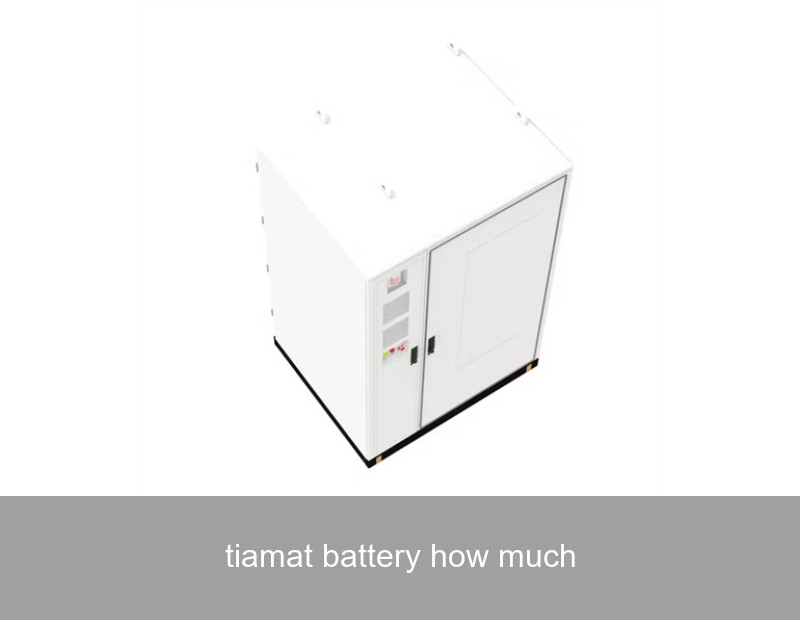
If you're researching the next wave of energy storage, you've likely stumbled upon a promising new technology: the Tiamat sodium-ion battery. And the first question that comes to mind is almost always, "Tiamat battery, how much does it actually cost?" It's a smart question. While headlines tout sodium-ion as the cheaper alternative to lithium-ion, the real-world price tag isn't a single number on a shelf. As a leader in advanced energy storage, Highjoule is here to demystify the costs. The answer isn't just about the battery cell; it's about the total value of a system that's safer, more sustainable, and perfectly suited for specific applications.
Let's cut through the hype. Sodium-ion technology, pioneered by companies like Tiamat, uses sodium salt instead of lithium. The raw materials are abundant and geographically widespread, which promises a fundamental cost advantage. But in 2024, we're in the early commercialization phase. So, when you ask "how much?", you're really asking about the investment in a pioneering technology that offers distinct benefits beyond just kilowatt-hours.

Image Source: Unsplash - Representative image of advanced battery manufacturing.
Key Factors Affecting the "Tiamat Battery How Much" Question
Pricing a sophisticated energy storage system is never one-size-fits-all. Several core factors directly influence the final investment for a Tiamat-based solution:
- System Scale & Capacity: Are you looking at a compact residential unit (often in the 5-10 kWh range) or a massive commercial/industrial containerized system (1 MWh+)? The price per kWh typically decreases with scale.
- Integration Complexity: The battery cells are just one component. The total cost includes the Battery Management System (BMS), power conversion systems (PCS), thermal management, safety enclosures, and sophisticated integration software.
- Application Specifics: Is the system for simple solar self-consumption, critical backup power, or fast-frequency grid services? High-power applications requiring rapid charge/discharge may influence the system design and cost.
- Market & Logistics: As a technology with strong potential in Europe and the U.S., shipping, local certifications, and installer mark-up affect the installed price.
Tiamat Battery Cost Breakdown: From Cells to Complete System
To understand the cost, let's break it down layer by layer. Current industry estimates suggest that at the cell level, sodium-ion batteries like Tiamat's are already competitive with some lithium-ion chemistries, notably Lithium Iron Phosphate (LFP). According to a 2023 analysis by the International Energy Agency (IEA), sodium-ion batteries have the potential for significant cost reduction due to lower raw material costs.
| Cost Component | Considerations for Sodium-Ion (Tiamat) | Impact on Final "How Much" |
|---|---|---|
| Cell & Module Cost | Lower cost of sodium, aluminum current collectors. Early-stage production volumes. | Foundation cost, promising long-term reduction. |
| Battery Management System (BMS) | Requires tailored algorithms for sodium-ion's voltage characteristics. | Critical for safety & longevity; a key part of system cost. |
| Power Conversion & Integration | Similar cost to lithium-ion systems for inverters, wiring, enclosures. | Often the largest portion of the total installed cost. |
| Installation & Commissioning | Familiar process for installers, similar safety protocols. | Variable based on location and project complexity. |
For a complete, installed, and commissioned system in 2024, prospective buyers in Europe and the U.S. should expect a price range. While specific quotes are project-dependent, the total cost for a Tiamat sodium-ion battery system can be broadly comparable to a premium LFP lithium-ion system. The value proposition isn't necessarily a lower upfront price today, but rather a combination of long-term supply chain security, superior safety (no thermal runaway), excellent performance in a wide temperature range, and a sustainable profile.
Real-World Case Study: Commercial Backup in Southern Europe
Let's move beyond theory. A mid-sized food processing plant in Spain faced unreliable grid power and sought a sustainable backup solution. Their priority was a safe system that could operate in high ambient temperatures without expensive cooling.
- Challenge: Provide 4 hours of backup power for critical refrigeration (approx. 200 kWh capacity). Avoid lithium-ion thermal management overhead.
- Solution: A custom-integrated energy storage system utilizing Tiamat sodium-ion modules, designed and supplied by Highjoule. Our engineers leveraged sodium-ion's stability across a wide temperature range (-20°C to 60°C) to simplify the enclosure design.
- Data & Outcome: The system was commissioned in Q4 2023. The installed cost was within 5% of a comparable LFP solution. However, the operational savings are projected to be 15-20% over 10 years due to lower maintenance and negligible cooling energy needs. The plant manager noted: "We got the reliability we needed, with the added peace of mind on safety and sustainability."

Image Source: Unsplash - Representative image of an industrial facility with energy systems.
How Highjoule Integrates Next-Gen Tech Like Tiamat Into Reliable Solutions
At Highjoule, we don't just sell batteries; we deliver intelligent, application-optimized power ecosystems. When a client asks us about sodium-ion or "Tiamat battery how much," we start by understanding their unique energy profile. Founded in 2005, we've built our expertise on integrating the right technology for the right job.
For clients where the inherent benefits of sodium-ion align—such as in environments with extreme temperature swings, where safety is non-negotiable, or where supply chain diversification is key—we design systems around these advanced cells. Our Highjoule H-Series Commercial Energy Platform is architected to be chemistry-agnostic, allowing us to seamlessly incorporate Tiamat's sodium-ion modules alongside other technologies. This means you get a system with our proven, smart BMS and grid-interactive controls, powered by the most suitable battery chemistry for your goals.
Our service includes a full lifecycle partnership: from initial feasibility and financial modeling, through custom engineering and commissioning, to long-term monitoring via our Highjoule EnergyOS platform. This ensures that when you invest in a cutting-edge technology, you're supported by decades of system integration experience.
The Future of Sodium-Ion Costs: What to Expect
The cost trajectory for sodium-ion is a bright spot. As production scales up globally, driven by demand in both stationary storage and specific electric vehicle segments, economies of scale will kick in. Research from Nature Energy suggests that the learning rate for sodium-ion could be steeper than for lithium-ion, potentially leading to it becoming the lowest-cost battery technology within a few years. For forward-thinking businesses and homeowners, this makes early adoption with a trusted integrator like Highjoule a strategic move, locking in resilience today while positioning for a cost-advantaged future.
Ready to See the Real Value Beyond the Price Tag?
So, "Tiamat battery, how much?" The most accurate answer comes from a conversation. What is the true cost of a grid outage for your business? What is the value of a safer battery system in your facility? How does securing a diverse, sustainable supply chain for your energy needs benefit your long-term operations? Highjoule's experts are here to translate the promise of sodium-ion into a tangible, optimized, and reliable solution for you. What specific energy challenge could a safer, temperature-resilient battery solve for your operation?
 Inquiry
 Online Chat