


Finding the Best Lithium Battery for Solar in Kenya: A Guide to Reliable Power
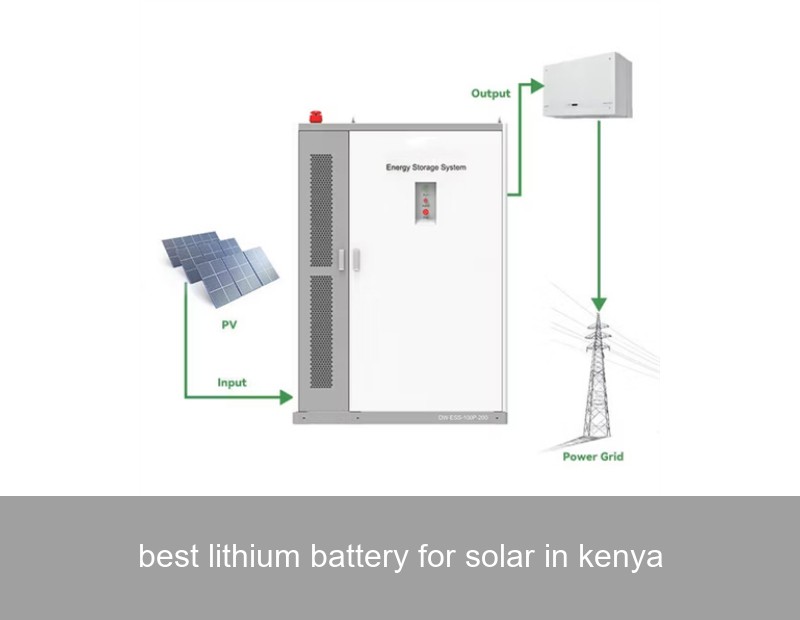
Imagine a world where power outages don't disrupt your business, your children's studies aren't halted by nightfall, and your clinic's vaccines are always safely refrigerated. For many in Kenya, this isn't just a dream—it's a necessity being unlocked by solar energy. But the heart of a truly effective solar power system isn't just the panels on the roof; it's the best lithium battery for solar in Kenya that stores that precious energy for when you need it most. As a global leader in advanced energy storage, Highjoule understands that choosing the right battery is critical for resilience, return on investment, and sustainability. This article will guide you through what makes a lithium battery truly the "best" for Kenya's unique conditions, from the sun-drenched coasts to the highland regions.
Table of Contents
- The Kenyan Power Puzzle: More Than Just Sunlight
- What Makes the "Best" Lithium Battery for Solar in Kenya?
- Case Study: Powering a Nakuru Agri-Processor
- Beyond the Battery: The Highjoule Advantage
- Your Energy Future: What's the Next Step?
The Kenyan Power Puzzle: More Than Just Sunlight
Kenya is a solar energy pioneer in Africa, with impressive irradiance levels. Yet, the challenge isn't just generation—it's reliable storage and management. The national grid, while expanding, can be inconsistent, with many businesses and households experiencing frequent outages or "low current" periods. This unreliability forces reliance on expensive, noisy, and polluting diesel generators. The phenomenon is clear: solar panels produce abundant energy during the day, but without a robust storage solution, that energy is wasted when the sun goes down or the grid fails.
Let's look at the data. According to the World Bank, only about 75% of Kenya's population had access to electricity in 2021. For the connected population, reliability is key. A 2023 report by the Kenya Association of Manufacturers cited power quality and cost as top constraints to industrial growth. This is where the right lithium battery becomes not just a product, but a strategic asset.

So, what should you look for? It's not just about the highest kilowatt-hour (kWh) rating. The best lithium battery for solar in Kenya must be a workhorse built for the local environment.
What Makes the "Best" Lithium Battery for Solar in Kenya?
Not all lithium batteries are created equal. For Kenyan applications—be it a bustling Nairobi restaurant, a Maasai Mara safari lodge, or a rural health clinic—specific features are non-negotiable.
1. Chemistry and Cycle Life: The Heart of Longevity
Lithium Iron Phosphate (LFP or LiFePO4) is widely considered the superior chemistry for stationary solar storage. Why? It boasts exceptional thermal and chemical stability, meaning it's safer and lasts much longer than other lithium types. A quality LFP battery can deliver over 6,000 charge cycles while retaining 80% of its capacity. In practical terms, that's over 15 years of daily use. This directly translates to a lower total cost of ownership, a crucial metric for any investment.
2. Temperature Resilience: Built for the Kenyan Climate
From the heat of Mombasa to the cooler highlands, batteries face temperature swings. High temperatures accelerate battery degradation. The best lithium battery for solar in Kenya must have an advanced Battery Management System (BMS) with precise thermal monitoring and control. It should operate efficiently within a wide ambient temperature range without significant performance loss.
3. Depth of Discharge and Usable Capacity
This is a critical differentiator. Many batteries advertise a capacity (e.g., 10 kWh) but only allow you to use 80-90% of it to prolong life. The best systems offer a Depth of Discharge (DoD) of 95% or more. This means you get virtually all the energy you paid for, maximizing your independence during every grid outage or night cycle.
4. Scalability and Integration
Your energy needs will grow. A modular battery system that allows you to easily add more units in parallel is far superior to a single, monolithic unit. Furthermore, seamless integration with hybrid inverters (solar/grid/generator) is essential for a smooth, automated power experience.
| Feature | Why It Matters for Kenya | What to Look For |
|---|---|---|
| Battery Chemistry | Safety, longevity, and performance under stress. | Lithium Iron Phosphate (LFP/LiFePO4) |
| Cycle Life | Determines the battery's lifespan and economic value. | > 6,000 cycles @ 80% Depth of Discharge |
| Thermal Management | Ensures reliability during hot days and cool nights. | Advanced BMS with active cooling/heating capability |
| Scalability | Allows system to grow with your business or family needs. | Modular, stackable design |
| Warranty & Support | Peace of mind and long-term partnership. | 10+ year warranty with local technical support |
Case Study: Powering Growth for a Nakuru Horticulture Processor
Let's move from theory to a real-world case. GreenHarvest Ltd., a medium-sized horticulture processor in Nakuru, faced crippling daily power outages during peak processing hours (4 PM - 8 PM). Their diesel generator bill was exceeding KES 180,000 monthly, and voltage fluctuations were damaging sensitive packing machinery.
Their solution was a 120kW solar PV array coupled with a 240kWh lithium battery storage system. After a detailed analysis by Highjoule's engineering partners in Kenya, our HPS Series Commercial Stack was selected. This modular LFP battery system was chosen for its:
- High Cycle Life: Matching the 25-year lifespan of the solar panels.
- High Power Output: Capable of starting and running large industrial cold rooms and motors seamlessly.
- Smart Grid Interaction: The system's controller automatically switches between solar, battery, and a minimized generator use, prioritizing the cheapest and cleanest source.
The results after 18 months? A 92% reduction in generator fuel costs, complete immunity to grid blackouts during operation, and a projected return on investment (ROI) in under 5 years. Most importantly, they secured export contracts requiring uninterrupted cold-chain compliance—something impossible with an unreliable grid. This demonstrates how the best lithium battery for solar in Kenya is an engine for economic growth, not just a backup device. The IEA highlights Kenya's focus on renewable integration, and stories like GreenHarvest are at the forefront.

Beyond the Battery: The Highjoule Advantage
At Highjoule, we believe the best lithium battery for solar in Kenya is part of an intelligent ecosystem. Since 2005, we've evolved from a component provider to a full-solution architect for commercial, industrial, and microgrid applications.
Our products, like the HPS Series for commercial scale and the integrated HomePower Stack for premium residential use, are designed with the principles above: LFP chemistry, exceptional cycle life, modularity, and robust thermal management. But we go further:
- AI-Powered Energy Management: Our systems don't just store energy; they learn your consumption patterns and optimize for cost and efficiency, automatically.
- Global Standards, Local Partnership: We manufacture to the highest international safety and quality standards (UL, IEC, etc.) and work through a network of certified, trained local installers and partners across East Africa. This ensures proper design, installation, and after-sales service.
- Future-Proof Design: Our systems are software-upgradable and can integrate with evolving grid services, protecting your investment for the long term.
Choosing a Highjoule system means choosing a partnership focused on your energy independence and operational resilience.
Your Energy Future: What's the Next Step?
The journey to energy independence starts with a question. Are you calculating the true cost of unreliable power—lost productivity, spoiled goods, equipment damage, and soaring diesel costs? Or, for a homeowner, the value of uninterrupted life, security, and comfort?
We invite you to look beyond the sticker price of a battery and consider the total cost of ownership and the value of unwavering reliability. What would a 95% reduction in power interruptions do for your business or home life? The technology is here, proven, and ready to transform your relationship with energy.
What is the first load you would secure with reliable, solar-stored power today?
 Inquiry
 Online Chat