


Finding the Best Lithium Battery for Solar in Nigeria: Beyond Capacity to Resilience
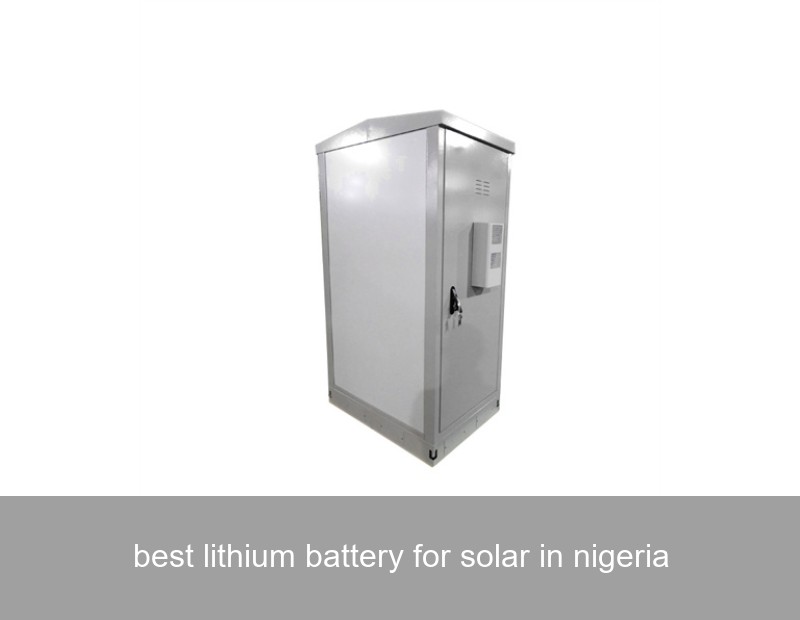
Nigeria is bathed in sunlight for most of the year, presenting a colossal opportunity for solar energy. Yet, for homeowners and businesses investing in solar panels, a critical question often dims the excitement: "How do I ensure this clean power is available when I need it most, especially after sunset or during grid outages?" The answer, and the true linchpin of a reliable solar system, lies in choosing the best lithium battery for solar in Nigeria. But this choice isn't just about picking the highest amp-hour rating from a catalog. It's about selecting an energy storage solution engineered to thrive in Nigeria's specific environment and usage demands—where heat, grid instability, and the need for robust return on investment intersect.
What Makes the "Best" Lithium Battery for Solar in Nigeria?
Let's move beyond marketing claims. In the Nigerian context, the "best" lithium battery is defined by its ability to deliver reliable power, maximize solar self-consumption, and require minimal upkeep over a long, productive life. Here are the non-negotiable pillars:
- Thermal Resilience & High Temperature Tolerance: Average temperatures in Nigeria hover around 25-30°C, with peaks much higher. Lithium batteries are sensitive to heat, which accelerates degradation. The best batteries feature advanced thermal management systems (not just a BMS) to maintain optimal cell temperature, ensuring longevity where it matters most.
- Deep Cycle Capability & High Usable Capacity: Frequent power outages mean batteries often undergo deep discharge cycles. You need a battery with a high Depth of Discharge (DoD) – ideally 90% or more – and a design built for daily deep cycling without significant wear. This gives you access to almost all the stored energy you paid for.
- Longevity and Cycle Life Warranty: The economics of solar-plus-storage hinge on the battery's lifespan. Look for batteries that guarantee a high number of cycles (e.g., 6,000+ at 80% depth of discharge) with a warranty that reflects confidence in the product. A 10-year warranty is becoming a benchmark for quality.
- Integrated Safety & Battery Management System (BMS): A sophisticated BMS is the brain of the battery. It must protect against overcharge, deep discharge, short circuits, and critically, thermal runaway. It should also provide communication for system monitoring and control.

Image: A robust, modular lithium battery installation is key for scalable and safe solar energy storage. (Source: Unsplash, representative image)
Lithium Chemistry Matters: LFP is the Front-Runner
While "lithium-ion" is a broad term, Lithium Iron Phosphate (LFP) chemistry has emerged as the premier choice for stationary solar storage globally, and for excellent reasons relevant to Nigeria:
| Feature | LFP (LiFePO4) Battery | Traditional NMC Battery |
|---|---|---|
| Thermal & Chemical Stability | Excellent; much safer, lower risk of thermal runaway | Moderate; requires more stringent thermal management |
| Cycle Life | Typically longer (6,000+ cycles) | Generally shorter (3,000-5,000 cycles) |
| Performance in Heat | More tolerant to high ambient temperatures | More susceptible to heat-induced degradation | Cost Over System Life | Lower total cost of ownership due to longevity | Potentially higher due to earlier replacement |
For a climate like Nigeria's and the priority of safety, LFP's inherent stability makes it the technical front-runner for the title of best lithium battery for solar in Nigeria.
Case Study: A Lagos Business Beats "Diesel Peak" with Intelligent Storage
Consider the real-world challenge faced by a medium-sized Lagos-based food processing company. They had a 100kW rooftop solar array but still relied heavily on the grid and diesel generators during peak afternoon operations and evening shifts. Their goal: reduce diesel consumption by 80% and gain 5 hours of backup power for critical cold storage.
- Phenomenon: Solar overproduction at midday was being clipped, while expensive diesel was burned in the late afternoon.
- Data & Solution: They integrated a 240kWh Highjoule H-Cube Commercial LFP battery system. The system's intelligent software was programmed for peak shaving and time-of-use optimization, storing excess midday solar for the 3 PM - 8 PM high-demand period.
- Result: Within the first year:
- Diesel generator usage dropped by 85% during operating hours.
- Grid electricity costs during peak tariff hours were reduced by 70%.
- The battery system provided seamless backup during grid failures, maintaining critical refrigeration without interruption.
This case highlights that the "best" battery is part of an intelligent system. It's not just a tank for electrons; it's an active grid-management tool that delivers direct financial ROI. You can explore more on the importance of storage for grid stability from the International Energy Agency.
Engineered for Resilience: The Highjoule Solution for Nigerian Solar Projects
At Highjoule, with nearly two decades of experience in advanced energy storage, we've designed our product lines to meet the exacting standards required for reliable operation in markets like Nigeria. Our systems are built not just to store energy, but to do so intelligently and durably.
For residential and small commercial applications, our Highjoule Home+ series features LFP battery packs with an integrated, AI-driven energy management system. It learns your consumption patterns, maximizes solar self-consumption, and can be configured for essential or whole-home backup, all managed via a user-friendly app.
For larger commercial, industrial, and microgrid projects, the Highjoule H-Cube Commercial modular system is the cornerstone. Its containerized or rack-mounted design is scalable from 100kWh to multiple MWh. Key features include:
- Liquid-Cooled Thermal Management: Actively regulates cell temperature, ensuring peak performance and longevity even in hot climates.
- Cyclonic+ BMS: Our proprietary multi-layer battery management system provides cell-level monitoring, state-of-health analytics, and failsafe protection.
- Grid-Forming Inverter Compatibility: In critical backup scenarios, it can form a stable microgrid, keeping essential operations running smoothly without reliance on the main grid.
We understand that a battery is a long-term investment. That's why our 10-year performance warranty isn't just a document—it's backed by remote performance monitoring and a global support network, principles outlined by quality-focused organizations like the Solar Energy International.

Image: Professional installation and monitoring are crucial for large-scale, high-performance battery systems. (Source: Unsplash, representative image)
Looking Beyond the Battery: System Intelligence is Key
Choosing the best lithium battery for solar in Nigeria is a major step, but its performance is ultimately dictated by the system it's integrated into. The inverter's compatibility, the system design, and most importantly, the energy management software are what transform a storage system from passive to proactive.
Can your system be programmed to prioritize solar charging during the day, ensure backup for essential loads, and even participate in future grid services? Does it provide clear, actionable data on your energy flows, savings, and battery health? This intelligence layer is where companies like Highjoule add immense value, turning a capital expenditure into a smart, revenue-protecting asset. For a deeper dive into smart grid technology, the U.S. Department of Energy provides extensive resources.
What Does Your Energy Future in Nigeria Look Like?
The journey to energy independence through solar is an exciting one. The cornerstone of that journey—selecting the right storage partner—requires looking beyond basic specs to holistic performance in your environment. It's about resilience, intelligence, and a total cost of ownership that makes undeniable sense.
So, as you evaluate your options for a solar storage system, we leave you with this question to discuss with your installer: Is your proposed battery system merely a backup component, or is it an intelligent energy asset designed to actively manage your costs and power quality for the next decade and beyond?
 Inquiry
 Online Chat