


Finding the Best Solar Power System for Off-Grid Living: A Comprehensive Guide
Imagine a life untethered from the utility grid, powered entirely by the sun. For homeowners in remote cabins, rural properties, or those simply seeking energy independence, finding the best solar power system for off-grid is the crucial first step. But with so many components and technical specs, where do you even begin? This guide cuts through the complexity. We'll explore the key elements of a robust off-grid system, share real-world data from a successful installation, and introduce you to Highjoule's tailored solutions that ensure your off-grid dream is both powerful and reliable.
Table of Contents
- The Core Challenge: More Than Just Panels on a Roof
- Anatomy of a Champion: Key Components of the Best Off-Grid Solar System
- Real-World Proof: A Case Study from the Colorado Rockies
- The Highjoule Solution: Intelligent Energy Independence
- Beyond the Basics: Ensuring Long-Term Reliability
The Core Challenge: More Than Just Panels on a Roof
The dream of off-grid living often starts with solar panels, but the reality is far more nuanced. An effective off-grid system isn't just about generating power when the sun shines; it's about providing a stable, 24/7 electricity supply regardless of weather. The primary challenge? Energy balancing. You must meticulously match your energy production (solar panels) with your energy storage (batteries) and consumption (appliances), all while planning for consecutive cloudy days or peak winter demand. A system sized incorrectly can lead to frustrating blackouts or a very expensive overbuild.
Anatomy of a Champion: Key Components of the Best Off-Grid Solar System
Let's break down the non-negotiable components that define a top-tier off-grid solar power system.
1. Solar Panels: Your Primary Energy Harvesters
High-efficiency monocrystalline panels are typically the best choice for off-grid due to their superior power output per square foot—a critical factor when roof or ground space is limited. Durability against harsh weather is equally important.
2. The Battery Bank: The Heart of Your Independence
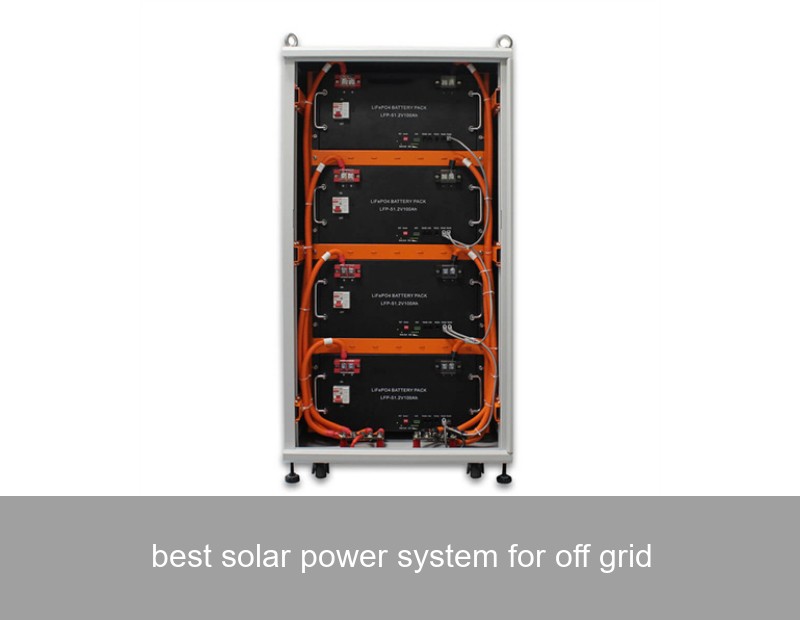
This is where your "sunshine" is stored for use at night and on cloudy days. Lithium-ion batteries, particularly Lithium Iron Phosphate (LFP), have become the standard for the best solar power system for off-grid thanks to their long lifespan (often 10+ years), deep discharge capability, and compact size. Unlike older lead-acid batteries, they require minimal maintenance and offer superior performance.

Image Source: Unsplash - Representative image of modern battery storage
3. The Inverter/Charger: The Brain and Nervous System
This multi-talented device converts the DC electricity from your panels and batteries into the AC power your home uses. In an off-grid setup, it also manages battery charging from multiple sources (solar, generator) and ensures seamless power quality. Look for a pure sine wave inverter for compatibility with sensitive electronics.
4. The Charge Controller: The Protective Guardian
Sitting between your panels and batteries, this device regulates the voltage and current to prevent overcharging, which can severely damage your battery bank. Maximum Power Point Tracking (MPPT) controllers are the most efficient choice.
5. The Backup Generator (Optional but Recommended)
A propane or diesel generator acts as a reliable backup for extended periods of poor weather. The best systems integrate the generator automatically to recharge batteries when needed, ensuring uninterrupted power.
| Component | Key Consideration | Recommendation for Best Performance |
|---|---|---|
| Solar Panels | Efficiency & Durability | Monocrystalline, 21%+ efficiency, strong warranty |
| Battery | Cycle Life & Depth of Discharge | Lithium Iron Phosphate (LFP), 6000+ cycles, 90%+ DoD |
| Inverter | Output Waveform & Power Rating | Pure Sine Wave, sized 20-30% above peak load |
| Charge Controller | Technology Type | MPPT for maximum energy harvest |
Real-World Proof: A Case Study from the Colorado Rockies
Let's look at a real installation to understand the numbers. A family in a remote part of the Colorado Rockies (elevation 9,200 ft) needed a year-round system to power a 2,000 sq ft home.
- Challenge: Harsh winters with heavy snow, temperatures down to -20°F, and occasional "sun drought" periods.
- Solution: A 12 kW solar array, a 40 kWh LFP battery bank, and a 12 kW inverter/charger with an integrated 12 kW propane generator backup.
- Outcome & Data: In its first full year, the system generated 16,500 kWh. The battery bank provided 2-3 days of autonomy. The generator automatically ran for less than 50 total hours over the entire winter, primarily during a severe 5-day snowstorm. The system achieved 99.8% uptime, with the family reporting no disruption to their daily lives. This project underscores that the best solar power system for off-grid isn't the biggest, but the one most intelligently matched to its environment and load profile. You can explore more about off-grid load calculations from resources like the U.S. Department of Energy.
The Highjoule Solution: Intelligent Energy Independence
At Highjoule, we've been engineering resilience into energy storage since 2005. We understand that an off-grid system is more than a product—it's a personalized power plant. That's why our EverOff Grid series is designed as a fully integrated, smart solution.
Our systems combine our high-density, UL-certified LFP battery modules with our proprietary HarmonyOS energy management system. HarmonyOS doesn't just react; it predicts. By analyzing weather forecasts and your usage patterns, it optimizes charging cycles, strategically conserves energy, and seamlessly activates backup generation only when absolutely necessary, maximizing the lifespan of every component. For larger needs, such as microgrids or commercial off-grid applications, our Industrial Energy Platform (IEP) offers scalable, containerized solutions. We provide a complete service package from initial site assessment and custom design to installation support and remote monitoring.

Image Source: Unsplash - Representative image of an off-grid solar-powered home
Beyond the Basics: Ensuring Long-Term Reliability
Choosing the right hardware is half the battle. The other half is intelligent design and ongoing insight. A common pitfall is undersizing the battery bank based on average consumption, not peak demand or worst-case weather. Professional load auditing is essential. Furthermore, consider the future—will you add an electric vehicle charger or a workshop? The best solar power system for off-grid is modular and scalable.
Remote monitoring, a feature central to Highjoule's systems, is a game-changer. It allows you (and your installer) to view system performance in real-time from a smartphone, receive proactive maintenance alerts, and diagnose issues before they cause an outage. This level of oversight, often discussed in industry reports from groups like the Solar Energy Industries Association, transforms an off-grid system from a "set-it-and-forget-it" machine into a responsive and adaptive energy partner.
So, as you contemplate your journey to energy independence, we leave you with this question: What does true energy resilience look like for your unique off-grid life, and how can your power system be designed not just to meet, but to anticipate your needs?
 Inquiry
 Online Chat