


Navigating the World of the Biggest Solar Panel Companies: A Guide to Smart Energy Integration
When you think about going solar, the first names that come to mind are often the biggest solar panel companies. Giants like JinkoSolar, LONGi, and Trina Solar dominate headlines with their gigawatt-scale production and cutting-edge PERC or TOPCon cell technologies. It's a fascinating and competitive arena. But here's a crucial insight from the trenches of renewable energy: the panel is just the beginning of the story. The true measure of a successful solar project—whether for a home, a factory, or a community—isn't just who manufactured the panels, but how intelligently that generated power is stored, managed, and utilized. That's where the conversation shifts from pure generation to complete system integration.
The Global Solar Landscape: Key Players and Market Trends
The solar manufacturing industry is a global powerhouse, primarily led by companies based in China, with strong contenders from the U.S. and other regions. Their scale is staggering. According to industry analysis, the top module suppliers shipped over 200 GW of panels globally in a recent year, enough to power tens of millions of homes. This massive production drive has been instrumental in bringing down the levelized cost of solar electricity by over 80% in the last decade.
Let's look at a quick comparison of some key attributes:
| Company (Representative) | Core Technology Focus | Global Market Presence |
|---|---|---|
| JinkoSolar | N-type TOPCon, High Efficiency | Extensive across Americas, Europe, Asia |
| LONGi | Mono-crystalline, PERC & HPBC | World's largest wafer producer, global shipments |
| First Solar (U.S.) | Thin-film Cadmium Telluride (CdTe) | Strong in Americas, utility-scale projects |
| Qcells | PERC, Q.ANTUM, and planned U.S. manufacturing | Major player in U.S. and European residential markets |
Choosing among these leaders often comes down to efficiency ratings, warranty terms, and local availability. However, this focus on the panel alone can lead to a common pitfall: underestimating the system. A high-efficiency panel producing at noon is only one part of the energy equation. What happens when the sun sets, or during peak demand charges for a business?

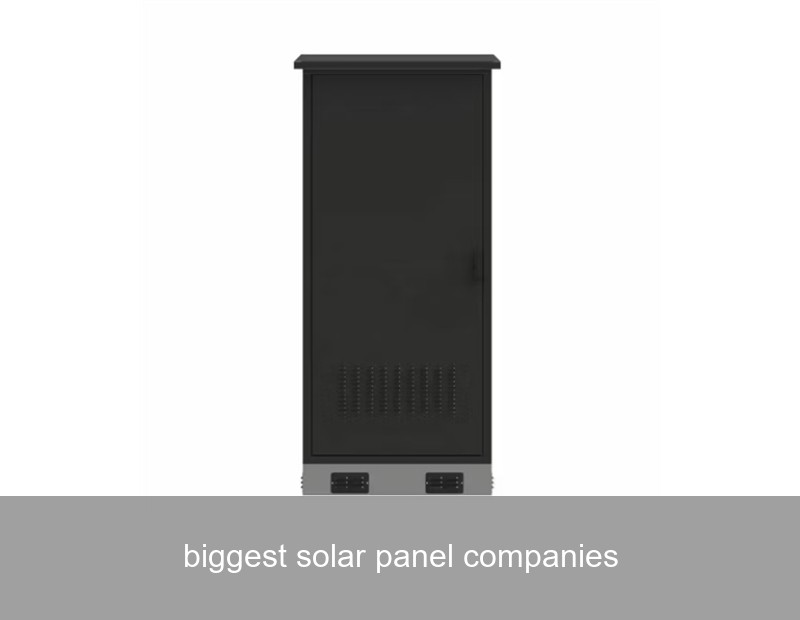
Image Source: Unsplash. High-efficiency panels are the starting point, but intelligent storage unlocks their full potential.
Beyond the Panel: The Critical Role of Energy Storage
This is the pivotal turn in modern energy thinking. The most advanced solar panel in the world cannot provide power on demand without a complementary storage system. This is the key to energy independence, resilience, and maximizing financial return. Think of it this way: solar panels are your energy collectors, but a battery energy storage system (BESS) is your energy bank account. It allows you to:
- Time-Shift Energy: Store excess solar generation from the day for use at night, drastically increasing self-consumption.
- Provide Resilience: Keep critical loads running during grid outages, a feature increasingly valuable for homes and businesses alike.
- Manage Costs: For commercial and industrial users, strategically discharge stored energy during peak rate periods can slash demand charges.
- Stabilize the Grid: At a larger scale, storage is essential for integrating high levels of variable renewable energy into the microgrid or main grid.
This is precisely where Highjoule's expertise becomes indispensable. While we don't manufacture panels, we specialize in the intelligent brain and robust muscle behind them. Since 2005, Highjoule has been a global leader in designing and deploying advanced, integrated storage solutions that make solar installations truly future-proof.
Highjoule's Integrated Approach
Our product suite is engineered to seamlessly connect with leading solar inverters and panels from the biggest solar panel companies. We provide the critical layer of control and storage that transforms a simple solar array into a smart, resilient energy asset. Our H-Series commercial & industrial storage systems are built for durability and high-cycle performance, while our HomePower solutions offer homeowners sleek, safe, and user-friendly storage. For off-grid and critical infrastructure, our Microgrid Controllers and containerized MegaStore systems manage complex energy flows between generation (solar, wind), storage, and loads with military-grade reliability.
A Case Study in Real-World Integration: A German Manufacturing Plant
Let's move from theory to practice with a real example from Bavaria, Germany. A mid-sized automotive parts manufacturer committed to sustainability installed a 500 kW rooftop solar array using panels from a top-tier global supplier. Initially, they faced a frustrating reality: about 40% of their solar generation was being exported to the grid at low feed-in tariffs, while they still drew expensive power from the grid in the evening and early morning. Their solar investment wasn't delivering its full potential.
The solution was a Highjoule integrated storage system. The plant deployed a Highjoule H-500 C&I Battery System (544 kWh capacity) coupled with our advanced energy management system (EMS). The results, monitored over one year, were transformative:
- Self-Consumption Rate: Increased from 60% to over 92%.
- Peak Demand Charge Reduction: Achieved a consistent 25% reduction by discharging the battery during operational peaks.
- ROI Improvement: The payback period for the combined solar-plus-storage system was calculated to be 22% shorter than for solar alone, thanks to the added value of arbitrage and demand charge management.
This case underscores a vital lesson: partnering with the biggest solar panel companies for hardware is a sound strategy, but pairing that hardware with intelligent storage and control from a specialist like Highjoule is what unlocks true energy autonomy and economic value. The U.S. Department of Energy emphasizes that storage is key to solar integration, enabling greater grid flexibility and reliability.

Image Source: Unsplash. Highjoule's C&I storage systems are designed for safety, scalability, and seamless integration with major solar brands.
Choosing the Right Partner for Your Energy Journey
So, how should you approach your solar-plus-storage project? The process involves two key partnerships:
- The Generation Partner: This is your solar installer or EPC (Engineering, Procurement, and Construction) firm. They will recommend and source panels, often from the biggest solar panel companies, and handle the physical installation and grid interconnection. It's vital to work with a certified, experienced installer.
- The Integration & Storage Partner: This is where Highjoule excels. We work alongside your installer as the storage technology and intelligence provider. Our team ensures the battery system is perfectly sized for your energy profile, seamlessly communicates with your solar inverters, and is configured via our EMS to meet your specific goals—be it maximizing self-use, ensuring backup power, or optimizing for financial return.
Questions to Ask Your Installer
To ensure you get a truly integrated system, ask your solar provider:
- "Do you offer integrated solar-plus-storage solutions, and which storage partners do you work with?"
- "How will the battery system be controlled to maximize my specific benefits?"
- "Can you provide a detailed simulation showing my energy flow and savings with and without storage?"
A reputable installer familiar with companies like Highjoule will be able to navigate these questions confidently, designing a system where the sum is greater than its parts. For a deeper dive into system sizing and technology, resources like NREL's publications on storage offer valuable technical background.
The Highjoule Promise
Our commitment is to provide the robust, smart, and scalable storage foundation that allows your investment in premium solar panels to deliver its ultimate promise: clean, reliable, and affordable power on your terms, 24/7. We bridge the gap between solar generation and energy consumption.
As you evaluate proposals featuring the world's leading solar panels, what specific energy challenge—be it nighttime power, backup needs, or rising utility costs—is most critical for you to solve with your new system?
 Inquiry
 Online Chat