


Designing a Solar Panel System: Your Blueprint for Energy Independence
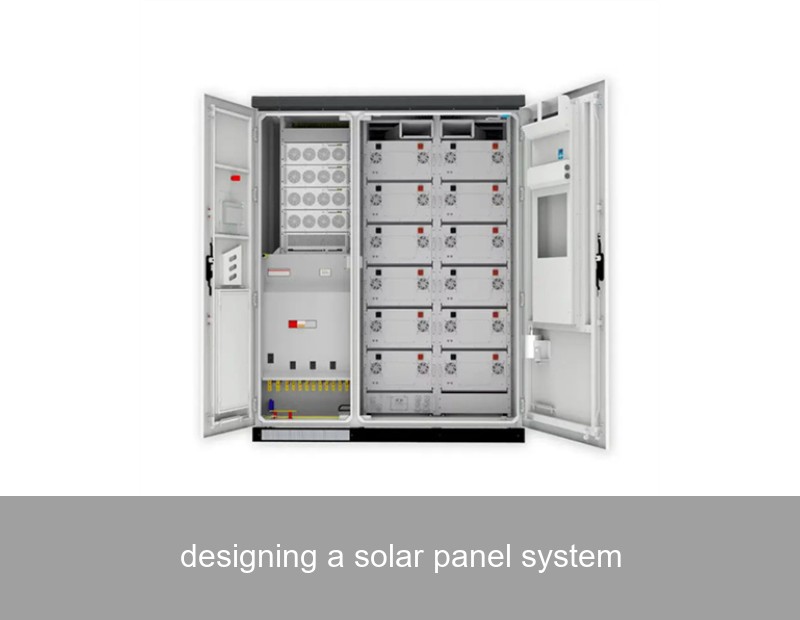
So, you're thinking about designing a solar panel system for your home or business. It's an exciting step towards lower energy bills, energy security, and a smaller carbon footprint. But where do you start? A successful solar installation isn't just about mounting panels on a roof; it's a holistic engineering project that balances energy production, consumption, storage, and intelligent management. This guide will walk you through the critical considerations, from initial site assessment to choosing the right components, ensuring your system is designed for maximum performance and return on investment.
Table of Contents
- The Foundation: Site Assessment and Energy Audit
- Sizing Your System: More Than Just Panel Count
- The Heart of the System: Inverters and Energy Management
- Beyond the Sun: The Critical Role of Energy Storage
- A Real-World Case Study: Resilience in California
- Future-Proofing Your Design
- Partnering with the Right Experts
The Foundation: Site Assessment and Energy Audit
The first step in designing a solar panel system is understanding your "energy canvas." This involves two key processes:
- Solar Potential: Using tools like Google's Project Sunroof or professional-grade software, installers analyze your roof's orientation, tilt, and shading from trees or chimneys. Even minor shading can significantly impact output, a phenomenon best understood through the "Christmas light effect" where shading one cell can dim a whole string.
- Energy Consumption Analysis: How much energy do you actually use? Reviewing 12 months of utility bills reveals your baseline. More importantly, analyze your load profile: when do you use power? A household that consumes most energy in the evenings has different needs than one running appliances all day.
This data forms the non-negotiable foundation of your design. It determines the physical and economic limits of your installation.
Key Data Points to Gather
| Data Point | Why It Matters | Typical Source |
|---|---|---|
| Annual kWh Consumption | Sets the overall production target. | Utility Bills |
| Peak Demand (kW) | Determines inverter and system capacity needs. | Utility Bill or Monitoring Device |
| Roof Area & Azimuth | Dictates maximum possible panel count and placement. | Site Survey / Aerial Imagery |
| Local Utility Rates & Net Metering Policy | Critical for financial payback calculations. | Utility Company Website |
Sizing Your System: More Than Just Panel Count
Many people think sizing is simply matching yearly kWh production to yearly consumption. But in modern system design, we must think in three dimensions:
- Energy (kWh): The total volume of electricity you need.
- Power (kW): The instantaneous rate of flow you need to run multiple appliances simultaneously.
- Time: When you need that power versus when the sun produces it.
Oversizing the array without a plan for the surplus (like storage or favorable net metering) can be wasteful. Undersizing leaves savings on the table. The goal is to design a system that covers a high percentage of your consumption while optimizing for your specific rate structure and future needs, like adding an electric vehicle.

Image Source: Unsplash - Professional site assessment is the first step.
The Heart of the System: Inverters and Energy Management
Panels generate direct current (DC). Your home uses alternating current (AC). The inverter is the brain and heart of the operation, performing this conversion. Your choice here dramatically affects efficiency, monitoring capabilities, and safety.
- String Inverters: Cost-effective for simple, unshaded roofs.
- Microinverters: Attached to each panel, they optimize output per panel (crucial for shaded roofs) and offer detailed monitoring.
- Hybrid or Battery-Ready Inverters: The smart choice for any system designed with future storage in mind. They can manage power flow between the grid, solar, and batteries seamlessly.
This is where a provider's expertise shines. At Highjoule, our intelligent energy management systems (EMS) go beyond basic inversion. They are the central nervous system that makes decisions in milliseconds: should solar power the fridge, charge the battery, or export to the grid based on real-time rates and consumption? This level of control is what transforms a simple solar array into a true smart energy asset.
Beyond the Sun: The Critical Role of Energy Storage
Let's address the elephant in the room: the sun sets. Designing a solar panel system today is incomplete without serious consideration of battery storage. It's the component that unlocks true energy independence and resilience.
Storage allows you to:
- Time-Shift Energy: Use your solar power at night, maximizing self-consumption and shielding you from peak utility rates.
- Provide Backup Power: Keep essential loads running during grid outages—a concern growing in frequency across both the US and Europe.
- Stabilize the Grid: Advanced systems can participate in grid services, potentially creating revenue streams.
Not all storage is created equal. Key specifications include usable capacity (kWh), continuous power rating (kW), depth of discharge, and cycle life. Highjoule's EverFlow battery storage systems, for instance, are engineered with lithium iron phosphate (LFP) chemistry for superior safety and longevity. Coupled with our NeuralGrid EMS, they learn your habits and weather patterns to optimize charge/discharge cycles, ensuring you have power when you need it most and saving you the most money.
A Real-World Case Study: Resilience in California
Consider a winery in Sonoma County, California. Their challenge wasn't just cost savings; it was operational continuity. Wildfire-related Public Safety Power Shutoffs (PSPS) threatened to halt production during critical fermentation periods, risking entire batches worth hundreds of thousands of dollars.
- A 250 kW rooftop solar array.
- A 500 kWh Highjoule EverFlow battery storage system.
- The Highjoule NeuralGrid EMS for islanded (off-grid) operation.
The Outcome: During a 3-day grid outage, the system maintained power to the entire production facility and critical cold storage. The winery not only avoided spoilage but continued bottling operations. Their calculated annual savings from demand charge reduction and energy arbitrage exceeded $45,000, with the added value of business continuity being priceless. This case, documented in part by the National Renewable Energy Laboratory's resilience reports, exemplifies modern system design thinking.

Image Source: Unsplash - Commercial solar installations power critical industries.
Future-Proofing Your Design
The energy landscape is evolving rapidly. A well-designed system should have a 25+ year outlook. Ask yourself and your designer:
- Scalability: Can I easily add more panels or battery capacity later?
- EV Ready? Does my system have the spare capacity and logical setup to add an EV charger that draws from my solar surplus?
- Software Upgrades: Can the energy management system receive updates to tap into new utility programs or algorithms?
Highjoule designs with this modularity in mind. Our architectures allow for plug-and-play expansion of storage capacity and seamless integration of new loads, protecting your investment for the long term.
Partnering with the Right Experts
Designing a solar panel system is a multidisciplinary task. It requires knowledge of electrical engineering, local building codes, utility interconnection processes, and financial incentives like the US Federal Investment Tax Credit (ITC) or European subsidies.
This is where partnering with an experienced, technology-agnostic provider like Highjoule makes the difference. Since 2005, we've moved beyond being just a component supplier. We are solution architects. Our process involves deep energy analysis, custom financial modeling, and the provision of fully integrated, intelligent systems that include our award-winning storage and EMS. We support a network of certified installers across Europe and the US, ensuring your bespoke design is installed to the highest standards.
The journey to energy independence starts with a blueprint. You now know the key phases: audit, size, integrate storage, and plan for the future. But the most important step is the next one. What specific energy goal—be it resilience, savings, or sustainability—is driving you to consider solar, and how can we help you design a system that turns that goal into a reality?
 Inquiry
 Online Chat