


BLUETTI B300 Expansion Battery: Unlocking True Energy Independence for Your Home or Business
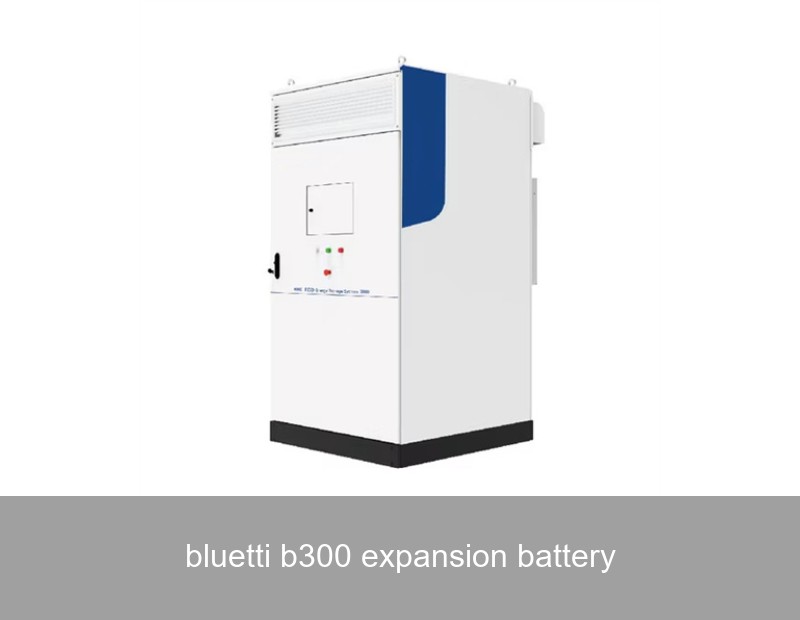
Have you ever watched your home battery system drain faster than expected during a cloudy week or a peak usage period? That moment of frustration, when you're forced back onto the grid despite your investment in solar, is a common phenomenon. It highlights a critical truth in renewable energy: your power storage capacity is just as important as your power generation. This is where expansion batteries, like the popular BLUETTI B300 Expansion Battery, enter the scene, transforming a standard setup into a robust, resilient energy fortress. But is simply adding more battery modules the complete solution? As a product technology expert at Highjoule, a leader in advanced energy storage since 2005, I see this as a perfect opportunity to discuss not just the "what," but the "how" and "why" of scalable energy storage for homes and businesses across Europe and the U.S.
Table of Contents
The "Storage Gap" Phenomenon: When Your Solar Isn't Enough
You installed a solar array with a matching battery, expecting near-total energy freedom. For a while, it works beautifully. But then, life happens: an electric vehicle needs charging, a heat pump runs through a cold night, or your home-based business powers new equipment. Suddenly, your system can't keep up. This "Storage Gap"—the disconnect between your energy production/consumption and your storage capacity—is the primary driver for the expansion battery market. Products like the BLUETTI B300 are designed as modular add-ons to popular units like the BLUETTI AC300 or AC500, allowing users to increase their kilowatt-hour (kWh) reserves. It's a logical and effective step, but it's one piece of a larger puzzle.
The Data: Why Capacity and Scalability Matter for Resilience
Let's look at the numbers. According to the U.S. Department of Energy's Solar Futures Study, achieving decarbonization goals will require a massive increase in both solar generation and energy storage. For individual users, the calculus is about resilience and economics.
| Scenario | Typical Storage Need (kWh) | Challenge Without Scalability |
|---|---|---|
| Average Home (Basic Backup) | 10-15 kWh | May not cover multi-day outages or high EV usage. |
| Home with EV & Heat Pump | 20-30+ kWh | Standard single-battery systems are quickly depleted. |
| Small Business / Microgrid | 50-200+ kWh | Requires commercial-grade, integrated solutions. |
The data shows a clear trend: energy needs are dynamic and growing. A system that cannot scale risks becoming obsolete. The modularity of an expansion battery like the B300 addresses this directly for its ecosystem, allowing capacity to grow from, say, 3kWh to over 12kWh. However, true scalability also involves the inverter's power output, system management software, and grid interaction capabilities.

Image Source: Unsplash (Representative image of a home energy system)
A Real-World Case: The Berlin Bakery's Recipe for Energy Security
Let's move from theory to practice. Consider a family-run artisan bakery in Berlin. They installed a 20kW solar roof and an initial 15kWh storage unit, aiming to reduce grid reliance. Their ovens, refrigerators, and air conditioning created a high, intermittent load. The initial system cut 60% of their grid use, but morning bake cycles—before the sun was strong—would still drain the battery, forcing them to buy expensive peak-hour electricity.
Their solution was not just adding more battery modules. They partnered with a system integrator to deploy a Highjoule HI-Stack Commercial Series. This system's design allows seamless capacity expansion from 30kWh to over 300kWh by stacking battery racks. Crucially, it's paired with Highjoule's Adaptive Grid Intelligence (AGI) software. The AGI platform forecasts solar generation and bakery load schedules, intelligently deciding when to draw from the battery, solar, or a small amount of grid power to minimize cost. It also enables peak shaving, automatically using stored energy when grid prices spike.
The result? After scaling to 45kWh of storage and leveraging smart software, the bakery achieved 92% grid independence and saw a return on investment in under 5 years by avoiding peak tariffs. This case illustrates that while physical battery expansion (like adding B300 units) is vital, the intelligence managing that energy is what unlocks its full financial and operational value.
Understanding Expansion Batteries: The BLUETTI B300 & The Modular Mindset
So, where does a product like the BLUETTI B300 Expansion Battery fit in? It represents the consumer and prosumer side of modular energy storage. Here's a technical breakdown:
- Function: It's a lithium iron phosphate (LiFePO4) battery module that connects to a compatible BLUETTI power station (e.g., AC300, AC500) to increase its total energy capacity.
- Key Specs: Each B300 typically adds 3,072Wh (3kWh) of capacity. Up to four can be connected to a single unit, potentially taking a system from 3kWh to over 12kWh.
- Ideal User: Homeowners, RV enthusiasts, or small workshop owners who already own the BLUETTI ecosystem and need more runtime for appliances, tools, or off-grid living.
This plug-and-play modularity is a fantastic innovation, democratizing capacity upgrades. However, for larger-scale commercial, industrial, or whole-home backup where three-phase power, higher continuous output (in kW), and advanced grid services are needed, a different architecture is required.
The Highjoule Perspective: Integrating Expansion into a Holistic System
At Highjoule, we view expansion not just as adding boxes, but as designing a cohesive, intelligent, and future-proof energy system. Our approach for residential and commercial clients in Europe and North America focuses on three pillars beyond raw capacity:
- Scalable Architecture: Our HI-Residential Series uses a modular rack design, allowing homeowners to start with 10kWh and expand to 30kWh+ as needs evolve—all managed by a single, powerful inverter. This avoids the "hub-and-spoke" limitation of some portable systems.
- Software Intelligence: Capacity is useless if not optimally deployed. Our energy management systems (EMS) use weather and usage forecasting to automate storage and discharge cycles, maximizing self-consumption of solar and providing grid stability services where permitted.
- Safety & Longevity: Industrial-grade LiFePO4 chemistry, integrated thermal management, and UL/Certified safety standards are non-negotiable for permanent installation. This ensures a 10+ year lifespan and peace of mind, which is critical for a system protecting your home or business.
Think of it this way: adding a BLUETTI B300 is like adding an extra fuel tank to a vehicle. A Highjoule integrated system is like designing the entire powertrain—engine, transmission, fuel system, and onboard computer—to work in perfect harmony for the specific journey you're on.

Image Source: Unsplash (Representative image of a commercial battery system monitoring)
What Does Your Energy Independence Blueprint Look Like?
The journey toward true energy independence is exciting. Whether you're a homeowner researching a BLUETTI B300 to extend your camping trips or a factory manager planning a microgrid to lock in energy costs, the core principle is the same: think ahead. Your energy needs will change. Can your system change with them? Does it simply add capacity, or does it intelligently manage every kilowatt-hour for maximum benefit?
We invite you to consider: What is the one energy challenge—be it a nightly blackout, a staggering monthly bill, or a sustainability goal—that your current system simply can't solve? The answer to that question is the first step in designing a storage solution that doesn't just meet today's demand, but empowers your tomorrow.
 Inquiry
 Online Chat