


How Leading Storage Systems Companies Are Powering a Sustainable Future
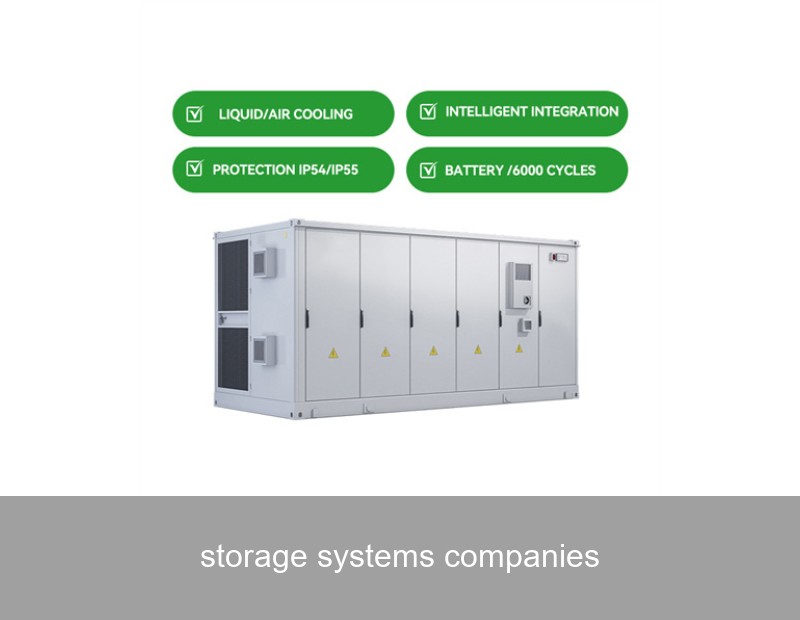
Have you ever wondered how businesses manage those sudden spikes in energy demand, or how a community keeps the lights on during a severe storm? The answer increasingly lies with advanced energy storage. As the world accelerates its transition to renewable energy, the role of storage systems companies has moved from the backroom to the boardroom. These innovators are not just providing batteries; they are delivering intelligence, resilience, and true energy independence. For over 18 years, Highjoule has been at the forefront of this revolution, engineering smart storage solutions that turn energy challenges into strategic advantages for commercial, industrial, and residential clients across Europe and the US.
Table of Contents
- The Phenomenon: Beyond the Battery Box
- The Data Driving the Storage Boom
- Case Study: A U.S. Manufacturing Plant's Transformation
- The Highjoule Approach: Intelligence Meets Storage
- Future Horizons for Energy Storage
The Phenomenon: Beyond the Battery Box
Gone are the days when energy storage was a simple, one-dimensional asset. Today's leading storage systems companies are solving a complex puzzle. The phenomenon is clear: solar panels don't produce at night, wind turbines are idle on calm days, and utility grids are becoming more congested and expensive. This intermittency and grid strain create a critical need for a buffer—a dynamic system that can store excess energy and release it precisely when and where it's needed most.
Think of it like the difference between a basic water tank and a smart, integrated water management system for an entire city. One just holds water; the other monitors usage, predicts demand, purifies, and distributes water efficiently to maintain pressure for all. Modern energy storage systems are the latter. They comprise not just battery cells (often Lithium Iron Phosphate or LFP for safety and longevity), but also sophisticated power conversion systems (PCS), thermal management, and, most importantly, advanced energy management software (EMS) that acts as the "brain."

Image Source: Unsplash - A modern battery storage installation requires precise engineering and integration.
The Data Driving the Storage Boom
The numbers behind this shift are staggering and underscore why savvy businesses are turning to expert storage systems companies. According to the U.S. Energy Information Administration (EIA), the country is poised to add a record 15.4 gigawatts (GW) of battery storage by 2024. Meanwhile, in Europe, the European Association for Storage of Energy (EASE) estimates that to meet its 2030 climate targets, the EU will need approximately 200 GW of energy storage capacity.
But it's not just about capacity; it's about economics and resilience. Let's break down the key value drivers:
| Driver | Impact | Typical Application |
|---|---|---|
| Demand Charge Management | Can reduce peak demand charges by 20-40%, a major portion of commercial utility bills. | Factories, Shopping Malls, Office Buildings |
| Energy Arbitrage | Store energy when prices are low (e.g., at night), use or sell it when prices are high. | Grid-connected businesses, Microgrids |
| Backup Power & Resilience | Provides seamless, instantaneous power during grid outages, protecting operations and data. | Hospitals, Data Centers, Critical Infrastructure |
| Renewable Integration | Captures surplus solar/wind generation, increasing self-consumption from 30% to 70%+. | Solar-powered facilities, Remote Communities |
These data points translate directly to a stronger bottom line and a more robust operational posture. It's a compelling financial and strategic equation.
Case Study: A U.S. Manufacturing Plant's Transformation
Let's make this concrete with a real-world example from the American Midwest. A mid-sized automotive parts manufacturer was facing two pressing issues: volatile monthly energy bills with crippling peak demand charges, and an increasing corporate mandate to reduce its carbon footprint. Their existing rooftop solar array was helpful but underutilized—often exporting excess power at low noon rates while the plant drew expensive grid power during the early evening production ramp-up.
They partnered with Highjoule to design and deploy a turnkey 1.2 MWh battery energy storage system (BESS), integrated with their existing solar PV and controlled by Highjoule's proprietary Adaptive Energy OS software. The results after the first year were significant:
- Peak Demand Reduction: The system automatically discharged during predictable high-load periods, slashing peak demand charges by 34%.
- Solar Self-Consumption: The facility's use of its own solar generation jumped from 40% to 81%, dramatically reducing purchased electricity.
- ROI Timeline: The combined savings from demand charge avoidance and increased solar usage projected a full return on investment in under 5 years.
- Resilience Bonus: The system provided critical backup power to safely shut down sensitive equipment during two brief grid disturbances, preventing potential product loss.
This case is a textbook example of how a forward-thinking storage systems company goes beyond hardware installation. Highjoule's solution involved detailed load profiling, utility rate analysis, and ongoing software optimization to ensure the system adapts to changing production schedules and tariff structures.
The Highjoule Approach: Intelligence Meets Storage
So, what sets apart the leading players in this field? At Highjoule, we believe the core differentiator is intelligence through integration. While many companies can source quality battery racks, our expertise lies in creating a seamless, future-proof ecosystem. Our flagship product lines, like the H-Series Commercial BESS and the Nexus Microgrid Controller, are built on this principle.
Our systems are designed with three pillars in mind:
- Safety & Longevity: We utilize thermally stable LFP chemistry and employ robust active cooling systems. Our designs exceed international standards (like UL 9540 and IEC 62619), giving our clients in Europe and the U.S. paramount peace of mind.
- Adaptive Software: The true brain is our software. It doesn't just react; it learns and forecasts. By integrating weather data, utility price signals, and consumption patterns, it makes real-time decisions to maximize economic and operational value.
- Scalable Architecture: Whether it's a 50 kWh backup for a rural clinic or a 20 MWh grid-scale installation, our modular platform allows for seamless expansion. This protects our clients' investment as their needs evolve.

Image Source: Unsplash - Advanced software control is key to maximizing storage value.
Our services extend from initial consultancy and feasibility studies to full EPC (Engineering, Procurement, and Construction) and long-term performance monitoring. We act as a true partner, ensuring the storage asset performs optimally throughout its 15+ year lifespan.
Future Horizons for Energy Storage
The innovation curve for energy storage is steep. We are already seeing trends like second-life EV batteries being repurposed for stationary storage and the exploration of alternative chemistries like sodium-ion. Furthermore, concepts like virtual power plants (VPPs)—where hundreds of distributed storage systems are aggregated to act as a single, grid-stabilizing resource—are becoming a reality. A notable pilot in this area is the project funded by the UK's Ofgem, demonstrating the massive grid potential of aggregated assets.
For businesses and communities, this evolution means storage will become an even more dynamic financial asset, capable of generating revenue through grid service markets while providing core local benefits. The question is no longer if storage is needed, but how to implement it most effectively.
What's Your Energy Resilience Strategy?
As energy volatility and sustainability goals continue to shape the operational landscape, the partnership with a capable storage systems company becomes critical. Is your organization simply weathering the storm of high energy costs and grid instability, or are you building a proactive, intelligent, and profitable energy ecosystem? We invite you to examine your facility's load profile and utility bills—what would a 30% reduction in peak demand charges mean for your annual budget?
 Inquiry
 Online Chat