


Finding the Right BMS Supplier for Sale: Your Guide to Battery Intelligence
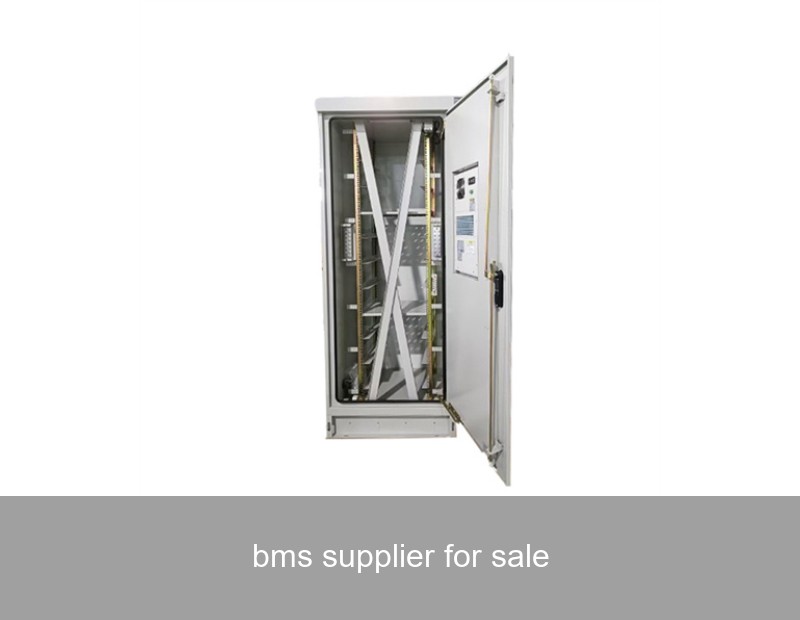
If you're in the market for energy storage, you've likely encountered the term "BMS" – the Battery Management System. It's the unsung hero, the brain behind the brawn of any lithium-ion battery. Searching for a reliable BMS supplier for sale isn't just about buying a component; it's about securing the safety, longevity, and intelligence of your entire energy investment. Whether you're integrating storage into a commercial facility, an industrial process, or a residential solar-plus-storage system, the choice of your BMS partner is critical. In this article, we'll demystify the BMS, explore what to look for in a supplier, and see how the right technology unlocks true value from your battery assets.
Table of Contents
What is a BMS and Why is it Non-Negotiable?
Think of a lithium-ion battery pack as a highly trained orchestra. Each cell is a musician. Without a conductor, the result is chaos—some cells overwork, others underperform, and the risk of a catastrophic failure (like thermal runaway) increases. The BMS is that conductor. Its core functions are often summarized as the "3 S's":
- Safety: Continuously monitors cell voltage, temperature, and current. It protects the battery from operating outside its safe area by disconnecting it during dangerous conditions.
- State: Calculates critical State-of-Charge (SOC) and State-of-Health (SOH), providing the user with an accurate "fuel gauge" and long-term lifespan prognosis.
- Supervision & Balancing: Ensures all cells are charged and discharged evenly. Passive or active balancing redistributes energy, maximizing the usable capacity of the entire pack.
A study by the National Renewable Energy Laboratory (NREL) emphasizes that advanced BMS algorithms are key to reducing battery degradation, potentially extending cycle life by 20-30%. This isn't just a minor improvement; it's a direct boost to your return on investment.
Beyond the Sale: Key Criteria for Choosing a BMS Supplier
When evaluating a BMS supplier for sale offerings, looking beyond the datasheet is crucial. Here are the layers you need to peel back:
| Criteria | Basic Supplier | Advanced Partner (Like Highjoule) |
|---|---|---|
| Core Technology | Standard voltage/temperature monitoring. | Advanced algorithms for SOC/SOH, predictive analytics, and cloud connectivity. |
| Integration Depth | Sold as a separate component; integration is your responsibility. | Deeply integrated with battery packs, inverters, and energy management software. |
| Safety Certifications | May have basic compliance. | Possesses stringent international certifications (e.g., UL 9540, IEC 62619). |
| Software & Support | Limited firmware updates; reactive support. | Lifetime software updates, remote monitoring platforms, and proactive support. |
The trend is clear: the market is moving from a BMS as a simple hardware controller to a Battery Intelligence Platform. This platform becomes the core of a smart energy system, enabling features like demand charge management, grid services participation, and optimized self-consumption of solar power.
From Theory to Practice: A European Microgrid Case Study
Let's ground this with a real example. A mid-sized dairy farm in Bavaria, Germany, aimed to achieve 90% energy independence. They had significant rooftop solar but needed storage to cover nighttime operations and milking cycles. They initially sourced batteries and a generic BMS separately.
The Phenomenon: Within 18 months, they noticed a 15% faster-than-expected capacity fade. The BMS provided limited data, making diagnostics nearly impossible.
The Data & Solution: The farm partnered with Highjoule to retrofit a new system centered on Highjoule's H-IQ BMS Platform. This platform offered cell-level monitoring and cloud-based analytics. The data revealed a critical insight: specific cells in the old pack were consistently 3-4°C warmer due to uneven cooling and poor balancing. The new Highjoule BMS, with its active balancing and thermal management integration, eliminated this hotspot.
The Result: The new, intelligently managed battery system is projected to meet its designed 10-year lifespan. Furthermore, by integrating with the farm's energy management system, the BMS enables "peak shaving," reducing grid power draws during expensive periods. This single feature saves the farm an estimated €4,200 annually on power costs. You can explore similar microgrid concepts at the U.S. Department of Energy's Smart Grid portal.

A professionally integrated battery system, where the BMS is the central intelligence unit.
The Highjoule Approach: Integrated Intelligence, Not Just Components
At Highjoule, we don't just sell a BMS; we provide the intelligence backbone for our complete range of H-Cube Commercial & Industrial (C&I) and H-Reserve residential storage solutions. Our philosophy is that safety and performance are inseparable from system-level design.
When you choose a Highjoule system, the H-IQ BMS is pre-integrated and rigorously tested. This means:
- Proactive Safety: Our BMS uses multi-layer algorithms to predict potential issues before they become faults, going beyond simple reaction.
- Performance Optimization: It doesn't just protect the battery; it constantly optimizes charge/discharge strategies based on weather forecasts, usage patterns, and tariff structures to save you maximum money.
- Seamless Connectivity: The BMS data feeds directly into our Highjoule Energy Cloud platform, giving you actionable insights and control from anywhere in the world.
For developers and integrators looking for a top-tier BMS supplier for sale, Highjoule also offers OEM and licensing partnerships. We provide our proven H-IQ BMS technology for integration into custom or large-scale projects, backed by our 15+ years of field experience.

Modern BMS platforms offer deep visibility into battery health and performance via user-friendly dashboards.
What Does the Future Hold for BMS Technology?
The evolution is towards even greater intelligence. We're looking at BMS units with embedded digital twins—a virtual, constantly updating model of the physical battery that allows for incredibly accurate lifespan predictions and failure prevention. Furthermore, with the rise of Vehicle-to-Grid (V2G) technology, the BMS will become the critical negotiator between your car's battery, your home, and the wider grid.
This raises a pivotal question: As energy systems become more complex and interactive, can you afford to treat your BMS as a simple, off-the-shelf commodity? Or does the future of resilient, profitable energy storage lie in choosing a partner that views the BMS as the core of a continuous, value-generating relationship?
What specific challenge in your current or planned energy project is making you reevaluate the role of battery intelligence?
 Inquiry
 Online Chat