


Boitier Telecom Exterieur: The Unsung Hero of Network Resilience and How Energy Storage Powers It
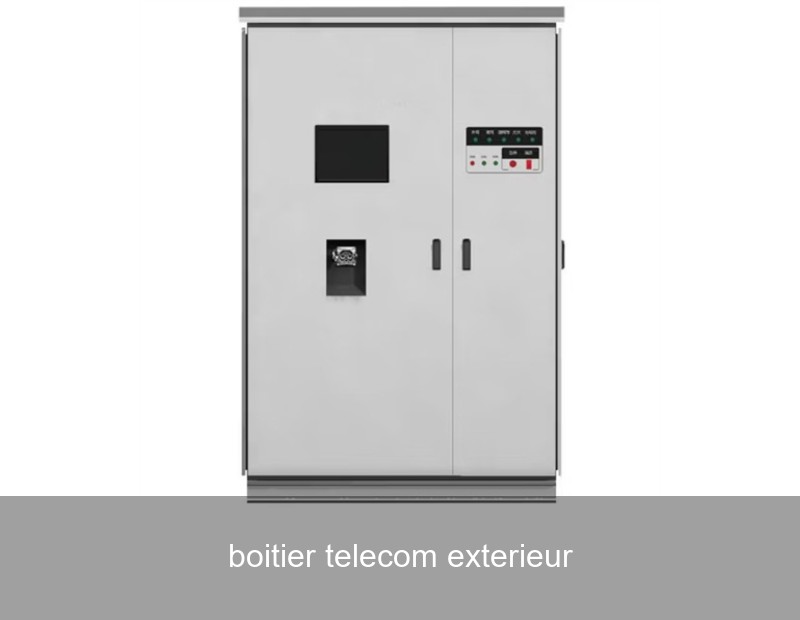
Table of Contents
- What is a Boitier Telecom Exterieur?
- The Silent Power Challenge: Why Grid Reliance is a Risk
- The Modern Solution: Intelligent Energy Storage Systems
- Case Study: Securing Rural Connectivity in France
- Highjoule's Role: Tailored Power for Critical Infrastructure
- Future Trends: Greener, Smarter Networks
- What's Your Network's Backup Plan?
You pass them every day. Those sleek, metallic cabinets on street corners, often adorned with telecom logos. In France and across Europe, they're known as the boitier telecom exterieur (outdoor telecom cabinet). More than just metal boxes, they are the critical nerve centers of our modern digital life, housing the sensitive electronics that bring fiber, 4G/5G, and fixed-line services to our homes and businesses. But have you ever wondered what keeps them running during a power outage or a severe storm? The answer lies in an often-overlooked aspect: reliable, resilient power. As networks demand more and grids face increasing strain, the energy strategy for these cabinets is undergoing a quiet revolution.
What is a Boitier Telecom Exterieur?
An outdoor telecom cabinet is a hardened enclosure designed to protect active network equipment from environmental hazards like rain, dust, extreme temperatures, and vandalism. Inside, you'll typically find:
- DSLAMs/MSANs for copper-based broadband.
- OLTs (Optical Line Terminals) for fiber-to-the-home (FTTH) networks.
- Switches and routers for data traffic aggregation.
- Power conversion and backup units, which are the focus of our discussion.
These cabinets are the "last aggregation point" before connectivity reaches your doorstep, making their uninterrupted operation non-negotiable for service level agreements (SLAs).

Image Source: Wikimedia Commons. A typical outdoor telecom cabinet, a common sight critical to network infrastructure.
The Silent Power Challenge: Why Grid Reliance is a Risk
Here's the core issue: the boitier telecom exterieur is almost always grid-tied. Traditional backup might consist of a few lead-acid batteries, designed to bridge short grid interruptions. However, modern challenges expose the limitations of this approach:
- Increasing Grid Volatility: Aging infrastructure and climate change-induced extreme weather (like the storms in the US or heatwaves in Southern Europe) are causing more frequent and longer outages. The International Energy Agency notes that grid investment and resilience are major concerns globally.
- Rising Energy Costs: Operational expenditure (OPEX) for telecom operators is soaring. Powering thousands of cabinets 24/7 represents a significant and growing cost center.
- Space and Maintenance Constraints: Lead-acid batteries are bulky, require active cooling/heating, and need regular maintenance, which is costly for remote sites.
- Higher Power Density: Newer equipment for 5G and fiber deep deployment draws more power, straining existing backup systems.
The phenomenon is clear: the criticality of the cabinet is rising, while its traditional power source is becoming less reliable and more expensive.
The Modern Solution: Intelligent Energy Storage Systems
The data points to a need for a paradigm shift. The answer lies in integrating advanced, lithium-ion battery energy storage systems (BESS) specifically designed for telecom outdoor cabinets. These are not just "better batteries"; they are intelligent power nodes.
| Feature | Traditional Lead-Acid System | Modern Lithium BESS (e.g., Highjoule) |
|---|---|---|
| Energy Density | Low (bulky) | High (compact, fits standard cabinets) |
| Lifespan | 3-5 years | 10-15 years |
| Maintenance | High (watering, testing) | Virtually maintenance-free |
| Temperature Tolerance | Poor (requires HVAC) | Excellent (wide operating range) |
| Intelligence | None | Remote monitoring, load management, grid services potential |
| Total Cost of Ownership | High (frequent replacement + OPEX) | Significantly lower over 10 years |
An intelligent BESS does more than just backup. It can be programmed for peak shaving—drawing from the battery during expensive peak tariff hours to reduce electricity bills. It also provides clean, stable power, protecting sensitive telecom gear from grid sags and surges.
Case Study: Securing Rural Connectivity in Rural France
Let's look at a real-world application. A major European telecom operator faced recurring outages in its rural French network, where cabinets were often at the end of long, vulnerable power lines. Winter storms and summer grid congestion led to multiple hours of downtime annually, breaching SLAs and causing customer complaints.
The Project: Pilot deployment of integrated lithium-ion BESS in 50 remote boitiers telecom exterieurs in the Nouvelle-Aquitaine region.
The Solution: Each cabinet was fitted with a compact, rack-mounted 5kWh lithium-iron-phosphate (LiFePO4) battery system with integrated battery management (BMS) and remote telemetry. The system was designed for a 72-hour backup runtime at typical load, far exceeding the old 4-8 hour standard.
The Data & Results (12-month period):
- 100% Uptime: Zero service interruptions due to grid outages at equipped sites.
- OPEX Reduction: By enabling strategic peak shaving, the operator reduced energy costs at these sites by an average of 18%.
- Maintenance Savings: Elimination of quarterly battery checks saved an estimated €400 per site per year.
- Carbon Footprint: Improved efficiency and the potential for future solar coupling reduced the carbon footprint of network operations at these nodes.
This case demonstrates that upgrading the power system of the boitier telecom exterieur is no longer just a cost of doing business—it's a strategic investment in network reliability, cost control, and sustainability.

Image Source: Unsplash. Modern, compact battery systems are designed for easy integration into existing infrastructure.
Highjoule's Role: Tailored Power for Critical Infrastructure
At Highjoule, with nearly two decades of expertise in advanced energy storage, we understand the unique demands of telecom infrastructure. Our solutions for the boitier telecom exterieur are engineered to meet these specific challenges head-on.
We offer a range of modular, cabinet-ready lithium battery systems that are the perfect fit for space-constrained environments. Our TelcoPower Series is designed with the following features:
- Ultra-Compact Form Factor: Fits seamlessly into standard and custom cabinets without sacrificing capacity.
- Extended Temperature Range: Engineered to operate reliably from -20°C to 60°C without demanding external climate control, a crucial factor for an outdoor cabinet.
- Integrated Smart Management: Our systems come with Highjoule's proprietary i-BMS, providing real-time monitoring of state-of-charge, health, and performance via cloud-based platforms. This allows network operators to manage the power health of thousands of cabinets from a single dashboard.
- Hybrid-Ready Design: Our units are designed to easily integrate with renewable sources like small-scale solar panels, enabling the creation of green, self-sustaining microgrids for off-grid or unreliable grid sites.
For Highjoule, it's not just about supplying a battery; it's about providing a comprehensive, intelligent power resilience solution. We work with telecom providers and infrastructure partners to design, integrate, and support systems that ensure the heart of the network—the humble outdoor cabinet—never skips a beat.
Future Trends: Greener, Smarter Networks
The evolution of the boitier telecom exterieur is tied to the broader energy transition. We are moving towards networks that are not only resilient but also active participants in the energy ecosystem. Imagine cabinets that:
- Use integrated solar canopies to generate and store their own power, reducing grid dependence. Initiatives like the ETSI 2030 Alliance are pushing for this sustainable ICT future.
- Participate in grid flexibility services, offering stored energy back to the grid during periods of high demand (where market structures allow), creating a new revenue stream for operators.
- Employ AI-driven energy management to predict outages, optimize charging cycles from the grid or renewables, and further slash costs.
The outdoor cabinet is transforming from a passive power consumer into an intelligent energy asset.
What's Your Network's Backup Plan?
As climate volatility and energy economics continue to shift, the question for every network operator and infrastructure manager is this: How resilient is your edge network really? Have you evaluated the true total cost of ownership and risk profile of the power systems in your thousands of boitiers telecom exterieurs? The next grid disruption might not just be an inconvenience—it could impact your core business metrics and customer trust. Is it time to explore how modern energy storage can future-proof your critical network nodes?
 Inquiry
 Online Chat