


Automated Storage and Retrieval Systems (AS/RS): The Unsung Hero of Modern Energy Management
In the bustling world of logistics and manufacturing, Automated Storage and Retrieval Systems (AS/RS) are the silent, high-speed engines powering efficiency. But have you ever stopped to think about what powers them? The relentless demand of these 24/7 automated giants is creating a new, critical challenge: energy resilience. This article explores how the marriage of cutting-edge AS/RS technology with intelligent energy storage is unlocking unprecedented levels of operational and financial efficiency, particularly for businesses in Europe and the US.
Table of Contents
- The Phenomenon: When Automation Meets Grid Vulnerability
- The Data: The Hidden Energy Cost of Uninterrupted Operation
- The Case Study: A German Automotive Logistics Center
- The Solution: Integrating AS/RS with Intelligent Battery Storage
- Highjoule's Role: Tailored Energy Storage for Demanding Operations
- The Future Horizon: Smarter Grids and Autonomous Energy
The Phenomenon: When Automation Meets Grid Vulnerability
Picture a state-of-the-art warehouse. Towering cranes glide noiselessly, robots shuttle goods, and the entire symphony operates with digital precision. This is the marvel of modern AS/RS. However, this precision is fragile. A momentary voltage dip, a brief power outage, or even fluctuating energy costs can disrupt the entire sequence. In regions like Europe and North America, where grid constraints and extreme weather events are increasingly common, this vulnerability is magnified. The paradox is clear: we've built hyper-efficient physical systems reliant on a sometimes inefficient and unstable electrical foundation.

Image Source: Unsplash (Photographer: Ant Rozetsky)
The Data: The Hidden Energy Cost of Uninterrupted Operation
The energy profile of an AS/RS facility is unique and demanding. Unlike a standard warehouse, energy consumption isn't steady. It features intense, short-duration peaks during simultaneous retrieval operations, acceleration of cranes, and charging of autonomous guided vehicles (AGVs). According to a U.S. Department of Energy report, material handling and industrial automation can account for over 50% of a facility's electrical load. These peak demands often trigger costly "demand charges" from utilities—fees based on the highest 15-30 minutes of power use in a billing cycle. For a busy logistics hub, this can translate to tens of thousands in unnecessary monthly costs.
Key Energy Pain Points for AS/RS Operations:
- Peak Demand Charges: Sudden spikes in power usage from simultaneous machine activity.
- Power Quality Issues: Voltage sags or harmonics that can trip sensitive control systems.
- Grid Dependency: Any outage halts all operations, causing massive downstream delays.
- Missed Renewable Opportunity: Inability to effectively store on-site solar power for use during high-price periods.
The Case Study: A German Automotive Logistics Center
Let's look at a real-world example. A major automotive parts distributor near Stuttgart, Germany, operates a 50,000-square-meter AS/RS facility. Their challenge was twofold: manage soaring energy costs and ensure zero downtime for their just-in-time manufacturing clients.
The Solution Implemented: They deployed a 2 MWh/1 MW battery energy storage system (BESS) integrated with their building management and solar PV array. The system was programmed for peak shaving and demand charge management.
The Results (18-Month Period):
| Metric | Before BESS | After BESS | Improvement |
|---|---|---|---|
| Average Monthly Demand Charge | €42,000 | €28,500 | 32% Reduction |
| Solar Self-Consumption | 35% | 89% | 54% Increase |
| Unplanned Downtime (Power-related) | ~4 hours/year | 0 hours | 100% Resilience |
This case, documented in part by the Fraunhofer Institute for Solar Energy Systems, highlights the tangible ROI. The battery system paid for itself in under 5 years through demand charge savings alone, not counting the value of uninterrupted operations.
The Solution: Integrating AS/RS with Intelligent Battery Storage
The answer lies not in asking the grid to be more robust, but in making the facility itself smarter and more self-reliant. This is where advanced battery energy storage systems become the critical co-pilot to AS/RS technology.

Image Source: Unsplash (Photographer: American Public Power Association)
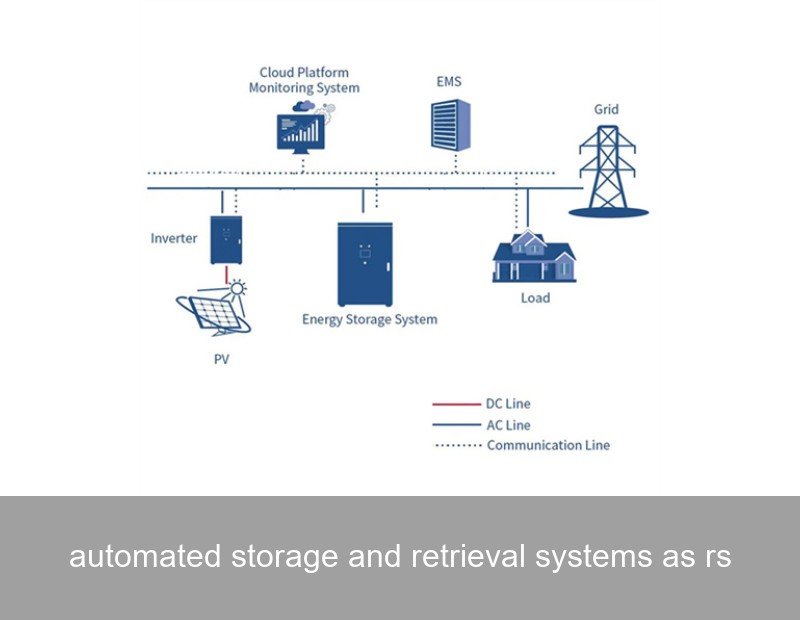
An intelligent BESS acts as a dynamic energy buffer. It continuously monitors the facility's power draw. When the AS/RS system initiates a series of simultaneous operations that would cause a demand spike, the BESS instantaneously discharges stored energy to "shave" the peak, drawing less from the grid. Conversely, during periods of low activity or high solar generation, it quietly recharges.
Core Benefits of the Integration:
- Demand Charge Management: Slashes peak loads, directly reducing the largest portion of commercial electricity bills.
- Uninterruptible Power Supply (UPS): Provides seamless backup power, keeping AS/RS systems online during grid outages.
- Energy Arbitrage: Stores energy when grid prices are low (e.g., at night) for use during expensive peak daytime hours.
- Renewable Optimization: Soaks up excess solar or wind generation, maximizing clean energy use and minimizing waste.
Highjoule's Role: Tailored Energy Storage for Demanding Operations
At Highjoule, we understand that an ASRS facility is more than just a building; it's a living, breathing ecosystem of kinetic energy. Since 2005, we've specialized in designing energy storage solutions that match the precision and reliability of the automated systems they support. Our approach goes beyond simply selling batteries.
For a large e-fulfillment center in Nevada, USA, facing both extreme heat and grid reliability issues, Highjoule engineered a custom H-Joule GridMaster® Industrial solution. This system combines high-cycle-life lithium-ion batteries with our proprietary Adaptive Load Management (ALM) software. The ALM software directly interfaces with the warehouse management system, receiving data on scheduled retrieval waves. It proactively prepares and dispatches energy, ensuring power availability aligns perfectly with operational schedules. This predictive capability, unique to Highjoule's integrated approach, delivers an extra 8-12% in efficiency gains over standard reactive systems.
Our product suite, from the modular H-Joule PowerStack® for commercial sites to the containerized GridMaster® Utility for microgrids, is built on a foundation of safety, intelligence, and durability. We provide a full lifecycle partnership—from initial energy analysis and financial modeling to installation, grid interconnection support, and 24/7 remote monitoring.
The Future Horizon: Smarter Grids and Autonomous Energy
The integration of AS/RS and smart storage is just the beginning. We are moving towards a future where these facilities become active participants in the grid, known as Virtual Power Plants (VPPs). Imagine a network of hundreds of AS/RS-equipped warehouses: during a regional grid strain, they could collectively and automatically reduce their grid draw by discharging their batteries, providing critical grid stability services and generating new revenue streams for their owners. This is the promise of true energy autonomy.
The question for forward-thinking operations managers in Europe and the US is no longer if energy storage is relevant, but how quickly it can be integrated. As your automated systems retrieve goods with perfect efficiency, is your energy strategy working just as hard for your bottom line?
What would the impact be on your operational resilience and total cost of ownership if your AS/RS could also "store and retrieve" energy with the same level of precision?
 Inquiry
 Online Chat