


Can a Solar Generator Power a House? A Realistic Guide for Homeowners
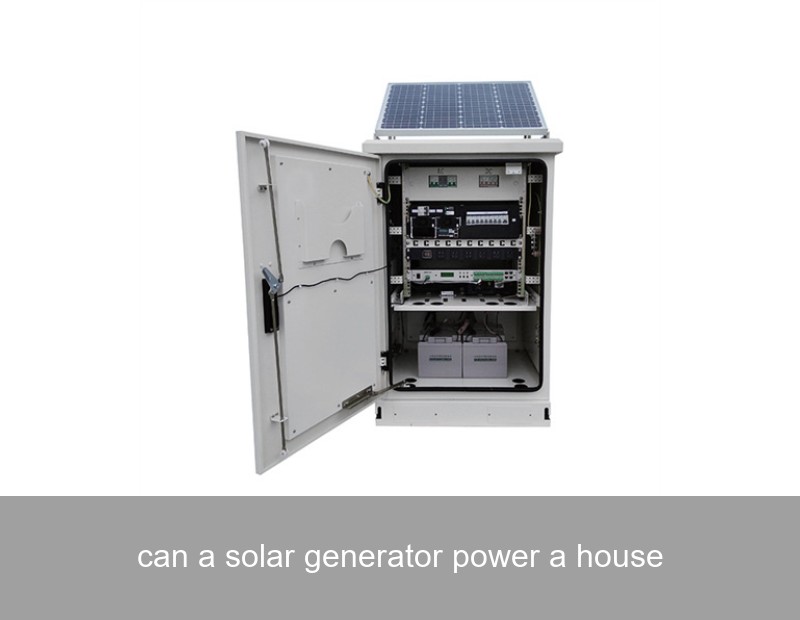
You've seen the headlines about rising energy costs and maybe even experienced a frustrating power outage. In your search for energy independence, a common question arises: can a solar generator power a house? The short answer is yes, but the how and how much are crucial. This isn't about a small portable unit for camping; we're talking about robust, permanent solar-plus-storage systems designed for home resilience. Let's demystify what it truly takes to power your home with solar energy, day and night.
Table of Contents
- The Phenomenon: From Portable Gadget to Home Power Hub
- The Data: Understanding Your Home's Energy Appetite
- The Case Study: A Real-World Example from Germany
- The Modern Solution: Intelligent Hybrid Solar-Storage Systems
- How Highjoule's Expertise Powers Modern Homes
- Getting Started: Key Questions to Ask
The Phenomenon: From Portable Gadget to Home Power Hub
The term "solar generator" can be misleading. For most, it conjures images of a briefcase-sized panel and a battery box for phones and laptops. However, the technology has evolved dramatically. Today's residential solar energy systems are sophisticated power plants comprising high-efficiency solar panels, a powerful inverter, and a high-capacity battery storage system—often collectively called a solar generator in the consumer market. The core challenge isn't just generating power when the sun shines; it's storing and managing that energy intelligently to run your refrigerator, HVAC, lighting, and electronics reliably, through cloudy days and overnight.
The Data: Understanding Your Home's Energy Appetite
To answer "can a solar generator power a house," we must talk numbers. The average U.S. household consumes about 886 kWh per month, or roughly 29 kWh per day. However, this varies widely. A critical concept is "load management." You don't need to power every single appliance simultaneously 24/7. A well-designed system focuses on essential loads and peak shaving.
| Appliance | Average Running Watts | Estimated Daily kWh Use* |
|---|---|---|
| Refrigerator | 150 - 400 | 1 - 4 |
| Central AC (3-ton) | 3,500 - 5,000 | 15 - 30 (seasonal) |
| Electric Water Heater | 4,000 - 5,500 | 10 - 20 |
| LED Lighting (Whole Home) | 100 - 500 | 1 - 3 |
| Sump Pump | 800 - 1,500 | Varies |
*Highly dependent on usage patterns, efficiency, and climate.
A system sized to cover 100% of your needs, especially with air conditioning or electric heating, requires significant solar panel array and battery capacity—often in the range of 10-20 kW of solar and 20-40 kWh of storage. For many, a more practical and cost-effective goal is 70-90% self-sufficiency, drastically reducing the grid reliance and providing full backup for essential circuits during outages.

Image Source: Unsplash - A modern home solar and storage installation.
The Case Study: A Real-World Example from Bavaria, Germany
Let's look at a concrete example. The Schmidt family (name changed for privacy) in a 2,200 sq ft home in Bavaria sought energy security and to offset high regional electricity prices. Their primary loads included a heat pump for mild climate heating/cooling, standard appliances, and an EV they charged overnight.
- Challenge: Achieve >80% self-consumption of solar energy and provide backup power for at least 24 hours.
- Solution Installed (2022): A 15.6 kWp solar array, coupled with a 22 kWh lithium iron phosphate (LFP) battery system and a hybrid inverter capable of managing grid interaction.
- Outcome & Data: In the first full year, the system generated 14,800 kWh. Their grid electricity import was reduced by 86%. The battery system routinely covered all household loads from late afternoon through the night. During a planned 18-hour grid outage, the home operated seamlessly—the heat pump even maintained comfort during a chilly autumn evening. The family's annual electricity bill was reduced from over €2,800 to approximately €400, factoring in grid feed-in tariffs.
This case highlights that with proper sizing and technology, the answer to "can a solar generator power a house" is a resounding, data-backed yes.
The Modern Solution: Intelligent Hybrid Solar-Storage Systems
The Schmidt family's success wasn't just about panels and a battery. It was about an intelligent system. Modern home energy solutions go beyond simple energy storage. They feature:
- Hybrid Inverters: The brain of the operation. They manage energy flow from solar panels, to the battery, to your home circuits, and to/from the grid, all in milliseconds.
- Advanced Battery Chemistry (LFP): Lithium Iron Phosphate batteries are now the standard for safety, longevity (6,000+ cycles), and performance across a wide temperature range.
- Smart Load Management: Systems can prioritize or shed non-critical loads during battery operation to extend backup time for essentials.
- Grid Services & Rate Arbitrage: In some markets, systems can interact with the grid to provide stability or charge when rates are low and discharge when they are high.
This is where the distinction between a simple "generator" and a fully integrated Home Energy Management System (HEMS) becomes clear. The latter is what truly powers a modern home.
How Highjoule's Expertise Powers Modern Homes
For nearly two decades, Highjoule has been at the forefront of this intelligent energy revolution. We understand that powering a home requires more than just hardware; it requires a solution tailored to your home's unique energy fingerprint, local climate, and utility landscape.
Our Residential Energy Platform is engineered for this precise purpose. It integrates high-density, safe LFP battery storage with our proprietary adaptive inverter technology. The system's software learns your consumption patterns, weather forecasts, and electricity tariffs to optimize every kilowatt-hour. For instance, it can ensure your battery is fully charged before a predicted storm, or schedule your EV charging to use excess solar midday.
For homeowners in Europe and North America asking "can a solar generator power a house," Highjoule provides the scalable answer. Our systems are modular, allowing you to start with a core configuration that covers critical loads and expand battery capacity as needs evolve. We partner with certified local installers to ensure a seamless design, permitting, and installation process, backed by robust warranties and 24/7 system monitoring.

Image Source: Unsplash - A clean, integrated home battery installation.
Getting Started: Key Questions to Ask
If you're seriously considering a whole-house solar power solution, begin with a self-audit:
- What are your goals? Full backup, bill reduction, or environmental impact?
- What are your "cannot-live-without" circuits? (Refrigeration, heating/cooling, medical equipment, sump pump).
- What is your recent annual electricity consumption (kWh)? Find it on your utility bill.
- What is your roof's orientation, shading, and available space?
Armed with this information, a qualified installer—like Highjoule's network partners—can model a system that turns the theoretical "yes" into a practical, empowering reality for your home.
So, the journey from wondering to knowing begins with a deeper question: What level of energy resilience and control do you want to build for your home and family?
 Inquiry
 Online Chat