


Energy Storage Indonesia: Powering an Archipelago's Sustainable Future
Imagine over 17,000 islands, a population nearing 280 million, and an economy growing faster than most of its Southeast Asian neighbors. Now, imagine reliably powering this vast and diverse nation. This is the fundamental challenge—and opportunity—for energy storage Indonesia. As the country ambitiously targets 23% renewable energy by 2025 and net-zero emissions by 2060, a critical question emerges: how do you integrate intermittent solar, wind, and hydropower into a grid serving thousands of islands? The answer lies not just in generation, but in intelligent storage. For businesses and communities across the archipelago, advanced energy storage systems (ESS) are becoming the linchpin for energy security, cost reduction, and a cleaner grid.
Table of Contents
The Challenge: Indonesia's Unique Energy Landscape
Indonesia's energy story is one of contrasts. It's a major coal producer and exporter, yet many of its outer islands rely on expensive, polluting diesel generators. The national grid, primarily on Java and Sumatra, faces stability issues. Meanwhile, the potential for renewables is staggering: the International Renewable Energy Agency (IRENA) highlights immense solar, geothermal, and hydropower resources. But here's the catch: solar doesn't shine at night, wind speeds vary, and delivering power from a geothermal plant in North Sulawesi to a remote village in Maluku is a monumental task. This geographical and technical reality makes a one-size-fits-all grid expansion impractical and costly. The true solution requires decentralized, intelligent systems that can store energy when it's abundant and dispatch it when it's needed most.

Image: Indonesia's diverse geography demands flexible energy solutions. (Source: Unsplash)
The Data: Why Storage is No Longer Optional
Let's look at the numbers. According to Indonesia's Ministry of Energy and Mineral Resources, the electrification ratio has reached over 99%, but the quality and reliability of power, especially in Eastern Indonesia, remain concerns. Furthermore, a report by the International Energy Agency (IEA) notes that to meet its growing power demand sustainably, Indonesia needs to accelerate renewable deployment dramatically. This is where storage economics come into play.
| Challenge | Impact | How Storage Helps |
|---|---|---|
| High Diesel Dependency | Fuel costs can be 3-4x higher than grid power; high emissions. | Reduces diesel runtime by 70-90%, offering rapid ROI. |
| Grid Instability (Frequency Fluctuations) | Disrupts operations for factories, hospitals, and data centers. | Provides sub-second frequency regulation and backup power. |
| Solar & Wind Intermittency | Can't provide reliable 24/7 power without backup. | Stores excess daytime solar for use at night, enabling higher renewable penetration. |
| Peak Demand Charges | Commercial users pay high fees for short periods of peak power use. | Discharges during peak hours, slashing demand charges by up to 40%. |
Case Study: Solar-Plus-Storage for a Remote Resort
Let’s make this tangible. Consider a luxury eco-resort on a small island in Raja Ampat, West Papua. Previously, it depended entirely on diesel generators, burning over 150,000 liters of fuel annually, with crippling costs and noise pollution conflicting with its "eco" branding.
The Solution: The resort implemented a hybrid solar-plus-storage microgrid. A 500 kWp solar canopy was installed over parking and staff areas, paired with a 1 MWh battery energy storage system (BESS).
The Results (Real Data from a Similar Project):
- Diesel Fuel Reduction: 82% decrease in annual consumption.
- Cost Savings: Payback period achieved in under 5 years.
- Reliability: 24/7 clean power, eliminating generator noise and ensuring uninterrupted guest experience.
- Emission Reduction: Cut carbon emissions by approximately 400 tons CO2e per year.
This isn't just theory. It's a replicable model for thousands of hotels, mines, plantations, and remote communities across Indonesia. The storage system acts as the brain and buffer, intelligently managing when to draw from solar, when to discharge from batteries, and when to sparingly use the diesel genset as a last resort.
The Solution: Tailored Storage for Island Resilience
So, what does an effective energy storage system for the Indonesian market require? It's not just about the battery cells. It's about a holistic solution built for the environment and use case.
- Climate Resilience: Systems must withstand high humidity, salty air, and temperatures consistently above 30°C. This requires robust thermal management (like liquid cooling) and IP-rated enclosures.
- Intelligent Energy Management (EMS): The software is the true hero. A smart EMS can predict solar generation, schedule diesel gensets optimally, and manage load to maximize savings and lifespan.
- Safety & Serviceability: With remote locations, safety is paramount. Systems need built-in fire suppression, gas detection, and remote monitoring. Modular design is also key for easy maintenance and expansion.
- Scalability: Solutions should grow with energy needs, from a small commercial building to a large industrial microgrid.
Lithium-Ion vs. Alternative Chemistries
While lithium-ion phosphate (LFP) is the dominant choice for most projects due to its falling costs, long cycle life, and excellent safety profile, the Indonesian context also sees applications for flow batteries for very long-duration storage (8+ hours) at utility scale, and advanced lead-carbon batteries for less cyclical, backup-oriented roles. The choice depends entirely on the specific duty cycle and financial model.
How Highjoule Powers Indonesia's Transition
This is where a global expert with local understanding makes all the difference. For nearly two decades, Highjoule has been designing and deploying intelligent storage solutions for some of the world's most challenging environments. We understand that energy storage in Indonesia isn't just about selling hardware; it's about delivering guaranteed outcomes: lower energy costs, unwavering reliability, and a smaller carbon footprint.
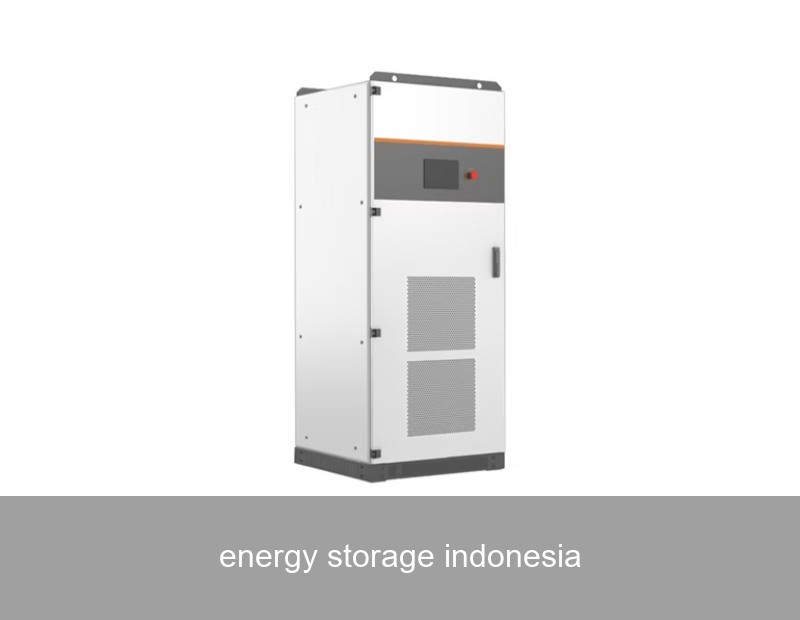
Our approach for the Indonesian market centers on our H-Series Modular Energy Storage Platform. This system is engineered for the tropics:
- All-Climate Design: Built-in liquid cooling maintains optimal cell temperature even in extreme heat, ensuring performance and longevity.
- Containerized & Modular: Our pre-integrated H-Series solutions ship in standard containers for fast, simple deployment to remote sites. You can start with a 500 kWh unit and scale to multi-megawatt hours seamlessly.
- Highjoule Neuron™ EMS: Our proprietary energy management software is the system's intelligence. It seamlessly integrates solar inverters, diesel gensets, and the grid, making autonomous, cost-optimizing decisions every second of the day.
- Full-Service Partnership: From initial feasibility studies and financial modeling to installation, remote monitoring, and maintenance, Highjoule provides an end-to-end partnership. We offer flexible models, including Energy-as-a-Service (EaaS), to remove upfront capital barriers.
Whether it's a commercial & industrial (C&I) facility in Jakarta looking to cut peak demand charges and ensure power quality, a residential complex in Bali seeking energy independence, or a utility-scale microgrid for an entire island community, Highjoule's technology is designed to be the reliable, intelligent core of that energy ecosystem.

Image: Floating solar, paired with storage, is a promising solution for Indonesia. (Source: Unsplash)
The Future: Microgrids and Beyond
The trajectory is clear. The future of Indonesia's energy, particularly outside the main islands, will be built around decentralized renewable microgrids anchored by sophisticated storage. Think of archipelagic "energy islands" that are self-sufficient, sustainable, and smart. The technology is ready, and the economic case grows stronger every day as battery prices decline and diesel costs remain volatile.
But progress requires collaboration. It requires utilities, IPPs (Independent Power Producers), developers, and technology providers like Highjoule to work together on standardized, bankable project models. It also requires supportive policies that recognize the grid-stabilizing value of storage, not just its energy-shifting capability.
Is your business or community in Indonesia ready to move beyond the limitations of an unreliable grid or expensive diesel dependency? What would 24/7 clean power and predictable energy costs do for your operations, your guests, or your residents?
 Inquiry
 Online Chat