


Cara Merangkai Solar Panel: A Step-by-Step Guide to a Safe and Efficient DIY Solar System
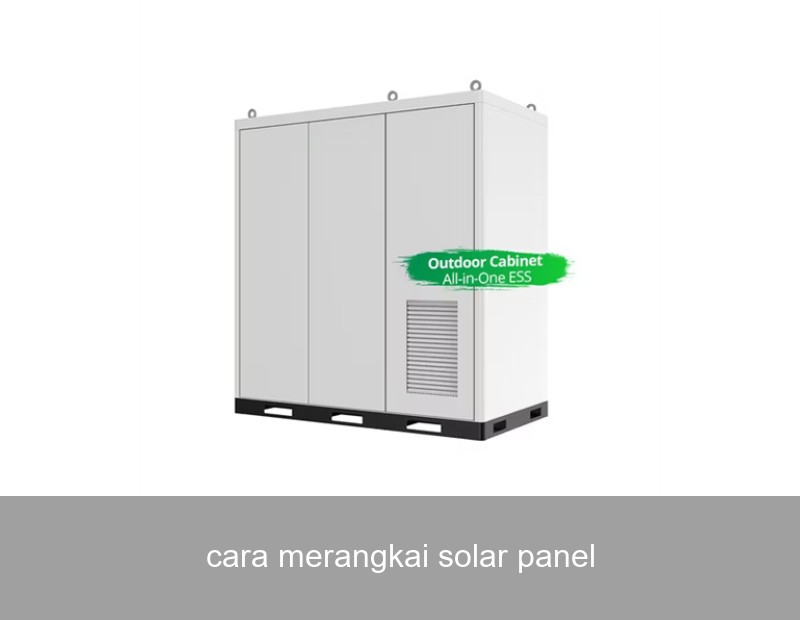
So, you're ready to harness the sun's power? "Cara merangkai solar panel" – or how to wire solar panels – is the crucial bridge between buying those sleek photovoltaic modules and actually powering your home. While the concept seems straightforward, the execution determines your system's safety, efficiency, and longevity. Whether you're a hands-on homeowner or a business looking to cut energy costs, understanding the principles of proper solar panel wiring is the first step toward energy independence. Let's demystify the process and explore how modern technology, like smart energy storage from companies like Highjoule, makes it more accessible and impactful than ever.
Table of Contents
- The Wiring Dilemma: More Than Just Connecting Wires
- Core Principles: Series vs. Parallel Wiring
- Essential Components for Your Solar Circuit
- Step-by-Step: A Safe Wiring Procedure
- Beyond the Panels: The Critical Role of Energy Storage
- Case Study: A German Bakery's Recipe for Energy Success
- When to Call the Professionals
The Wiring Dilemma: More Than Just Connecting Wires
Many DIY enthusiasts dive into solar panel installation focusing on the racking and placement, only to find the electrical wiring the most daunting part. And for good reason. Incorrect wiring can lead to significant power losses, posing a safety risk from high-voltage DC arcs or even fire hazards. The goal of "cara merangkai solar panel" isn't just to make a connection; it's to create a balanced, efficient, and safe system that maximizes the energy harvest from every ray of sunlight.
Core Principles: Series vs. Parallel Wiring
Your choice between series and parallel connections (or a hybrid of both) dictates your system's voltage and current, directly impacting which inverter you can use. Let's break it down:
| Connection Type | How to Wire | Voltage & Current Effect | Best For |
|---|---|---|---|
| Series | Connect the positive (+) terminal of one panel to the negative (-) of the next. | Voltage adds up, current (Amps) stays the same. | Systems with string inverters, longer wire runs (less voltage drop). |
| Parallel | Connect all positive terminals together and all negative terminals together. | Current adds up, voltage stays the same. | Shaded conditions (to minimize panel mismatch), systems with microinverters or DC optimizers. |
Most residential and commercial systems use series strings to achieve a high enough voltage for the inverter to operate efficiently. However, if one panel in a series string is shaded, it can drag down the performance of the entire chain. This is where power optimizers or microinverters, which often use a parallel-like architecture at the module level, become invaluable.

Image Source: Wikimedia Commons - A commercial solar array showing complex wiring configurations.
Essential Components for Your Solar Circuit
Wiring the panels themselves is one part of the equation. A safe and functional system requires several key components:
- MC4 Connectors: The industry-standard, weatherproof connectors used on most modern panels.
- DC Combiner Box: Where multiple series strings meet in parallel. It houses fuses or circuit breakers for each string for protection.
- DC Disconnect: A safety switch to isolate the DC current from the panels before it reaches the inverter.
- Solar Inverter: The brain of the system, converting DC electricity from the panels to usable AC electricity.
- AC Breaker Panel & Disconnect: Integrates the solar AC output into your home's electrical grid and provides a utility-accessible disconnect.
Step-by-Step: A Safe Wiring Procedure
Always consult local electrical codes and consider hiring a certified electrician. This is a general guide:
- Plan & Design: Determine your series/parallel configuration based on your inverter's input requirements (Voltage & MPPT range).
- Mount Panels & Conduit: Securely mount panels and run UV-rated, waterproof conduit from the array to the inverter location.
- String Wiring: With the system completely OFF, use pre-assembled MC4 extension cables to connect panels in your planned series strings.
- Grounding: Properly ground all panel frames and metal equipment to protect against lightning and surges.
- Run to Combiner Box: Bring each string's positive and negative leads into the DC combiner box, connecting them to the appropriate fused terminals.
- Connect to Inverter: Run the combined DC output from the combiner box through the DC disconnect and into the inverter's DC input terminals.
- Final AC Connection: A licensed professional should perform the final connection of the inverter's AC output to your main service panel.
Beyond the Panels: The Critical Role of Energy Storage
Mastering "cara merangkai solar panel" gets you solar production. But what about when the sun sets or during a grid outage? This is where an advanced Battery Energy Storage System (BESS) transforms your solar array from a daytime supplement into a 24/7 power solution. This is precisely where Highjoule excels.
Highjoule's HES Series commercial and industrial storage systems and HRS Series for residential applications are designed to seamlessly integrate with new or existing solar installations. Their systems feature intelligent energy management that doesn't just store excess solar energy but optimizes when to use it, sell it back to the grid, or keep it in reserve. For a DIY solar installer, choosing a storage solution like Highjoule's means you're not just wiring panels; you're building a resilient, intelligent energy ecosystem that maximizes your investment and provides true energy security.

Image Source: Unsplash - A modern home battery storage unit.
Case Study: A German Bakery's Recipe for Energy Success
Let's look at a real-world example from Bavaria, Germany. Bäckerei Schmidt, a family-run bakery with high energy demands for ovens and refrigeration, installed a 50 kW rooftop solar array. Initially, they faced the classic problem: overproduction at noon (often sold to the grid at low rates) and high energy draw from the grid in the early morning and evening.
Their solution was to integrate a Highjoule HES-50 battery storage system. The system was wired to store excess solar production. Now, their morning baking shift is largely powered by stored solar energy from the previous day. The results after one year:
- Self-consumption of solar energy increased from 35% to over 80%.
- Grid electricity purchases during peak price hours were reduced by 95%.
- The system provided backup power during two brief grid outages, preventing thousands of euros in spoiled inventory.
- Projected return on investment for the combined solar + storage system: 6.5 years.
This case shows that proper system design—combining correct solar wiring with intelligent storage—creates tangible economic and operational benefits. You can read more about the importance of system integration in studies by the National Renewable Energy Laboratory (NREL).
When to Call the Professionals
While wiring panels is a achievable DIY project for some, the integration with the home's main electrical panel, the utility grid interconnection, and especially the installation of high-voltage battery storage must be performed by licensed professionals. Companies like Highjoule work with a global network of certified installers who ensure that your entire system, from the "cara merangkai solar panel" to the complex battery management software, is installed safely, complies with all local regulations, and is optimized for performance.
Understanding solar wiring empowers you to make informed decisions and communicate effectively with your installer. It's the foundation. But the future of energy is in smart, integrated systems. As you plan your solar journey, ask yourself: Is my goal just to generate solar power during the day, or is it to achieve true energy independence and resilience, day and night?
 Inquiry
 Online Chat