


Understanding the Lithium Battery Cell: The Heart of Modern Energy Storage
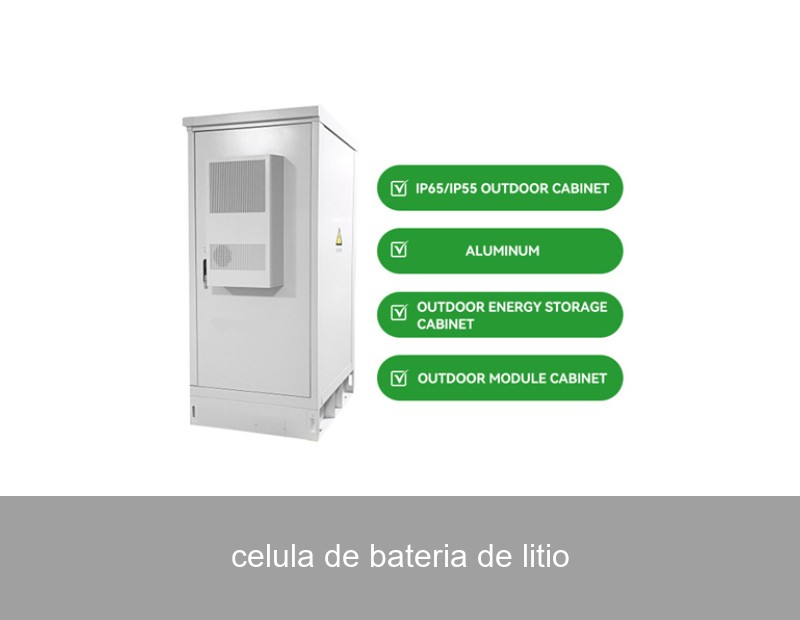
Have you ever wondered what powers your electric vehicle, keeps your home running during an outage, or enables a solar farm to deliver electricity after sunset? The answer, increasingly, lies in a small but mighty component: the lithium battery cell. This single unit is the fundamental building block of the energy revolution, and its performance dictates the efficiency, safety, and longevity of the entire storage system. For businesses and homeowners in Europe and the US looking to harness renewable energy and achieve energy independence, understanding the celula de bateria de litio is the first step toward a smarter, more resilient power strategy. Let's dive into the world inside these powerful cells.
What is a Lithium Battery Cell?
At its core, a lithium battery cell is a self-contained unit that stores electrical energy in chemical form. Think of it as a miniature electrochemical reactor. Each cell consists of four primary components:
- Cathode (Positive Electrode): Typically a lithium metal oxide (like NMC, LFP) that determines capacity and voltage.
- Anode (Negative Electrode): Usually graphite, where lithium ions are stored during charging.
- Electrolyte: A liquid or gel that allows lithium ions to move between the cathode and anode.
- Separator: A porous membrane that prevents physical contact between the electrodes while enabling ion flow.
When you connect hundreds or thousands of these individual cells together, managed by a sophisticated Battery Management System (BMS), you create a battery pack capable of powering anything from a smartphone to an entire factory.

Image Source: Unsplash - A close-up of modern lithium-ion battery cells.
How It Works: A Simple Analogy
Imagine the lithium battery cell as a busy library. During charging, lithium ions are like books being checked out from the cathode (the main shelves) and carried through the electrolyte (the library corridors) to be stored on the anode (the readers' desks). The electrical current you supply is the librarian facilitating this process. When you use the battery (discharging), the books (ions) return from the desks to the shelves, releasing their energy (knowledge) back into the circuit to power your devices. This reversible "shuttle" of ions is what makes rechargeable lithium batteries possible.
Key Performance Metrics That Matter
Not all lithium cells are created equal. When evaluating cells for a commercial or residential energy storage system (ESS), several critical metrics come into play:
| Metric | What It Means | Why It's Important |
|---|---|---|
| Energy Density (Wh/kg) | Energy stored per unit weight | Determines system size and weight; crucial for space-constrained installations. |
| Cycle Life | Number of full charge/discharge cycles before capacity degrades to 80% | Directly impacts the long-term economics and return on investment (ROI) of your ESS. |
| Thermal Stability | The cell's resistance to overheating or thermal runaway | Fundamental for safety, especially in large-scale deployments. |
| C-Rate | Speed of charge/discharge relative to capacity | Defines how quickly you can store or release energy, vital for load-shifting or backup power. |
For instance, Lithium Iron Phosphate (LFP) cells, which Highjoule strategically employs in many of its systems, offer exceptional cycle life (often over 6,000 cycles) and superior thermal stability, making them ideal for stationary storage where longevity and safety are paramount over extreme energy density.
From Cell to System: A Real-World Case Study
Let's move from theory to practice. Consider a mid-sized fruit packaging cooperative in Valencia, Spain. Their challenge was twofold: high energy costs during peak afternoon hours and the need for reliable backup cooling for their cold storage facilities. A solar PV installation helped, but excess midday solar energy was being exported to the grid at low rates, while they later bought expensive power in the evening.
The Solution & Data: A Highjoule HI-Stack Commercial ESS was installed, integrating over 3,000 individual LFP cells into a robust 500 kWh / 250 kW system.
- Peak Shaving: The system discharges during daily peak price windows (6 PM - 10 PM), reducing grid draw.
- Solar Self-Consumption Optimization: It stores excess solar generation from midday for use later in the day.
- Backup Power: Provides seamless backup for critical cold storage units.
Results after 12 months (Real Data):
- 35% reduction in monthly peak demand charges.
- Increase in solar self-consumption from 40% to over 85%.
- Estimated ROI period of 4.7 years, thanks in part to the long cycle life of the underlying LFP cells.
- Annual CO2 emissions reduced by an estimated 62 metric tons.

Image Source: Unsplash - A commercial battery energy storage system installation.
The Highjoule Approach: Beyond the Individual Cell
While the quality of the celula de bateria de litio is foundational, the true intelligence of a storage system lies in how these cells are integrated, managed, and optimized. This is where Highjoule's expertise, honed since 2005, becomes critical. We don't just supply cells; we deliver intelligent, system-level solutions.
Our HI-Stack series for commercial and industrial applications, like the one deployed in Valencia, is built with industry-leading LFP cells. But more importantly, it's governed by our proprietary Adaptive BMS (Battery Management System) and Energy Management Software (EMS). This software layer continuously monitors the health of every single cell, balances their charge, manages temperature, and optimizes the system's operation based on weather forecasts, tariff structures, and your unique consumption patterns. It's the difference between owning a pile of powerful cells and owning a reliable, revenue-generating energy asset.
For residential customers in markets like Germany and California, our HomePower series offers the same philosophy in a compact, silent design. It seamlessly integrates with solar inverters, allowing homeowners to maximize self-consumption, participate in virtual power plants (VPPs), and secure their home's power during increasing grid outages.
Future Trends in Lithium Cell Technology
The evolution of the lithium cell is accelerating. Solid-state batteries, which replace the liquid electrolyte with a solid material, promise even greater energy density and safety. Silicon-anode technology is on the horizon to significantly boost capacity. At Highjoule, our R&D team actively evaluates these advancements, not for their hype, but for their practical impact on real-world cycle life, safety, and total cost of ownership for our clients. Our commitment is to integrate next-generation cell chemistry only when it delivers proven, tangible benefits for your energy storage application. You can read about the latest research directions from authoritative sources like the U.S. Department of Energy or the International Energy Agency (IEA).
So, as you contemplate an energy storage system for your business or home, remember to look beyond the basic specs of the lithium battery cell. Ask yourself: How will these thousands of cells be intelligently managed over 15+ years? How is the system designed to protect that investment from thermal events or premature degradation? The answers to these questions define the true value of your storage solution.
What specific energy challenge—be it unpredictable demand charges, solar curtailment, or backup power concerns—could a deeper understanding of battery cell technology help you solve today?
 Inquiry
 Online Chat