


Partnering with Centrica Business Solutions for a Smarter, More Resilient Energy Future
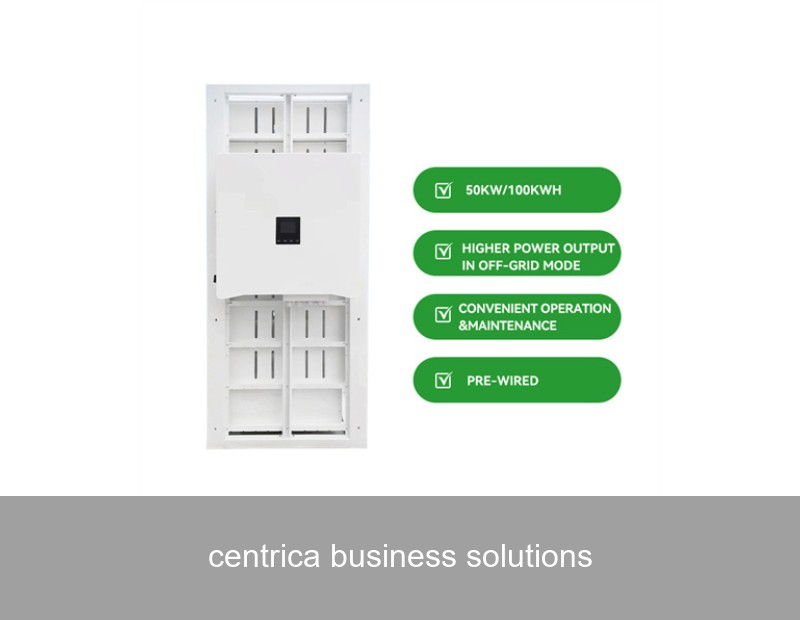
If you're a business or utility leader in Europe or the US, you've felt it: the relentless pressure to manage energy costs, ensure operational resilience, and meet ambitious sustainability targets. The grid is becoming more volatile, and traditional energy strategies are no longer sufficient. This is where forward-thinking organizations are turning to expert partners like Centrica Business Solutions to navigate the complex energy transition. But what truly powers a successful partnership? It's the underlying technology—the intelligent, robust hardware and software that transforms strategy into tangible results. Let's explore how the synergy between visionary energy services and cutting-edge advanced energy storage systems is creating a new paradigm for commercial and industrial power management.
The Modern Energy Challenge: More Than Just Cost
For decades, energy was a relatively predictable line item. Today, it's a dynamic and strategic concern. The phenomenon is clear: the integration of intermittent renewable sources like solar and wind, while environmentally crucial, introduces grid instability. This leads to greater frequency of peak demand charges and increased risk of outages. According to the U.S. Energy Information Administration, commercial electricity prices have seen significant volatility, with peak rates in some regions soaring to multiples of the off-peak cost. In Europe, the energy crisis underscored the critical need for self-sufficiency. The data tells a story of financial exposure and operational risk.
This is precisely the complex landscape that Centrica Business Solutions operates in. They don't just sell equipment; they deliver comprehensive energy strategies—from demand response and onsite generation to long-term power purchase agreements (PPAs). Their expertise lies in designing a financial and operational model that works for your specific site. However, the physical heartbeat of many of these strategies, particularly for demand-side response and peak shaving, is a high-performance Battery Energy Storage System (BESS). The effectiveness of the entire solution hinges on the reliability, intelligence, and longevity of this core technology.

Image Source: Unsplash (Photographer: American Public Power Association)
The Solution Pillar: Intelligent Battery Energy Storage Systems (BESS)
Think of a BESS as the ultimate energy shock absorber and strategic reservoir. It's not a single product but a sophisticated ecosystem. Here’s what a modern, grid-interactive system comprises:
- Battery Racks & Modules: The core energy storage medium, typically using lithium-ion chemistry for its high density and declining cost.
- Power Conversion System (PCS): The "translator" that converts stored DC power to AC power for your facility and vice-versa.
- Battery Management System (BMS): The guardian, ensuring each cell operates safely within its voltage, current, and temperature limits.
- Energy Management System (EMS): The brain. This is where the magic happens. A smart EMS uses algorithms and often AI to decide when to charge, discharge, or hold based on electricity prices, grid signals, and your consumption patterns.
When a partner like Centrica Business Solutions designs a solution for you, they are effectively orchestrating this technology to hit specific financial and operational KPIs. The strength of their orchestration depends fundamentally on the quality and intelligence of the instruments—the BESS itself.
The Highjoule Advantage: The Technology Behind the Strategy
This is where Highjoule's two decades of specialization become critical. As a global provider founded in 2005, we engineer the advanced hardware and software that make strategic energy partnerships successful. When an integrator or solution provider like Centrica Business Solutions deploys a project, they need a BESS they can trust to perform for 15+ years.
Our H-Series Commercial & Industrial (C&I) ESS is built for this very purpose. It features:
- Ultra-Safe LFP Chemistry: Using lithium iron phosphate cells for superior thermal and chemical stability, a non-negotiable for indoor or dense urban installations.
- All-Climate Resilience: Engineered with integrated thermal management to operate efficiently from -10°C to 50°C, crucial for both North European winters and Southern US summers.
- Grid-Forming Inverter Technology: An optional advanced feature that allows the system to "create" a stable grid, enabling microgrid functionality and black start capabilities—a huge step beyond simple backup.
- Open API EMS Platform: Our JouleMind™ software doesn't lock partners into a closed ecosystem. It's designed for seamless integration with third-party aggregation platforms, building management systems, and, critically, the sophisticated optimization engines used by leading energy service companies. This means a partner like Centrica Business Solutions can layer their proprietary intelligence and market access directly on top of our rock-solid, predictable hardware performance.
In essence, Highjoule provides the reliable, intelligent, and interoperable technological foundation that allows energy solution experts to deliver on their promises to you, the end client.
Case Study: UK Manufacturing Plant with Centrica Business Solutions
Let's ground this in reality with a documented example. A major UK food manufacturing plant faced steep Triad charges (peak winter demand periods) and wanted to stabilize energy costs while adding backup resilience.
Phenomenon & Strategy: Centrica Business Solutions conducted a full site audit and proposed a integrated solution combining a rooftop solar PV array with a large-scale battery storage system. The BESS was programmed to charge from excess solar and from the grid during low-cost, off-peak periods. It would then discharge during expensive peak periods and Triad windows, effectively "arming" the facility against demand charges.
Deployment & Data: A 2 MWh / 1 MW battery storage system was installed. In the first full year of operation:
| Metric | Result |
|---|---|
| Peak Demand Charge Reduction | 42% |
| Annual Energy Cost Savings | £186,000 |
| CO2e Emissions Avoided (via optimized consumption & solar) | ~270 tonnes |
| Payback Period | Under 5 years |
The Technology in Action: While the overall strategy and market participation were managed by Centrica, the battery system's performance was key. The required deep-cycle capability, rapid response to price signals, and flawless integration with the site's solar generation are all functions of the BESS's core design—exactly the domain of a technology provider like Highjoule. This case exemplifies the perfect partnership: strategic energy expertise powered by dependable, high-performance technology.

Image Source: Unsplash (Photographer: ThisisEngineering)
The Future Outlook: Beyond Backup Power
The role of storage is rapidly evolving from a cost-saving tool to a critical grid asset. With the rise of Virtual Power Plants (VPPs), aggregated fleets of distributed assets like BESS can provide grid stability services, such as frequency response, directly to transmission operators. This creates an additional, significant revenue stream for asset owners.
Partners like Centrica Business Solutions are at the forefront of enrolling client assets into these programs. The prerequisite? Your BESS must be capable of receiving and executing automated, real-time grid signals with 100% reliability. Highjoule's systems are engineered with this future in mind. Our JouleMind™ EMS is built for multi-market stacking—simultaneously saving on your bills, providing backup, and generating grid service revenue, all without compromising the battery's health or your primary objectives.
What's Your Next Move in the Energy Transition?
The partnership model—combining the strategic acumen of energy service leaders with the deep technical excellence of specialized manufacturers—is proving to be the most effective path forward. It de-risks the transition and maximizes return on investment. As you evaluate your own organization's path to resilience and sustainability, the question isn't just *if* you need an energy strategy, but *how* you will ensure its foundation is unshakeable.
When your chosen partner, be it Centrica Business Solutions or another expert integrator, specifies the technology for your project, what criteria should you encourage them to prioritize? Is your organization ready to treat its energy infrastructure not as an overhead cost, but as a strategic, revenue-generating asset?
 Inquiry
 Online Chat