


China's Desert Solar Panels: A Blueprint for Global Renewable Energy Ambitions
Imagine a vast, sun-drenched desert, once considered barren land, now powering millions of homes with clean electricity. This isn't science fiction; it's the reality unfolding in the deserts of western China. The deployment of massive solar photovoltaic (PV) farms in these arid regions is one of the most significant energy stories of our time. While "China desert solar panels" represent a monumental domestic achievement, the underlying technologies and challenges—particularly in energy storage and grid integration—offer crucial lessons for Europe and the United States as they accelerate their own renewable transitions. For global leaders in smart energy storage like Highjoule, this phenomenon underscores a universal truth: the sun's power is limitless, but its value is unlocked only when we can store it and deliver it intelligently.
Table of Contents
- The Phenomenon: Turning Deserts into Power Plants
- The Data & Scale: Numbers That Dwarf the Landscape
- The Critical Storage Challenge: Beyond the Noon-Day Peak
- Case Study: The Qinghai Model - A Glimpse into the Future Grid
- Global Insights: What Europe and the U.S. Can Learn
- The Highjoule Role: Intelligent Storage for a Stable Energy Future
The Phenomenon: Turning Deserts into Power Plants
China's western provinces, like Xinjiang, Gansu, and Qinghai, are home to some of the world's largest deserts. These regions experience extreme temperatures and low rainfall, making them harsh for habitation but perfect for solar energy generation, with some of the highest solar irradiance levels on the planet. Recognizing this potential, China launched ambitious initiatives to build "solar bases" on these lands. The sight is staggering: millions of solar panels arranged in neat rows, stretching to the horizon, silently converting abundant sunlight into gigawatts of electricity. This strategic move helps China pursue its dual carbon goals while utilizing otherwise low-value land.

Image Source: Unsplash - Representative image of a large-scale desert solar installation.
The Data & Scale: Numbers That Dwarf the Landscape
The scale of China's desert solar ambition is best understood through data. According to the International Energy Agency (IEA), China is responsible for nearly 60% of new renewable capacity added globally each year. A significant portion comes from these utility-scale projects in the west. For instance, the Tengger Desert Solar Park covers over 1,200 square kilometers and has a capacity of over 1.5 GW. To put that in perspective, a single project of this size can generate enough electricity for well over a million households. However, this immense, centralized generation creates its own set of complex challenges, primarily centered around transmission and the intermittent nature of solar power.
The Inherent Challenge of Intermittency
Solar power generation follows the sun's arc. Output peaks at midday and falls to zero at night. This creates a "duck curve" for grid operators—a deep midday trough of net demand followed by a steep evening ramp-up as the sun sets but people return home and switch on appliances. In a desert solar context, this mismatch is amplified because the generation is so colossal and often located far from the coastal demand centers.
The Critical Storage Challenge: Beyond the Noon-Day Peak
This is where the global conversation moves from generation to integration. Building the panels is only half the battle. The real engineering marvel lies in making that power reliable, dispatchable, and grid-friendly. Energy storage systems (ESS) are the indispensable solution. They act as a buffer, absorbing excess solar energy during peak production hours and releasing it during periods of high demand or low generation. Without large-scale storage, much of the potential of desert solar is wasted through curtailment (where panels are turned off because the grid can't handle the power), and grid stability is compromised.
This challenge is not unique to China. In the U.S., states like California and Texas experience similar intermittency issues with their growing solar fleets. In Europe, countries like Spain and Portugal, with high solar potential, face the same integration hurdles. The quest for efficient, durable, and cost-effective storage is a global race.
Case Study: The Qinghai Model - A Glimpse into the Future Grid
Let's examine a concrete example. Qinghai province, on the Tibetan Plateau, hosts several massive solar and wind farms. In 2020, the province ran a groundbreaking experiment: for 31 consecutive days, it powered its entire grid of over 6 million people using only renewable energy—solar, wind, and hydropower. This "Green Grid" feat was made possible by a sophisticated combination of sources and, crucially, large-scale energy storage.
The project leveraged pumped-hydro storage (using existing dams) and began integrating utility-scale battery storage systems to smooth out the minute-to-minute variability of solar and wind. The data from this trial is instructive:
| Metric | Data | Significance |
|---|---|---|
| Duration | 31 days (June 2020) | Proved medium-term grid stability is achievable. |
| Primary Energy Source | Solar PV (desert installations) | Highlighted solar as a baseload-capable source with support. |
| Key Enabling Technology | Hybrid Storage (Pumped-Hydro + Batteries) | Showcased the need for multi-technology storage solutions. |
| Peak Load Served | ~9.7 GW | Demonstrated scalability for large populations. |
This case, documented by researchers at Nature Energy, provides a real-world blueprint. It shows that while the geography of China's deserts is specific, the technological and systemic lessons—especially the non-negotiable role of advanced storage—are universally applicable.
Global Insights: What Europe and the U.S. Can Learn
The "China desert solar panels" story is less about geography and more about system-level innovation. For European and American policymakers, energy companies, and communities, the takeaways are clear:
- Think Big, Start Smart: Utility-scale solar in low-competition land areas (like brownfields or arid regions) can rapidly boost renewable portfolios.
- Storage is Not an Add-on; It's a Core Component: From day one, storage must be factored into the financial and engineering plans for any major solar project.
- Grid Modernization is Paramount: Long-distance, high-voltage transmission and smart grid technologies are needed to move power from remote generation sites to cities.
- Hybrid Systems Win: Combining solar with wind (which often generates at different times) and a mix of storage technologies (lithium-ion, flow batteries, pumped hydro) creates a more resilient and balanced energy system.

Image Source: Unsplash - Technician inspecting a utility-scale battery storage installation.
The Highjoule Role: Intelligent Storage for a Stable Energy Future
The challenges highlighted by mega-projects in China are precisely the problems Highjoule was founded to solve. Since 2005, we have evolved into a global leader in advanced energy storage systems because we understand that capturing energy is only the first step. Our expertise lies in making it usable, reliable, and intelligent.
Our product suite is designed to address the very intermittency and grid-integration issues faced by large-scale solar deployments:
- Commercial & Industrial (C&I) ESS: For businesses looking to pair with on-site solar, our systems maximize self-consumption, provide backup power, and enable participation in demand response programs, turning energy into a strategic asset.
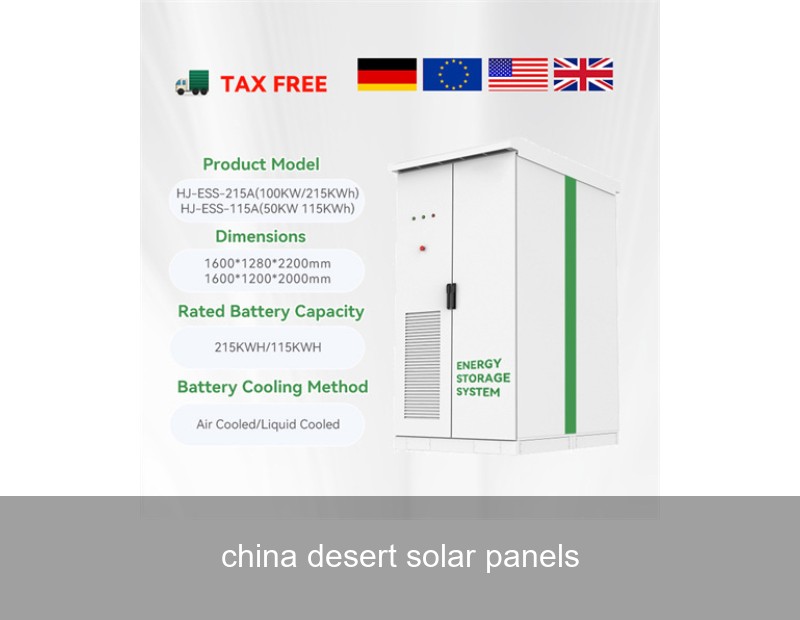
- Utility-Scale Storage Solutions: Highjoule's containerized battery systems are engineered for the harsh conditions of remote solar farms. They feature advanced thermal management and are built for high cycle life, providing grid operators with the essential services of frequency regulation, peak shaving, and renewable firming.
- Microgrid Controllers: For remote communities or industrial campuses powered by solar, our intelligent controllers seamlessly manage generation, storage, and load, ensuring stability without reliance on a distant central grid.
Imagine a solar farm in the Mojave Desert or southern Spain equipped with a Highjoule storage system. Instead of scrambling to manage the noon-day surge, the grid operator has a predictable, dispatchable resource. The solar energy is stored and can be released during the expensive evening peak, increasing the project's profitability and grid value while enhancing overall network resilience. That's the Highjoule difference—transforming raw renewable power into a dependable, intelligent energy stream.
Looking Ahead: The Storage-Centric Grid
The future grid will not be defined by how much energy we can generate, but by how well we can store and manage it. The lesson from the world's largest solar farms is unequivocal. As you contemplate your organization's or community's path to energy independence and sustainability, consider this: Is your renewable energy strategy fully integrated with a smart storage solution that ensures every kilowatt-hour generated is a kilowatt-hour delivered?
 Inquiry
 Online Chat