


Navigating the Landscape: A Guide to China Solar Panel Suppliers for Global Projects
If you're planning a solar installation in Europe or the United States, you've undoubtedly encountered a dominant theme: the overwhelming presence of China solar panel suppliers. It's not just a trend; it's the bedrock of the global photovoltaic (PV) market. For project developers, EPCs, and even homeowners, understanding this landscape isn't just about finding a vendor—it's about making strategic decisions that affect the levelized cost of energy (LCOE), project timelines, and long-term system reliability. The phenomenon is driven by decades of industrial policy, massive scale, and relentless innovation in China's manufacturing sector. But here's the crucial insight we'll explore: sourcing panels is only one piece of the puzzle. The true value of a solar energy system is unlocked through intelligent integration with advanced power conversion and storage solutions. This is where expertise beyond the module data sheet becomes paramount.
Key Advantages of Sourcing from China Solar Panel Suppliers
The dominance of Chinese manufacturers like JinkoSolar, LONGi, and Trina Solar is built on concrete, competitive advantages that directly benefit end-users worldwide. Let's break down the core benefits:
- Unmatched Economies of Scale: Chinese factories produce at a volume that significantly reduces unit costs. This translates directly to more affordable panels, making solar projects financially viable faster and improving return on investment (ROI).
- Continuous Technological Innovation: Contrary to outdated perceptions, these suppliers are at the forefront of PV technology. They consistently push the boundaries in panel efficiency, with leading companies now mass-producing n-type TOPCon and HJT cells that offer higher performance and better temperature coefficients.
- Vertically Integrated Supply Chains: Many top suppliers control the entire production process from polysilicon to the finished module. This vertical integration provides greater quality control, supply stability, and resilience against market fluctuations in raw material prices.
- Extensive Product Certification: Reputable Chinese suppliers rigorously test their products to meet international standards like IEC 61215 and IEC 61730, as well as region-specific certifications from UL (US) and the CE mark (Europe).
However, procuring these high-efficiency panels is merely the first step. They generate DC electricity, but our homes and businesses run on AC power. This is where the "brain" of the system comes in. At Highjoule, we've seen that the inverter and energy management system are what truly determine how much of that raw solar potential you can actually use. Our Hybrid Inverters and Energy Management Systems (EMS) are engineered to seamlessly integrate with panels from any major global supplier, ensuring every kilowatt-hour is harvested, stored if needed, and delivered with maximum efficiency.
Understanding the Technology Spectrum
| Panel Type (Common from China) | Typical Efficiency Range | Key Advantage | Best Suited For |
|---|---|---|---|
| Monocrystalline PERC | 21% - 22.5% | Cost-effective, proven reliability | Residential & commercial rooftop projects |
| n-type TOPCon | 22.5% - 24%+ | Higher efficiency, lower degradation | Projects with space constraints, maximizing annual yield |
| Heterojunction (HJT) | 23% - 24.5%+ | Excellent performance in high temperatures | Hot climates, commercial & industrial applications |
Navigating the Challenges: Quality, Logistics, and Compliance
While the advantages are clear, sourcing directly or indirectly from China solar panel suppliers presents distinct challenges that require diligent management. The market is vast, with a wide spectrum of quality. The lowest bidder may not account for long-term performance degradation or mechanical durability. Furthermore, logistics from East Asia to Europe or the US involve complex shipping, customs clearance, and potential tariffs, which can impact total landed cost and project schedules. Finally, compliance with local grid codes, building regulations, and incentive programs (like the EU's Renewable Energy Directive) is non-negotiable.
This is precisely why partnering with a system integrator with global experience is critical. Highjoule doesn't just supply components; we provide comprehensive, smart storage systems. Our role is to de-risk your project. We ensure that the selected panels are optimally paired with our bi-directional inverters and battery systems, that the entire system is compliant with local standards, and that our AI-driven EMS software is configured to meet your specific energy goals—whether that's maximizing self-consumption, providing backup power, or participating in grid services.

Image Source: Unsplash (Representative image of solar panel logistics and inspection)
Beyond Panels: The Critical Role of System Integration
Think of high-efficiency solar panels as a powerful engine. But an engine alone doesn't make a high-performance vehicle. You need a sophisticated transmission, suspension, and onboard computer. In the energy world, that's the inverter, battery storage, and energy management system. The synergy between these components is where the magic—and the maximum financial return—happens.
For instance, a premium n-type panel will produce more DC power, especially in low-light conditions. To capitalize on this, you need an inverter with a wide MPPT voltage range and high conversion efficiency. Highjoule's hybrid inverters are designed for exactly this, featuring multiple MPPT trackers to handle different roof orientations and mitigate shading losses. Furthermore, without storage, excess solar energy produced at midday is often exported to the grid at low rates. By integrating Highjoule's modular battery energy storage systems (BESS), that excess energy is stored for use in the evening, dramatically increasing energy independence and savings.
Our Highjoule Neuron EMS acts as the project's central intelligence, continuously analyzing energy production, consumption patterns, weather forecasts, and even utility tariff schedules. It autonomously decides the most economical flow of energy—whether to charge the batteries, power the building, or sell to the grid—optimizing for your pre-set financial and resilience goals.
Case Study: A German *Mittelstand* Company's Strategic Approach
Let's examine a real-world application that highlights the interplay between global sourcing and local system expertise. A mid-sized automotive component manufacturer in Bavaria, Germany, aimed to reduce its carbon footprint and hedge against volatile energy prices. Their goal was 65% self-sufficiency through solar.
- Phenomenon: High daytime energy consumption with a significant evening load from facility lighting and machinery.
- Data & Sourcing: After a competitive tender, they selected high-efficiency TOPCon panels from a tier-1 China solar panel supplier, attracted by the performance warranty and cost-per-watt. The 500 kWp array was projected to produce ~525,000 kWh annually.
- Integration Challenge: The factory's load profile meant ~40% of the solar generation would be exported instantaneously without storage, missing the opportunity for deeper self-consumption.
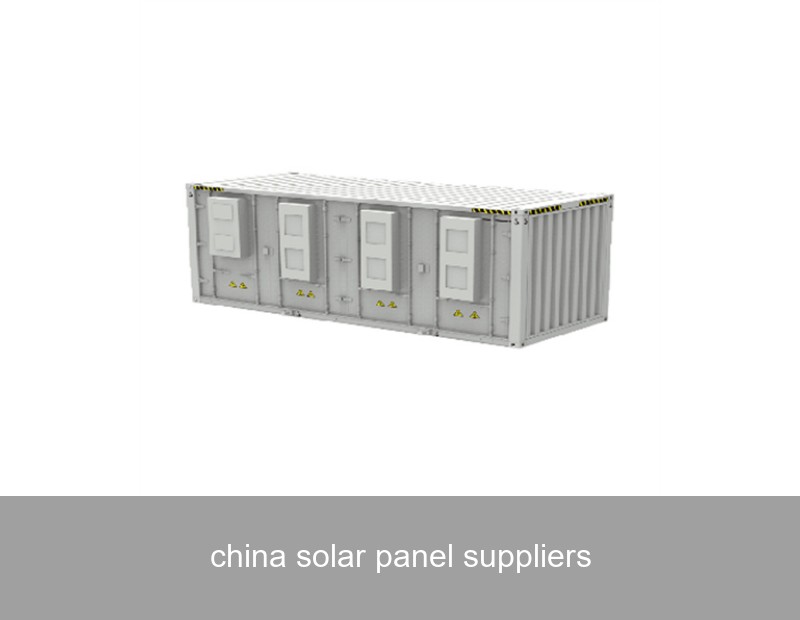
- Highjoule Solution: The company partnered with Highjoule's European team to design a turnkey system. We supplied a 500 kW hybrid inverter system and a containerized 1 MWh battery storage unit. Our EMS was programmed to prioritize self-consumption, shift grid charging to night-time low tariffs, and provide grid-forming capabilities for critical processes.
- Result: The system achieved 92% self-consumption of solar generation, not 65%. The effective energy cost reduction exceeded initial projections by 28%. The battery system also provides uninterrupted power for critical manufacturing lines, a value-add not initially quantified. Fraunhofer ISE studies consistently show that such integration is key to maximizing the value of PV assets.
Future-Proofing Your Solar Investment
The solar industry is dynamic. Panel efficiencies will continue to creep up, and grid regulations will evolve. When you source panels, you're making a 25-30 year investment. Your supporting system must be equally resilient and adaptable. This means choosing an inverter and storage platform with software-upgradable capabilities, open protocol support, and scalability.
Highjoule builds this flexibility into every product. Our battery systems are chemistry-agnostic and can be expanded modularly as your needs grow. Our EMS receives regular firmware updates that can adapt to new grid service markets or tariff structures. This creates a foundation where your initially sourced panels remain a productive asset for their entire lifespan, protected from technological obsolescence by the intelligence of the system around them.
So, as you evaluate China solar panel suppliers based on their datasheets and warranties, we invite you to consider the next, more critical question: How will you build an intelligent energy ecosystem around those panels to capture their full potential for decades to come?
 Inquiry
 Online Chat