


Comment Stocker l'Électricité: The Key to Unlocking a Renewable Future

Imagine a world where the sun doesn't shine on demand, and the wind is a fickle friend. Welcome to the reality of renewable energy. We've made incredible strides in generating clean power from solar panels and wind turbines, but there's a fundamental question we must answer: comment stocker l'électricité (how to store electricity) when production and consumption are out of sync? This isn't just a technical puzzle; it's the linchpin for achieving true energy independence, grid stability, and a sustainable future for homes, businesses, and entire communities.
The challenge is clear. In Germany, for instance, renewable sources frequently supply over 50% of the nation's electricity on a given day. Yet, without robust storage, excess energy generated during a windy afternoon can go to waste, only for fossil fuel plants to ramp up in the calm evening. This mismatch is the central obstacle to a fully decarbonized grid. Effectively storing electricity transforms renewables from intermittent supplements into reliable, dispatchable power sources, turning the dream of 24/7 clean energy into a practical reality.
The "How": A Guide to Modern Electricity Storage Technologies
So, how do we actually capture electrons for later use? The field is diverse, with different technologies excelling in different areas—from powering your home for a few hours to backing up an industrial complex for an entire day. Let's break down the main contenders.
Lithium-Ion: The Current Champion for Versatility
You're familiar with these from your phone and EV. For broader energy storage, lithium-ion batteries are the dominant force due to their high energy density, declining costs, and rapid response times. They are ideal for:
- Frequency Regulation: Instantly injecting or absorbing power to keep the grid's frequency stable.
- Solar Self-Consumption: Storing rooftop solar energy for use at night, a solution we at Highjoule have perfected for residential and commercial clients.
- Back-up Power: Providing seamless electricity during outages.
However, they are best suited for shorter-duration storage (typically 2-6 hours) and considerations around lifecycle and raw materials are driving innovation for alternatives.

Image: A modern grid-scale battery energy storage system. Credit: Unsplash
Flow Batteries: The Steady Hand for Long-Duration Needs
Think of these as large-scale, rechargeable fuel cells. Energy is stored in liquid electrolytes held in external tanks. The key advantage? Duration is easily scaled by simply using larger tanks, making them economically attractive for storing energy for 6, 10, or even 12+ hours. They offer excellent cycle life with minimal degradation, making them a promising solution for weekly or seasonal storage cycles, a critical need for fully renewable microgrids.
Pumped Hydro: The Established Giant
This is the grandfather of grid-scale storage, accounting for over 90% of the world's current storage capacity. It works like this: use cheap or excess electricity to pump water uphill to a reservoir. When energy is needed, release the water downhill through turbines. It's highly efficient and provides massive storage capacity, but it's geographically limited and faces significant environmental and permitting hurdles for new projects. According to the International Energy Agency (IEA), pumped hydro remains crucial but growth is concentrated in specific regions.
Emerging and Alternative Technologies
The innovation race is on. Compressed Air Energy Storage (CAES), gravity-based storage (using weights in old mine shafts), and advanced thermal storage are all being piloted. Each seeks to solve the cost, duration, and scalability equation in novel ways. The future of "comment stocker l'électricité" will likely be a diverse portfolio, not a one-size-fits-all solution.
| Technology | Best For | Typical Duration | Key Advantage | Consideration |
|---|---|---|---|---|
| Lithium-Ion Battery | Frequency regulation, peak shaving, residential/commercial backup | 2 - 6 hours | High power, fast response, modular | Cycle life, raw material supply chain |
| Flow Battery | Long-duration storage, renewable integration for microgrids | 6 - 12+ hours | Duration easily scalable, long cycle life | Lower energy density, higher upfront cost |
| Pumped Hydro | Massive grid-scale storage, seasonal balancing | 6 - 20+ hours | Very high capacity, proven technology | Geographic constraints, high capex, long lead times |
Real-World Impact: A European Case Study
Let's move from theory to practice. Consider the challenge faced by a mid-sized manufacturing plant in Bavaria, Germany. Their operations are energy-intensive, and they installed a large solar array to reduce costs and carbon footprint. However, their production peaks often occurred in the early morning and late afternoon, misaligned with the solar generation peak at midday. They were forced to sell excess solar power at low prices and buy back expensive grid power later.
The Solution & The Data: The plant partnered with Highjoule to deploy a tailored 1.2 MWh IntelliBESS battery storage system integrated with their existing solar infrastructure. Our system's AI-driven energy management software (Highjoule Neuron) learned the facility's load patterns and energy prices in real-time. The results over the first year were compelling:
- 85% increase in on-site consumption of solar energy.
- €48,000 saved annually through peak shaving and optimized energy arbitrage.
- 42% reduction
- Provision of backup power for critical processes, enhancing operational resilience.
This case, mirrored across many of our European and North American industrial clients, demonstrates that solving "comment stocker l'électricité" is not just an environmental imperative but a direct and powerful driver of economic efficiency and business continuity.
Highjoule's Role: Intelligent Storage for Every Need
Since 2005, Highjoule has been at the forefront of answering this very question. We understand that storage is not just about the battery cell; it's about the intelligent system that surrounds it. Our solutions are designed to adapt to your specific context, whether you're a homeowner seeking independence, a factory manager targeting cost savings, or a developer building a resilient microgrid.
Our core offerings include:
- Residential & Commercial ESS: Our HomePower and BizPower series are sleek, safe, and smart lithium-ion systems that seamlessly integrate with solar, maximize self-consumption, and provide peace-of-mind backup power.
- Industrial & Utility-Scale IntelliBESS: These modular, containerized solutions are the workhorses for large-scale applications. Coupled with our Highjoule Neuron platform, they perform multiple revenue-generating and cost-saving functions simultaneously, from frequency response to demand charge management.
- Microgrid Controllers & Software: The true brain of modern storage. Our software orchestrates generation (solar, wind), storage, and consumption in real-time, ensuring optimal performance, resilience, and return on investment. This is where the magic of true energy autonomy happens.
We partner with leading technology providers and research institutions, like the U.S. Department of Energy's Energy Storage Hub, to ensure our systems incorporate the latest advancements in safety, efficiency, and lifecycle management.
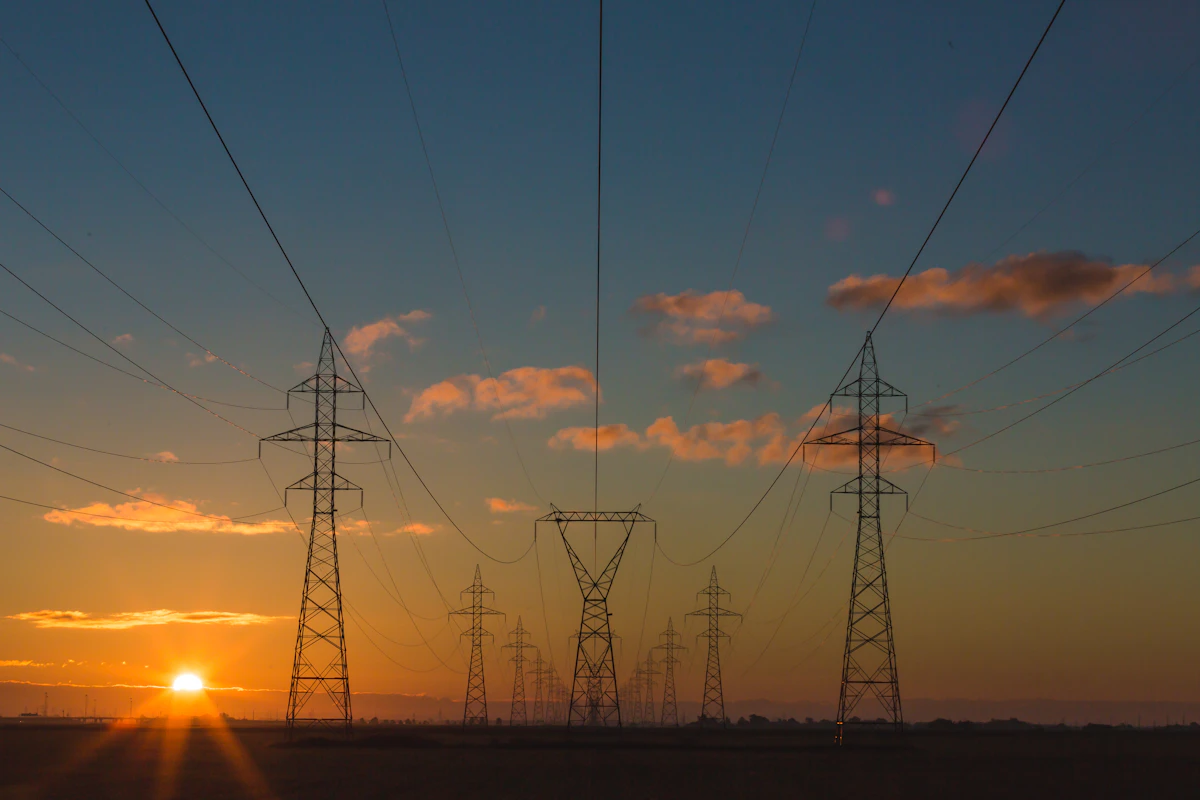
Image: Advanced control systems are key to optimizing storage performance. Credit: Unsplash
Future Horizons and Your Role
The journey to master "comment stocker l'électricité" is accelerating. The convergence of cheaper renewables, smarter software, and evolving storage technologies is creating a tipping point. We are moving from storage as a niche asset to storage as the fundamental enabler of a new energy architecture—one that is decentralized, democratic, and decarbonized.
But this future isn't automatic. It requires continued policy support, investment, and public engagement. It also requires choosing the right partners to navigate this complex transition. So, as you look at your own energy bills, your company's sustainability goals, or your community's resilience plans, we leave you with this question: What could you power, and what risks could you mitigate, if you had the ability to store and control your own clean electricity on your terms?
 Inquiry
 Online Chat