


Finding the Right Solar Kits for Sale in Kenya: A Guide to Sustainable Power
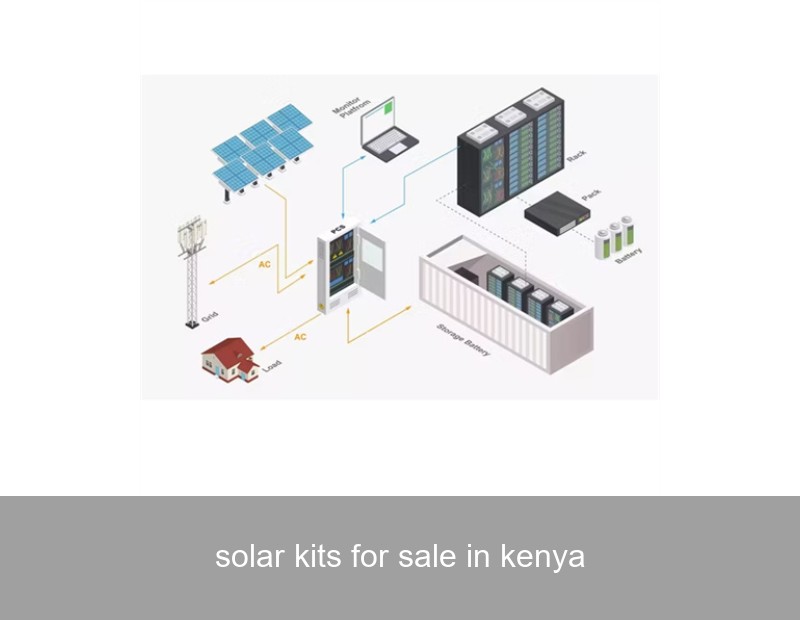
If you're exploring solar kits for sale in Kenya, you're part of a powerful movement. Across the country, from bustling Nairobi to remote villages, Kenyans are turning to the sun to tackle energy challenges and unlock economic potential. But with so many options, how do you choose a system that's reliable, efficient, and truly meets your needs? This guide will illuminate the path to a smarter solar investment, blending local context with global expertise.
Table of Contents
The Phenomenon: Kenya's Solar Surge
Kenya's relationship with solar energy is unique. High irradiation levels, coupled with the need to extend the grid and ensure stable power for growing businesses, have created a perfect storm for solar adoption. It's not just about being green; it's about resilience and growth. Power interruptions can halt production, spoil goods, and disconnect communities. A well-designed solar kit becomes more than an appliance—it's a cornerstone for development.

For homeowners, it means lights for children to study at night and a fan during the hot season. For entrepreneurs, it means refrigerating products, running machinery, and staying online. The phenomenon is clear: reliable energy is the fuel for opportunity.
The Data: Why Solar Makes Economic Sense
Let's talk numbers. The cost of solar photovoltaic (PV) modules has fallen dramatically globally, over 80% in the last decade according to the International Energy Agency (IEA). In Kenya, where electricity tariffs for commercial users can be significant, the payback period for a solar investment has become incredibly attractive.
Consider this simple table comparing ongoing costs:
| Energy Source | Primary Cost Driver | Long-Term Cost Predictability |
|---|---|---|
| Grid Power (Kenya) | Variable Tariffs & Demand Charges | Low (Prices can fluctuate) |
| Diesel Generator | Fuel Price & Maintenance | Very Low (Highly volatile) |
| Solar PV Kit (with battery) | Initial Investment | Very High (Sunlight is free) |
The data points to a simple truth: after the initial investment, solar provides a hedge against rising energy costs for 25+ years. The key is that initial investment must be in quality components designed to last in specific environmental conditions.
The Case Study: Powering a Nakuru Agri-Business
Let's make this real. GreenShade Farms, a medium-sized horticulture company in Nakuru, faced persistent grid instability that threatened its cold storage facilities. A spoilt batch of produce meant direct financial loss. In 2022, they installed a 25kW solar kit with battery storage.
- Challenge: Unreliable grid causing cooling system failures.
- Solution: A hybrid solar kit with high-efficiency panels, a robust battery bank, and an intelligent inverter system that seamlessly switches between solar, battery, and grid.
- Result (18 months post-installation):
- Energy costs reduced by 60%.
- Zero produce loss due to power failure.
- Estimated return on investment (ROI) period: 4.2 years.
The system wasn't just an "off-the-shelf" kit; it was engineered for their specific load profile—prioritizing the constant power needed for refrigeration. This is where choosing a provider with deep system design expertise makes all the difference.
The Kit Breakdown: What to Look For in a Quality System
Not all solar kits for sale in Kenya are created equal. A true system comprises synergized components:
1. Solar Panels (The Generators)
Look for Tier-1 manufacturers with proven performance in high-temperature environments. Efficiency and degradation warranties (often 25+ years) are key.
2. Inverter (The Brain)
This converts DC solar power to AC for your appliances. For reliability, choose a hybrid inverter that can integrate battery storage and manage grid/generator input. Highjoule's HI-3000 Series Hybrid Inverters, for instance, are built for rugged conditions and offer advanced grid-management capabilities, ensuring smooth operation even with unstable grid input—a common challenge in many regions.
3. Battery Storage (The Bank)
This is the heart of your independence. Lithium-ion phosphate (LiFePO4) batteries are now the standard for safety, lifespan (often 6000+ cycles), and performance. They are a far cry from old lead-acid batteries. Highjoule specializes in integrated Highjoule HES (Home Energy Storage) and BESS (Battery Energy Storage System) solutions that are modular, scalable, and come with sophisticated energy management software to maximize cycle life and efficiency.
4. Balance of System (BOS)
Mounting structures, wiring, circuit breakers, and monitoring software. Skimping here can compromise the entire system. Professional installation is non-negotiable.

The Expert Edge: Beyond the Basic Kit
As a global leader with nearly two decades of experience, Highjoule understands that selling a kit is just the beginning. We provide intelligent, sustainable power solutions. For the Kenyan market, this means:
- Adapted Product Design: Our systems are engineered for high ambient temperatures and can handle voltage fluctuations common in emerging grid infrastructures.
- Smart Energy Management: Our solutions include software that allows you to monitor production and consumption in real-time via a smartphone app, and even optimize when to use solar, store energy, or draw from the grid based on cost and need.
- Scalability: Starting with a home system? Our modular designs allow you to easily add more panels and battery capacity as your needs grow, protecting your initial investment.
- Technical Support & Training: We partner with local distributors and installers, ensuring they have the knowledge to design, install, and maintain systems to the highest global standards. You can learn more about global best practices in system design from resources like the U.S. Department of Energy.
This holistic approach transforms a simple kit into a long-term energy asset.
Your Energy Future: Questions to Consider
As you evaluate solar kits for sale in Kenya, ask yourself and potential suppliers these crucial questions:
- What is my precise daily energy consumption (in kWh), and what are my critical loads?
- Does the provider offer a detailed site assessment and customized design, or just a generic package?
- What is the warranty and projected lifespan of the core components, especially the battery?
- How does the system's software help me manage and get the most value from my energy?
- Can the system grow with my future energy needs?
The journey to energy independence is exciting. It starts with the right information and the right partner. What specific energy challenge are you hoping solar power will solve for you today, and what opportunities do you hope it will unlock for tomorrow?
 Inquiry
 Online Chat