


Commercial Energie Solaire: Transforming Sunlight into Strategic Business Advantage
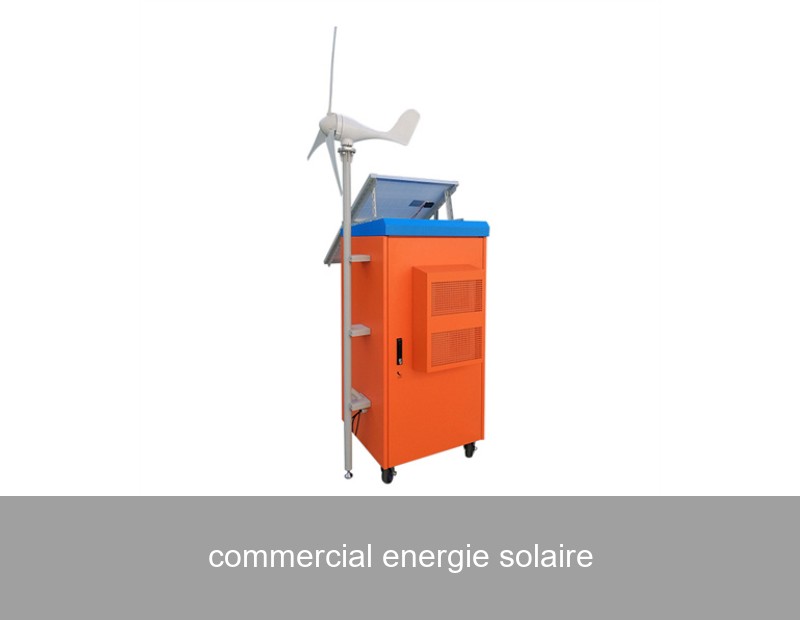
Let's be honest. When you think of commercial energie solaire, the first image is likely rows of solar panels on a warehouse roof. And that's a great start! Capturing free, abundant sunlight is the cornerstone of energy independence. But for forward-thinking business leaders in Europe and the US, the real conversation has evolved. It's no longer just about generating green power; it's about building a resilient, intelligent, and profitable energy asset. The true potential of your commercial solar installation is unlocked not when the sun is shining, but when it's not. That's where the strategic shift from simple generation to integrated energy management begins.
The Power Shift: Why Commercial Solar is More Than Panels
The global drive towards sustainability, coupled with volatile energy prices, has made commercial solar a boardroom discussion. Businesses are no longer passive consumers. They are becoming "prosumers"—both producing and consuming energy. This shift is driven by clear goals: reducing operational costs (OpEx), achieving ESG (Environmental, Social, and Governance) targets, and insulating against grid instability. A solar array is a visible commitment to these goals, but its output is inherently variable. This variability introduces the core challenge that modern businesses must solve.
The Missing Piece: Intermittency and the Grid Strain
Here's the phenomenon every solar business owner encounters: your panels produce a surplus at midday, often exporting it to the grid at a low feed-in tariff. Then, in the evening during peak demand hours when electricity is most expensive, your production drops to zero, forcing you to buy back power at a premium. This cycle creates a financial and operational gap.
Let's look at the data. According to the International Energy Agency (IEA), solar PV is the fastest-growing electricity source, but grid integration remains a key challenge for system stability. In markets like California and parts of Europe, "duck curves"—deep dips in net demand during sunny days followed by steep ramps in the evening—are testing grid infrastructure. For your business, this translates to missed opportunities and continued exposure to market spikes.

Image Source: Unsplash - A commercial solar array. The setting sun symbolizes the end of production, but not the end of energy demand.
Solar + Storage: The Intelligent, Resilient Power Plant
This is where the complete solution comes into play: commercial energie solaire paired with a Battery Energy Storage System (BESS). Think of it as your private energy reserve. The solar panels are the fuel harvesters, and the battery is the strategic fuel tank and manager.
- Energy Time-Shifting: Store excess solar energy produced at noon and use it during expensive peak periods (4 PM - 9 PM).
- Demand Charge Reduction: Slash the highest 15-minute power draw in a billing cycle, which often constitutes up to 50% of a commercial electricity bill.
- Backup Power: Maintain critical operations during grid outages, ensuring business continuity.
- Grid Services: In some markets, you can even generate revenue by providing grid stability services.
Case Study: A German Logistics Hub Takes Control
Let's examine a real-world application. A major logistics center in North Rhine-Westphalia, Germany, was operating a 500 kWp rooftop solar system. Despite significant generation, their energy costs remained high due to demand charges and nighttime operations. They faced the classic solar dilemma.
Their solution was integrating a 372 kWh battery storage system. The results, monitored over a year, were telling:
| Metric | Before Storage | After Storage Integration |
|---|---|---|
| Solar Self-Consumption | 35% | 89% |
| Peak Grid Demand | 180 kW | 95 kW |
| Annual Demand Charge Savings | €0 (baseline) | €18,500 |
| Overall Bill Reduction | ~25% (solar only) | ~68% (solar + storage) |
This case, documented in a Fraunhofer ISE analysis, highlights the multiplier effect of storage. The facility didn't just save more; it transformed its energy profile, becoming a stable node on the local grid.
The Highjoule Solution: Engineered for Commercial Demands
At Highjoule, we've spent nearly two decades perfecting this synergy. Our approach to commercial energie solaire is holistic. We don't just sell components; we deliver intelligent, integrated power solutions.
Our H-Series Commercial Energy Storage Systems are the brains behind the operation. Built with lithium iron phosphate (LFP) battery chemistry for superior safety and longevity, they are designed for the rigorous daily cycling required in commercial applications. What sets Highjoule apart is our Adaptive Energy Management System (AEMS). This AI-driven software doesn't just store and release energy. It learns your facility's load patterns, weather forecasts, and real-time electricity tariffs to make autonomous, cost-optimizing decisions every second of the day.

Image Source: Unsplash - Representative of a modern commercial battery storage installation.
For businesses looking to deploy or upgrade their solar infrastructure, Highjoule offers a seamless path. We provide:
- Turnkey Solar + Storage Projects: From initial consultancy and design to installation, grid connection, and long-term maintenance.
- Storage-First Retrofits: Unlock the full value of your existing solar array by adding a Highjoule BESS.
- Microgrid Solutions: For campuses or remote industrial sites, we design systems that can operate independently from the grid, powered by solar, storage, and other generators.
Making the Financial Sense: ROI Beyond Bill Savings
The economics are compelling. While upfront investment is higher than solar alone, the payback period is often accelerated due to dramatic demand charge savings. Furthermore, incentives like the Investment Tax Credit (ITC) in the US, which now includes standalone storage, and various European grant programs (like those from the European Commission) improve the model. The ROI calculation must include intangible value: brand enhancement through demonstrable sustainability, operational resilience, and future-proofing against rising energy costs and potential carbon taxes.
Future-Proofing Your Energy Strategy
The energy landscape is not static. Electrification of transport (think fleet charging), the rise of carbon pricing mechanisms, and increasing grid volatility are not distant futures—they are present realities. A commercial energie solaire system coupled with intelligent storage is the foundational platform for navigating this change. It allows you to absorb new loads (like EV chargers) without triggering higher grid demand charges and positions you to participate in emerging energy markets.
So, the question for your business is no longer just "Should we install solar?" The strategic question has become: "How do we design our energy system today to be an adaptive, cost-saving, and resilient asset for the next 25 years?" What is the first operational cost you would like to stabilize against the unpredictable grid?
 Inquiry
 Online Chat