


Understanding Solar Panel Price in Pakistan: A 2024 Guide for Smart Energy Investment
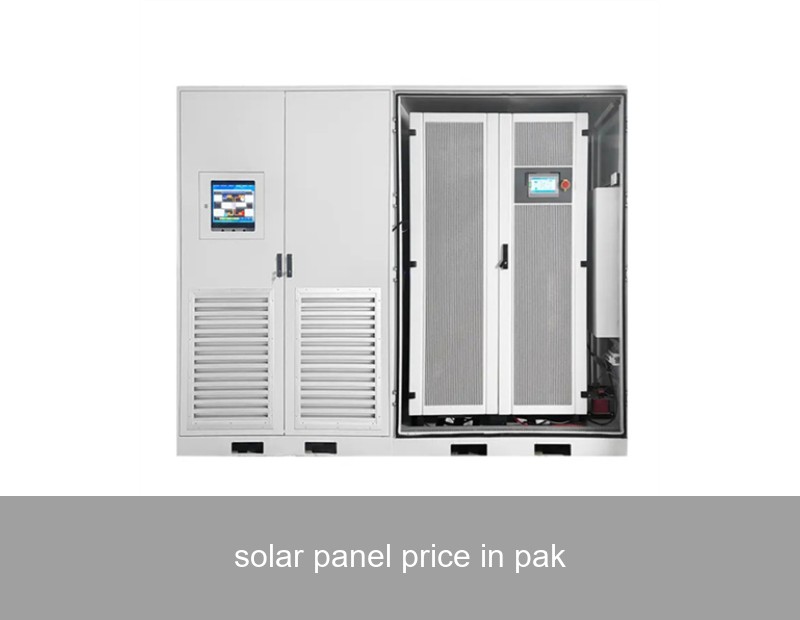
If you're researching the solar panel price in Pakistan, you're likely caught between the promise of energy independence and the complexity of upfront costs. It's a common dilemma. The initial price tag is just one piece of the puzzle. True value lies in understanding the technology, the total cost of ownership, and the long-term performance of your entire solar energy system. As a global leader in advanced energy storage, Highjoule has witnessed how pairing high-efficiency solar panels with intelligent battery storage transforms this investment, maximizing return and ensuring reliable power. Let's demystify the factors behind solar pricing and explore how to build a system that delivers value for decades.
Table of Contents
- Key Factors Influencing Solar Panel Price in Pakistan
- The Real Cost: Looking Beyond the Solar Panels
- The Highjoule Advantage: Where Intelligent Storage Adds Value
- Case Study: A Lahore Textile Factory's Journey to Energy Security
- Future Trends: What's Next for Solar in Pakistan?
Key Factors Influencing Solar Panel Price in Pakistan
The per-watt quote you receive for solar panels is shaped by a global and local market. Firstly, panel technology matters. Monocrystalline panels, with their higher efficiency (often 20% and above), command a higher price than polycrystalline modules. This efficiency means you need fewer panels and less roof space to generate the same power—a crucial consideration for commercial setups.
Secondly, brand and quality assurance play a huge role. Tier-1 manufacturers with proven long-term reliability and performance warranties justify a premium. In a climate like Pakistan's with high temperatures and dust, the panel's temperature coefficient and durability are non-negotiable for protecting your investment. Finally, the scale of your project impacts price. A large commercial or industrial installation will have a lower cost per watt compared to a small residential system due to economies of scale.

Image Source: Unsplash - A large-scale solar installation demonstrates the impact of project size on overall system economics.
Breaking Down the System Components
- Solar Panels (Modules): Typically 50-60% of the system cost. Prices fluctuate with global silicon prices and import duties.
- Inverters: The "brain" of your PV system. Central string inverters are cost-effective for uniform arrays, while microinverters optimize output per panel (at a higher cost), ideal for shaded roofs.
- Mounting Structure & Balance of System (BOS): This includes racks, cables, connectors, and safety equipment. Quality here ensures your system withstands weather for 25+ years.
- Installation & Soft Costs: Engineering, permits, and labor. Working with an accredited, experienced installer is critical for system performance and safety.
The Real Cost: Looking Beyond the Solar Panels
Focusing solely on the solar panel price in Pakistan is a classic pitfall. The ultimate metric is the Levelized Cost of Energy (LCOE)—the average net present cost of electricity generation over the system's lifetime. A cheaper, less efficient panel may have a higher LCOE if it produces less energy and degrades faster.
Consider this: solar panels only produce power when the sun shines. Without storage, excess midday energy is often exported to the grid at a low rate, and you draw expensive power from the grid at night. This cycle limits your savings and leaves you vulnerable to outages. Therefore, the true value of your solar investment is unlocked when you can store and manage the energy you produce.
| Feature | Basic Grid-Tied Solar System | Solar System + Highjoule Battery Storage |
|---|---|---|
| Daytime Energy Savings | High | High |
| Evening/Night Energy Savings | Low (Relies on Grid) | Very High (Uses Stored Solar) |
| Backup Power During Outages | None (Inverter shuts off for safety) | Full Home/Business Backup |
| Grid Independence | Low | High |
| Return on Investment (ROI) Timeline | Longer (Limited by consumption patterns) | Optimized (Maximizes self-consumption) |
The Highjoule Advantage: Where Intelligent Storage Adds Value
This is where Highjoule's expertise transforms a capital expense into a strategic asset. We don't just sell batteries; we provide integrated, intelligent energy storage systems (ESS) that manage the flow of solar energy 24/7. Our HPS Series for residential and commercial use is built with lithium iron phosphate (LFP) chemistry, known for its safety, longevity (over 6000 cycles), and excellent performance in high-temperature environments—perfect for Pakistan's climate.
Our systems go beyond simple storage. Highjoule's Adaptive Energy Management Platform uses AI-driven software to learn your energy consumption patterns, weather forecasts, and tariff schedules. It automatically decides when to store solar energy, power your loads, or sell back to the grid, ensuring every kilowatt-hour of your solar production is used in the most economical way possible. By integrating a Highjoule system, you effectively increase the utilization and financial return of your solar panels, making the initial solar panel price in Pakistan part of a much smarter, more resilient energy solution.

Image Source: Unsplash - A modern home battery storage unit, similar to Highjoule's HPS Series, enabling energy independence.
Case Study: A Lahore Textile Factory's Journey to Energy Security
Let's look at real data. A mid-sized textile factory in Lahore faced crippling daily load-shedding and escalating grid tariffs, threatening production deadlines. They installed a 500 kW solar PV system. Initially, without storage, they only offset daytime grid use. Night shifts and critical machinery during outages still relied on expensive, polluting diesel generators.
The turning point was integrating a Highjoule C&I Containerized Storage Solution with 1 MWh capacity. The results, monitored over 12 months, were transformative:
- Diesel Generator Use Reduced by 95%: The batteries provide seamless backup during grid outages.
- Grid Energy Consumption Slashed by 80%: Factory now runs primarily on solar, day and night.
- ROI Achieved in Under 5 Years: Savings from eliminated diesel costs and reduced grid bills accelerated payback.
- Carbon Footprint Dramatically Lowered: Aligning with global sustainability goals for export markets.
This case demonstrates that the combined investment in solar and smart storage, though higher upfront, delivered far greater operational and financial resilience than solar alone ever could. For deeper insights on global solar trends, you can review reports from the International Energy Agency (IEA).
Navigating Incentives and Quality Assurance
While the Alternative Energy Development Board (AEDB) in Pakistan has frameworks to support solar adoption, the onus is on the consumer to choose quality. Always demand certified equipment (IEC, UL standards), comprehensive performance warranties (not just product warranties), and insist on a detailed simulation of your system's annual energy yield. A reputable installer will provide this transparency.
Future Trends: What's Next for Solar in Pakistan?
The landscape is evolving. We expect continued innovation in panel efficiency, driving down the solar panel price in Pakistan per watt of output. More significantly, the role of storage will become central. Future systems will likely participate in virtual power plants (VPPs), where networks of home and business batteries provide stability to the national grid, creating a potential revenue stream for system owners.
Highjoule is at the forefront of this transition. Our systems are designed for this grid-interactive future, ready to help consumers not just save money, but also participate in the energy ecosystem. The question is no longer just "what do solar panels cost?" but "what is the value of a truly intelligent, self-sufficient energy system for my home or business?"
Given your specific energy consumption patterns and load requirements, what would be the first critical appliance or process you would want to secure with a 24/7 renewable power supply?
 Inquiry
 Online Chat