


Unlocking the True Potential of Commercial Rooftop Solar with Smart Energy Storage
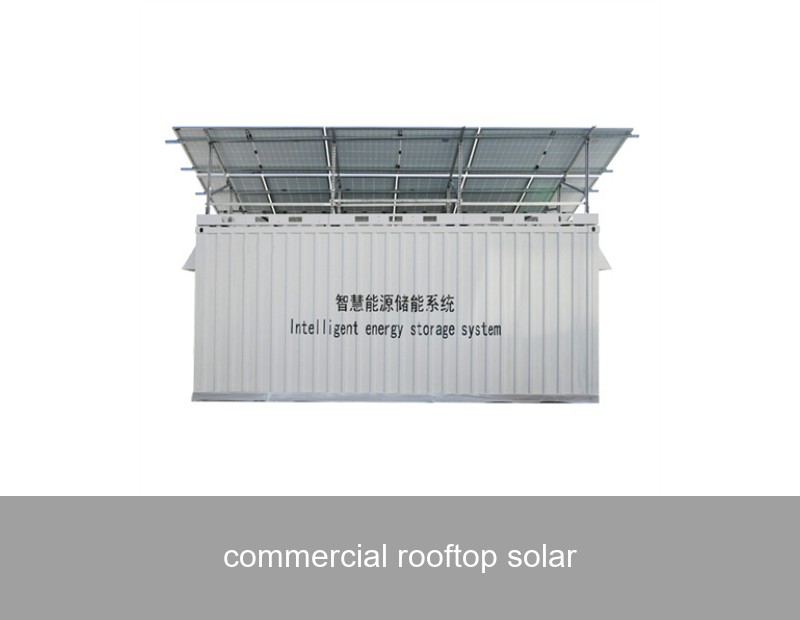
Table of Contents
If you manage a commercial building, warehouse, or factory, you've likely considered commercial rooftop solar. The promise is compelling: reduce energy bills, hedge against volatile utility prices, and showcase a commitment to sustainability. But here's a truth many discover only after installation: generating solar power is one thing; harnessing its full economic value is another. The real game-changer isn't just on the roof—it's in the intelligent system that stores and manages that power.
The Phenomenon: More Sun, More Problems?
It's a brilliantly sunny afternoon at your manufacturing facility. Your commercial rooftop solar array is producing at peak capacity. However, your machinery is running at baseline, and office occupancy is low. You're generating a massive surplus of electricity. In many markets, you're forced to sell this excess back to the grid at a fraction of the price you pay to buy power later. Conversely, come 6 PM, the sun sets, production ramps up for the night shift, and you're pulling expensive power from the grid just when your solar panels are asleep. This mismatch between solar production and energy consumption is the central challenge of solar economics.

Image Source: Unsplash - A typical commercial rooftop solar installation.
The Data: The Rooftop Solar Power Paradox
The financial impact of this imbalance is quantifiable. According to analysis from the U.S. National Renewable Energy Laboratory (NREL), without storage, a typical commercial solar system might only directly offset 20-40% of a site's total electricity consumption from the grid. The rest is either exported cheaply or missed when the sun isn't shining. Furthermore, grid structures are evolving. "Net metering" policies, which provided favorable credits for solar exports, are being phased out or revised in regions like California, Hawaii, and parts of Europe, moving towards less lucrative "net billing" or time-of-use (TOU) rates that heavily penalize peak-hour consumption.
| Scenario | Solar Self-Consumption Rate | Grid Dependency After Sunset |
|---|---|---|
| Solar PV Only (No Storage) | ~30-40% | 100% |
| Solar PV + Battery Storage | 60-90%+ | Dramatically Reduced |
This data reveals a clear opportunity. Pairing storage with commercial rooftop solar isn't just an add-on; it's the key to maximizing return on investment and achieving true energy independence.
A Real-World Case: The Bakery That Ate Its Peak Charges
Let's look at a concrete example from Germany. A medium-sized industrial bakery with high energy demand for ovens and refrigeration installed a 250 kW commercial rooftop solar system. Despite significant generation, their utility bills remained high due to steep demand charges and evening energy use.
They partnered with a system integrator using Highjoule's H-Series modular battery storage systems. A 240 kWh battery bank was installed alongside their existing solar. The results over one year were striking:
- Solar Self-Consumption Increased: From 35% to 82%.
- Peak Demand Charges Reduced: By 45% by discharging the battery during high-price grid periods.
- Total Energy Cost Savings (solar + storage vs. old grid-only): 68%.
- ROI Period for the added storage: Under 5 years, thanks to Germany's high electricity prices and favorable regulations for self-consumption.
The bakery didn't just save money; it gained predictable energy costs and protected its operations from grid instability.
The Solution: It's Not Just Panels, It's a System
The optimal commercial rooftop solar project today is a seamlessly integrated energy ecosystem: Generation (PV) + Storage (BESS) + Intelligence (EMS).
The Intelligent Energy Management System (EMS): The Brain
This software platform is the orchestrator. It makes real-time decisions based on weather forecasts, electricity price signals, your consumption patterns, and grid requirements. Should it store solar excess, discharge to avoid a peak tariff, or provide grid services? The EMS continuously optimizes for your financial and operational goals.
The Battery Energy Storage System (BESS): The Muscle
This is the physical reservoir for your solar energy. For commercial applications, safety, longevity, and scalability are non-negotiable. Lithium Iron Phosphate (LFP) chemistry has become the standard for its thermal stability and long cycle life. The system must be robust enough for daily, deep cycling for decades.

Image Source: Unsplash - A modern commercial battery storage installation.
How Highjoule Transforms Commercial Rooftop Solar Projects
Since 2005, Highjoule has been at the forefront of solving this exact puzzle. We don't just supply components; we provide the intelligence and resilience that make commercial rooftop solar a truly transformative investment.
Our integrated approach centers on two pillars:
- The Highjoule H-Series Commercial BESS: Our flagship product is engineered for the demands of C&I applications. Featuring UL9540-certified LFP battery modules, it offers unparalleled safety and a 10,000+ cycle design life. Its modular architecture allows you to scale from 100 kWh to multi-MWh seamlessly, perfect for growing businesses or phased projects.
- JouleOS™ Energy Management Platform: This is where the magic happens. JouleOS™ doesn't just react; it predicts and optimizes. It integrates with your solar inverters, building management system, and local grid signals to autonomously run your microgrid for maximum savings. You can monitor and control everything via an intuitive dashboard, setting preferences for cost-saving, sustainability, or backup priority.
For a large distribution center in the Netherlands, Highjoule's system was key to their "net-zero energy" certification. The 1.2 MW commercial rooftop solar array, coupled with an 800 kWh Highjoule H-Series battery and JouleOS™, manages to power nearly all operations, with the battery absorbing midday peaks and providing full backup for critical cold storage. The facility now operates as a grid asset, participating in flexibility markets for additional revenue.
Beyond Savings: Added Value with Highjoule
A Highjoule-powered system delivers a multi-layered return:
- Demand Charge Management: Actively shaves peak loads to cut the most expensive line item on your utility bill.
- Enhanced Resilience: Provides seamless backup power during outages, protecting operations and sensitive equipment.
- Grid Services Revenue: In some markets, aggregated systems can provide frequency regulation or capacity services, turning your energy asset into a revenue stream.
- Future-Proofing: Our systems are software-upgradable to adapt to new tariffs, regulations, and market opportunities.
The Future of Your Commercial Energy
The landscape of commercial energy is shifting from passive consumption to active, intelligent management. Commercial rooftop solar is the first, crucial step. But to truly capitalize on your investment and build a resilient, cost-controlled operation, integrating smart storage is no longer optional—it's essential.
With volatile energy markets and increasing grid pressures, the question for business leaders is evolving. It's no longer just "Should we install solar?" but rather, "How do we design a solar-plus-storage system that delivers the highest financial and operational resilience for our specific site?"
What is the single biggest energy cost driver for your business—is it volatile kWh prices, punishing demand charges, or the risk of operational downtime—and how could capturing your own solar energy 24/7 change your bottom line and competitive edge?
 Inquiry
 Online Chat