


Understanding the 100 Watt Solar Panel Price: A Smart Buyer's Guide
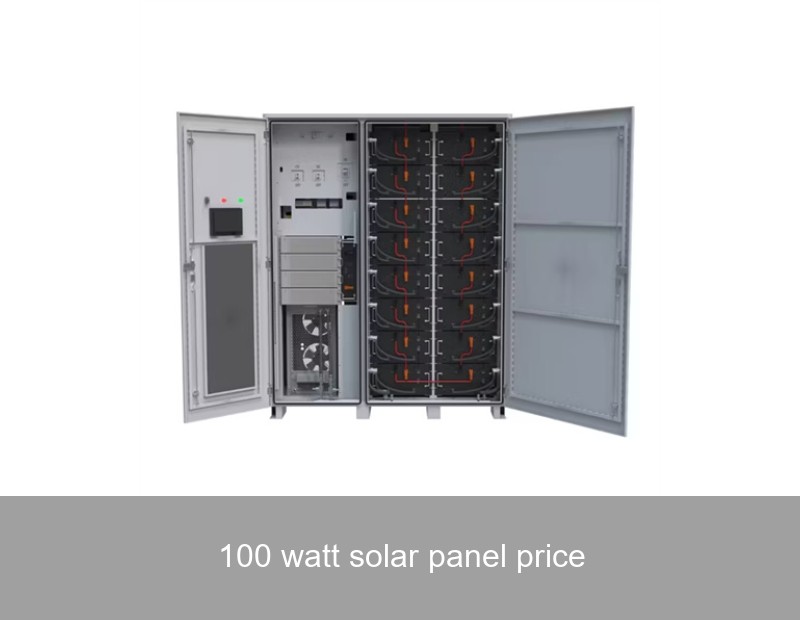
So, you're looking into a 100 watt solar panel. Whether it's for a camper van, a small shed, a boat, or to dip your toes into solar energy, the 100 watt solar panel price is often the first checkpoint. But here's the thing savvy buyers know: the sticker price is just the beginning of the story. The real value lies in understanding what you're getting, how it integrates into a broader system, and the long-term benefits it unlocks. Let's demystify the costs and explore how a simple panel fits into a smarter energy future.
Table of Contents
- The Real 100 Watt Solar Panel Price Breakdown
- Beyond the Panel: The System Cost Reality
- Case Study: The German Small Business Powering Independence
- Maximizing Your Investment: It's About the System, Not Just the Panel
- Where Highjoule Fits In: From a Panel to a Complete Energy Solution
- The Future of Small-Scale Solar: More Than Just Price per Watt
The Real 100 Watt Solar Panel Price Breakdown
As of 2024, the price for a standalone 100-watt monocrystalline solar panel typically ranges from $80 to $200 in markets like the US and Europe. This variation isn't random. It's driven by several key factors:
- Panel Efficiency & Technology: Higher-efficiency panels (21% and above) cost more but produce more power in limited space.
- Brand & Warranty: Established brands with robust 25-year performance warranties command a premium over generic options.
- Durability Features: Corrosion-resistant frames, high transparency low-iron glass, and robust junction boxes add to cost and longevity.
- Certifications: Panels with UL (US) or IEC (Europe) certifications ensure safety and reliability, often reflecting in the price.
But purchasing the panel is only the first piece of the puzzle. Focusing solely on this component cost is like buying a high-performance car engine without considering the transmission, wheels, or fuel system.
Beyond the Panel: The System Cost Reality
To make that 100W panel useful, you need a Balance of System (BOS). This is where the true system cost becomes clear. For a basic off-grid setup, your investment includes:
| Component | Estimated Cost (USD/EUR) | Purpose |
|---|---|---|
| 100W Solar Panel | $80 - $200 | Generates DC electricity from sunlight |
| Charge Controller (PWM or MPPT) | $20 - $100 | Regulates voltage from panel to battery, preventing damage |
| Battery (e.g., 50Ah LiFePO4) | $200 - $500 | Stores energy for use when the sun isn't shining |
| Power Inverter (if AC needed) | $50 - $300 | Converts stored DC battery power to usable AC power |
| Wiring, Mounts, & Fuses | $50 - $150 | Ensures safe installation and connectivity |
| Total System Cost Range | $400 - $1,250+ | For a functional, safe, and reliable system |
Suddenly, the 100 watt solar panel price becomes a fraction of the total. This system view is critical. A cheap panel paired with a low-quality battery can lead to system failure, wasted energy, and ultimately, a higher cost over time.
Case Study: The German Small Business Powering Independence
Let's look at a real-world application in Bavaria, Germany. A small, family-owned alpine holiday cabin, previously reliant on an expensive and unreliable propane generator, sought a quiet, clean alternative for basic lighting, refrigerator, and device charging.
Their solution wasn't just a single panel. They installed a modular system:
- Four 100W high-efficiency panels (400W total array)
- A smart MPPT charge controller for optimal harvest in variable mountain weather.
- A 5kWh lithium iron phosphate (LiFePO4) battery storage unit.
- A compact 1kW pure sine wave inverter.
The data after one year was telling. The system generated an average of 1.5 kWh per day, covering 90% of their seasonal needs. Crucially, by intelligently managing storage and discharge cycles, the battery's state of health remained at 99%. The upfront investment was recouped in under 4 years compared to the ongoing cost and hassle of propane. This case highlights that the value is generated not by panels alone, but by their integration into a resilient, intelligent storage system.

Credit: Photo by American Public Power Association on Unsplash (Representative image of a small cabin solar installation)
Maximizing Your Investment: It's About the System, Not Just the Panel
To truly maximize the value of your solar investment, shift your focus from component price to system performance and intelligence. Here’s what matters most:
- Battery Technology: The heart of any storage system. Lithium-ion, particularly LiFePO4, offers longer lifespan (5,000+ cycles), higher depth of discharge, and better safety compared to traditional lead-acid. This is where long-term value is secured.
- Energy Management: A smart system doesn't just store power; it manages it. Look for systems with software that can optimize charging based on weather forecasts, prioritize loads, and even integrate with grid services where available.
- Scalability & Integration: Can you easily add more panels or battery capacity later? A modular design protects your initial investment and allows your system to grow with your needs.
Where Highjoule Fits In: From a Panel to a Complete Energy Solution
This is precisely the philosophy at Highjoule. While we understand the curiosity around the 100 watt solar panel price, we specialize in delivering value far beyond a single component. For over 18 years, we've engineered integrated storage solutions that make renewable energy reliable and intelligent.
For residential and small commercial applications, our HOMEsync Series is a prime example. It's a modular battery storage system designed to seamlessly integrate with new or existing solar arrays. Think of it as the brain and heart of your energy setup. While you source panels appropriate for your roof or land, the HOMEsync system provides:
- High-Density LiFePO4 Batteries: For maximum safety and cycle life.
- AI-Powered Energy Management: Our platform learns your consumption patterns and automatically optimizes self-consumption, reducing reliance on the grid.
- Grid Services Ready: In some markets, systems like ours can provide grid stability services, creating a potential revenue stream.
- Scalable Design: Start with a base capacity and expand battery storage as needed without replacing the entire system.
We move the conversation from "the cost of a panel" to "the value of energy independence and resilience."

Credit: Photo by Andreas Gücklhorn on Unsplash (Representative image of a modern home energy system)
The Future of Small-Scale Solar: More Than Just Price per Watt
The solar industry's trajectory is clear. According to the International Energy Agency (IEA), solar PV is set to become the largest source of installed power capacity globally. As technology advances, we're seeing a move towards higher-efficiency panels and, more importantly, smarter, software-defined storage systems.
The future isn't about finding the cheapest panel; it's about building the most resilient and economical personal energy ecosystem. It's about systems that communicate with the grid, manage home appliances, and provide peace of mind during outages.
Your Next Step in the Energy Journey
Now that you see the bigger picture beyond the 100 watt solar panel price, what aspect of building a truly intelligent and resilient energy system is most important for your goals—is it achieving total energy independence, maximizing financial return, or ensuring backup power for critical needs?
 Inquiry
 Online Chat